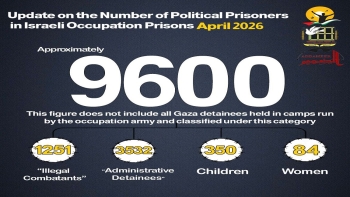
•  April 2026 Update on Numbers of Palestinian Political Detainees in Israeli Occupation’s Prisons

    April 2026 Update on Numbers of Palestinian Political Detainees in Israeli Occupation’s Prisons

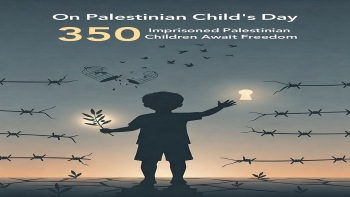
  • Palestinian Child’s Day Highlights Escalating, Systematic Targeting of  Palestinian Children

    Palestinian Child’s Day Highlights Escalating, Systematic Targeting of Palestinian Children

  • After Passing the Death Penalty Law, the EU Must Suspend the EU–Israel Association Agreement and Take Immediate Action

    After Passing the Death Penalty Law, the EU Must Suspend the EU–Israel Association Agreement and Take Immediate Action

  • Israeli Occupation Approves Law To Execute Palestinian Political Prisoners

    Israeli Occupation Approves Law To Execute Palestinian Political Prisoners

  • ONGOING URGENT APPEAL: STOP THE EXECUTION OF PALESTINIAN PRISONERS’ LAW

    ONGOING URGENT APPEAL: STOP THE EXECUTION OF PALESTINIAN PRISONERS’ LAW

  • 1
  • 2
  • 3
  • 4
  • 5

Medical crime is committed against the old detainees Muwafaq Erouq

on . Posted in slider

The Commission of Detainees' Affairs stated that a crime is
being committed at the medical level against the detainee
Muwafaq Erouq, 77, who has cancer and going on a difficult
health condition after removing a large part of his stomach and
intestines.
The Commission also stated that the detainee is suffering from
severe pains and high temperature and that he lost weight and
could not eat or drink. He is being fed through a tube inserted in
his abdomen.
The Commission warned of the repeated transfer of the detainee
between Berzilai Hospital and Al-Ramlah clinic, which increase
his pain and worsen his health condition.
Doctors diagnosed him with cancer in the liver and stomach last
July, but the administration of prison procrastinated in his
chemotherapy which worsened his health condition.
It is worth mentioning that the detainee Muwafaq, from Yafa-
Nasrah, is imprisoned since 2003 and sentenced to 30 years of
imprisonment.

Despite the seriousness of her health conditions, the occupation authorities prevent the detainee Suhair Sulaimyeh from family visits since her detention

on . Posted in slider

The Commission of Detainees' Affairs stated that the administration of prisons prevents the detainee Suhair Sulaimyeh from family visits since her detention in 30th October 2019.

The Commission pointed out that Sulaimyeh is suffering from severe pains as a result of being shot during her arrest process by the Israeli occupation forces. A bullet is settled in her shoulder in addition to many fragments in the place of injury, which caused difficulty in moving her hand and severe pain in her stomach. She has been subjected to medical negligence, where she was transferred from hospital to the clinic of Al-Ramlah prison before getting well. Her health conditions deteriorated and she was only given painkillers.

The Commission stated that the Israeli occupation authorities prevents Sulaimyeh from contacting her husband and kids and all family members, and the contact is limited to lawyers visits only.

It is worthy to mention that the occupation army arrested Sulaimyeh from the spaces of Al-Ibrahimi Mosque in Hebron/ south of the West Bank, and prevented the ambulance staff and the mosque guards from helping her before being transferred to Shaare Zedek Hospital.


In the International Human Rights Day \ The Commission of Detainees: occupation authorities arrest 5000 Palestinians

on . Posted in slider

 The Commission of Detainees' Affairs stated that occupation authorities still holding 5000 Palestinians in Israeli jails including 200 minors and 38 women.

This came in a statement in the occasion of the International Human Rights Day, where the commission confirmed that the Israeli occupation authorities violate the provisions of protection guaranteed by international law for prisoners through arresting tens of Palestinians on a daily basis, accompanied by abusive measures using excessive force and extrajudicial execution.

In addition, Israeli authorities continue to arrest former members of Legislative Council, defenders of human rights and journalists on charges of posting on Facebook, where women and minors are not excluded.

The commission also stated that the prisons' administration have implemented suppressive policies aiming at destroying Palestinian detainees and degrading their dignity. This was implemented through interrogation in which detainees are subjected to many forms of physical and psychological torture.

Prisons' administration practices abusive and suppressive measures against detainees after transferring them to prison, these practices are represented in isolation, imposing fines, intensive beating, destroying detainees' belongings, depriving them of family visits, depriving them of medical care and treatment using the policy of medical negligence and transporting them in military vehicles made of iron in which they do not feel comfortable, especially sick detainees.

The commission confirmed the existence of flagrant violations of International Law provisions practiced by Israeli authorities against Palestinian detainees, ignoring the guarantees of fair trial provided by International Humanitarian Law and Human Rights Law, especially the Standard Minimum Rules for the Treatment of Prisoners 1955, and other declarations and international agreements that guarantee the rights of detainees.

The Commission of Detainees' Affairs called on the International Community to intervene and fulfill its legal and ethical commitments towards Palestinians, and to take actual procedures to hold the occupation authorities accountable for the daily crimes committed against our people. It also called on activating solidarity campaigns to support Palestinians and their cause.


Detainees' Institutions: occupation authorities arrested 496 Palestinians in January 2020

on . Posted in slider

Israeli occupation authorities arrested (496) Palestinians from the occupied territories in January, including (67) minors and (16) women.

Detainees' institutions and human rights organizations (the Commission of Detainees and Ex-detainees' Affairs, the Palestinian Society Prisoner's Club, Al Dameer Association for Human Rights) pointed out that occupation authorities arrested (245) citizens from Jerusalem, (30) from Ramallah, (70) from Hebron, (43) from Jenin, (32) from Bethlehem, (14) from Nablus, (10) from Tulkarem, (21) from Qalqilia, (10) from Tubas, (1) from Salfit, (11) from Jericho and (9) from Gaza Strip.

5000 detainees are currently imprisoned in Israeli jails including (42) women, (200) minors and (450) administrative detainees, while (96) new administrative detention orders have been issued.

Torture at Al-Maskoubya interrogation center

 Detainees who have been recently moved to Al-Maskoubya interrogation center were subjected to physical and psychological torture such as: solitary confinement, long hours of interrogation, intensive beating, deprivation of sleep and sexual harassment, in addition to threatening them by detaining their relatives as a means of pressure against the detainee. They were threatened of being raped, tortured and ending their stay in Jerusalem.

Torture against detainees led to many dangerous injuries such as: fractures, loss of consciousness, vomiting, bleeding in various parts of the body such as (nose, mouth, hands, legs, and genital area).

Case of the detainee Jamil Dar'awi

The detainee Jamil Dar'awi, 40, has been subjected to torture where the occupation forces attacked his wife and children, and he got interrogated in the field before moving him to Al-Maskoubya interrogation center. He remained 45 days at the interrogation center, where he has been subjected to physical torture.

He underwent a military interrogation for 8 days, and was beaten severely by 10 interrogators and had continuous punches on the face causing loss of feeling. While beating, interrogators poured cold water on his body and pressed tightly on his neck and shoulders. He also had a blow on the head which caused fainting and then he lost the ability to speak. He also said that interrogators have extinguished cigarettes on his hand.

Case of the detainee Qassam Barghouthi

 The detainee Qassam Barghouthi was arrested from his house in 26/8/2019, after breaking into his house by Special Forces. He was beaten and attacked by dogs. He got interrogated in his house before arresting him, and then he was transferred to Hadassah Hospital. Then, he was transferred to Al-Maskoubya interrogation center, where he was subjected to many kinds of physical and psychological torture for 80 days. Occupation forces arrested his mother and brother and summoned his father for interrogation. He got beaten all over his body, hanged for long hours and deprived of using the toilet.

Occupation's policy in targeting minors

In 13/1/2020, the administration of prisons transferred (34) minors from Ofer prison to Damoun prison, without being accompanied by their representatives of adult detainees. They were transferred to a section that is not suitable for human life, full of insects and mice and lacks covers and blankets.

The administration of Damoun prison resorted to abuse and attack minors since the first day of transfer. Detainees announced the protest against the difficult conditions of the prison, which forced the administration of the prison to summon Special Forces to isolate detainees, cut off the power and water and confiscate their clothes and stuff. In addition, they tend to break into minors' rooms every hour, beat and assault them and deprive them from taking a shower. (7) Detainees were transferred to solitary confinement, and after announcing the hunger strike the administration brought (3) detainees from Ofer prison and Mejiddo prison as representatives on the behalf of minors.

A committee is formed to take care of minor detainees, organize the requirements of their daily lives, direct their behavior, defend their rights before the occupation prisons administration and develop an educational program for all levels.

Detainees' institutions confirms that the occupation authorities continue to violate the rules of international law and Geneva Convention to fight the Palestinian society using systematic policies backed by the judiciary device.

Detainees' institutions call on the international, local and regional parties to take effective procedural steps to ensure the protection of the Palestinian presence, and the protection of humanity, especially in light of the escalating policy of systematic torture.


The Commission of Detainees' Affairs reviews the suffering of minor detainees with the testimony of two minors

on . Posted in slider

The Commission of Detainees' Affairs cited the testimony of two minors within (34) minors that have been transferred from Ofer prison to Damoun prison, in preparation for implementing the policy of secluding minor detainees from the administrative committees.

 The lawyer of the commission cited the testimony of the minors Ahmad Anati, 15 years old, from Fawwar Camp/Hebron, and Fadi Ashraf Kesbeh, 17 years old, from Qalandia camp/Jerusalem, during a visist to Damoun prison.

She stated that the administration of Ofer prison started to transfer (34) minors in January 13, 2020 and allowed them to take their clothes, covers and a pillow in addition to stuff from the cantina. They did not allow minors to take their necessary stuff from the cells such as electric supplies, preventing them from being accompanied by their representatives.

The two minors confirmed that they arrived at section (1) at Damoun prison, which is deserted many years ago, full of insects, inappropriate for living and there is neither sunshine nor ventilation.  It is consisted of five narrow cells, including three without windows and two with very small windows and low ceiling. The walls are moist and toilets are located outside the cells. Minor detainees are not allowed to go out to the prison's yard except in case of beating. Besides, the section has a stinky smell, with torn mattress and bad quantity and quality of food is served, which minors refuse to eat the most of the time.

 The two detainees pointed out that the minors began protesting by knocking on the doors and screaming, in protest against the prevention of the representatives from accompanying them.

The also stated that the administration of the prison summoned Special Forces to suppress minors since the first day of transfer. Forces tend to break into the cells, cut off the power and water and attack them.   Each time, they choose two or three detainees, take them out of the section and beat them severely. The most cruel break in was in the fourth day of transfer, where (4) special units broke into minors' section, attacked them, handcuffed them for four hours, prevented them from using the toilet and beat them if they moved.

They also stated that minors declared entering a hunger strike in the second day of transfer, but the Special Forces tend to break in the section every one hour, beat the detainees, drag them while being asleep, use tear gas and confiscate their clothes and mattresses. Minors were forced to sleep on thin mattresses provided by the administration of the prison, where four detainees have been moved to solitary confinement at Jalamah detention center; Khalil Jabareen, Mahmoud Ewais, Reyad Al-'emor and Yehya Sbeiah.

They also affirmed that the administration of the prison tried to negotiate each minor separately, to force them accept the existing conditions in exchange of providing facilities and privileges. However, they all refused and insisted on having their representatives of adult detainees.

Moreover, they pointed out that the administration of the prison allowed three adult detainees to enter minors' section on January 16, 2020, who asked the administration to untie the handcuffs and return the confiscated clothes and covers.

However, the administration of the prison made a promise to end the crisis and put actors on minor detainees, but it did not keep the promise and returned the adults to their prisons. It also announced the prevention of administrative committees to enter the minors' sections in all prisons, and tried to gather all minors in one prison.

The Commission of Detainees' Affairs pointed out that the administration of the prison has informed detainees of its decision to impose punishments against them such as depriving them of family visits and imposing fines.

The Commission of Detainees' Affairs called on the international organizations concerned with children's rights, the International Committee of the Red Cross and the Amnesty International to intervene urgently to pursue the complaints of minors who live in bad conditions.   


Detainees' Institutions: occupation authorities arrested 374 Palestinians in November 2019

on . Posted in slider

Israeli occupation authorities arrested 417 Palestinians from the occupied territories in November including 66 minors and 6 women.

Detainees' institutions and human rights organizations the Commission of Detainees and Ex-detainees' Affairs, the Palestinian Society Prisoner's Club, Al Dameer Association for Human Rights) pointed out that occupation authorities arrested 137 citizens from Jerusalem, 42 from Ramallah, 70 from Hebron, 22 from Jenin, 43 from Bethlehem, 12 from Nablus, 15 from Tulkarem, 7 from Qalqilia, 5 from Tubas, 2 from Salfit, 8 from Jericho and 11 from Gaza Strip.

5000 detainees are currently imprisoned in Israeli jails including 38 women, 200 minors and 450 administrative detainees, while 90 new administrative detention orders have been issued.


The martyrdom of detainee Sami Abu Dyak

The detainee Abu Dyak was assassinated in November 26, 2019 by the Israeli occupation forces, which used the policy of deliberate medical negligence that is classified as systematic torture tools.

He was not suffering from any disease before detention, but in September 2015 he was transferred to Soroka Hospital, where he had severe pain in his intestines. He was diagnosed of intestinal obstruction due to cancerous tumor.

He underwent a surgery in 6/9/2015 to treat the intestinal obstruction and then he got moved prison again. His health condition deteriorated after few days and then he was transferred to Assaf HaRofeh Hospital, and he was diagnosed with poisoning due to the lack of cleanliness of the prison. Then, he underwent many surgeries but to no avail due to the renal failure.

  Sami Abu Dyak, 38 years old, is from Seilet Al-Daher village near Jenin. He has been arrested in 17/7/2002 and sentenced to 3 life terms in addition to 30 years. He has a brother who is also detained and sentenced to a life term.

However, lawyers of the commission submitted another request to early-release Abu Dyak in 4/8/2019, but the Israeli authorities refused and did not care about his serious condition and kept him held in Al-Ramlah prison clinic.

His last letter from prison: "I appeal every conscientious to work for releasing me from the Israeli jails. I call on you to let me spend my last hours and days with my mother and family, I don’t want to die handcuffed in a mean cell by a jailor who prefers death to us".

The number of Captive movement martyrs since 1967 became 222 with the martyrdom of the detainee Sami Abu Dyak, including 67 detainees who were killed by medical negligence, 5 of them killed in 2019: Fares Baroud, Omar Younes, Nassar Taqatqa, Bassam Sayeh and Sami Abu Dyak.

 Detainees' institutions state that the occupation authorities hold full responsibility on killing Abu Dyak by systematic torture methods such as: depriving detainees from medical treatment and late diagnosis of the disease. There are tens of detainees who have been waiting for years to have surgeries, and some of them reached to stage in which treatment is difficult to be attained.

The battle of administrative detention is continuous

3 detainees continued their open hunger strike in November protesting against the policy of administrative detention, which is practiced by the Israeli authorities against 450 Palestinian detainees.

The detainee Ahmad Zahran is on hunger strike since 77 days, the detainee Mus'ab Hindi started his strike since 75 days and the detainee Ismail Ali who entered a strike for 112 days and ended it after having an agreement to determine the period of his detention of six months.

Zahran and Hindi are suffering from bad health conditions, where Zahran suffers from dizziness, continues headache and severe pain in all joints. He is not able to stand up or move, and he has pain in the eyes and weak vision, and he lost 27 kegs of his weight.

Hindi suffers from dizziness, continues headache, weak vision, shortness of breath, joints pain and he lost 25 kegs of his weight.

Detainees' institutions warns of the bad health conditions of Zahran and Hindi, and call on the international community and the member states that signed the Fourth Geneva Convention to practice pressure on the occupation authorities to stop violations against detainees and end the policy of administrative detention.

No exceptions in detention… tens of aged detainees in Israeli jails

Israeli occupation authorities intend to arrest old men, where they are subjected to many forms of torture, which starts from the first moment of arrest. Prisons administration isolated many of them in solitary confinement, deprived them of family visits and practiced medical negligence against them.

Occupation authorities did not exclude old women of detention and humiliation, where tens of old women have been arrested and some of them were sentenced to house arrest.

Detainees' institutions pointed out that the Israeli authorities hold tens of Palestinian elders above 60 years in harsh conditions.

A case in point is the detainee Fuad Shobaki, the eldest detainee, 81 years, and he needs a special medical care where he suffers from many chronic diseases including cancer. He is detained since 2006 and sentenced to 17 years of imprisonment.

Another case in point is the detainees Kareem Younis, 64 years old who is detained since 1983, and the detainee Youssef Abu Alkhair 73 years old, Nael Barghouthi 62 years old and Badran Jaber 74 years old.


The Commission of Detainees' Affairs arranges a specialized workshop on house arrest against children from Jerusalem

on . Posted in slider

The Commission of Detainees' Affairs, in cooperation with the Defense for Children International Movement, the YMCA and Wadi Hilweh Information Center/ Silwan, arranged a workshop at its headquarter in Ramallah on house arrest against children from Jerusalem: the occupation's policy of converting family into jailors. Participants presented papers that explain in details the issue of house arrest and its social and psychological impacts on children, in addition to live testimonies for many children who were subjected to this type of detention.

The Head of the Commission of Detainees' Affairs, Qadri Abu Baker, talked about difficult conditions and the fierce attack imposed on the Captive Movement, especially against children who have been transferred to Damoun prison, and the tragic situation they live in without their representatives of adult detainees.

Abu Baker discussed the issue of children detention in general, and talked in particular about the children from Jerusalem who are suffering from house arrest. He pointed out that there are 25 children under house arrest in Jerusalem. He added, in case the families of those children break the rules of house arrest, the Israeli courts would impose high fines against them.

Abu Baker called on the necessity of exposing the Israeli practices against detainees, especially children, sick and women detainees. He also called on increasing the efforts on the international level to protect our people.

His Excellency Abdulqader Al-Khatib, Deputy-Head of the Commission, welcomed the guests and appreciated the efforts of the participating institutions in this workshop. He stressed on the seriousness and the importance of the issue of minor detainees, and the gravity of house arrest due to its social and psychological impacts on children, his family and society.

The general director of the International Relations Unit, Raed Abu-Hommus, stressed on the importance of warning the parents of the seriousness of house arrest, and determining the legal and psychological methods to help and save them.

The released detainee Durgham A'raj talked shared his experience for more than two years in prison, as a representative on minor detainees from Jerusalem. He stated that minors from Jerusalem are isolated from other sections, and force them to accept the orders of house arrest by the Israeli Ministry of Justice, Intelligence, and the Ministry of Internal Security.  He said that the option of resorting to house arrest as a substitute for actual imprisonment destroys the child’s future and is reflected on his psychological condition and family situation. Thus, it is important to warn the parents of the seriousness of this procedure which cause depression to children.

The lawyer of the commission Hiba Masalha discussed the issue of house arrest in the Israeli law, and explained that the period of house arrest is not included in the real sentence against the child, and it may be extended many times. In some cases, child got imprisoned after ending the house arrest. She also stated that the Israeli courts resort to apply other alternatives against those minors, such as holding them at Ovic prison, a prison for criminals, or holding them in housing centers. However, Israeli courts usually resort to house arrest in order to preserve themselves in front of the international community, and to destroy the child morally, psychologically and socially.

The head of the Defense for Children International Movement, Khalid Quzmar, stated that arresting children according to the International Law should be on legal basis and for the shortest period possible, but the Israeli military courts target Palestinian children by arresting and humiliating them. They seek to destroy Palestinian children by applying alternatives of actual imprisonment, such as holding them under house arrest to end their childhood.

The representative of Wadi Hilweh Information Center, Fida' Rwaidy, provided statistical and documental information on the issue of house arrest, and revealed the number of house arrest cases by a filmed report.

Moreover, the representative of YMCA, Candy Jarayseh, stressed on the importance of holding rehabilitation sessions for the minor detainee and his family.

At the end of the workshop,the minor detainee Haitham Khwais from Jerusalem shared his experience and talked about house arrest and its tragic effects.

The detainee Samer Arbeed during the hearing session

on . Posted in slider

Israeli Special Forces arrested Samer Arbeed, 44, in 25/9/2019 in front of his workplace. He was accompanied by his wife, and he was subjected to beating during arrest process. Israeli forces prevented his lawyer from visiting him since the first moment of detention. In 27/9/2019, after two days of his detention, Samer arrived at the hospital with a state of unconsciousness, and he was diagnosed with 11 fractures in the chest, bruises all over his body and renal failure. Due to the seriousness of his health condition, he was anesthetized and linked to respirators because of the severe pasin he was suffering from. In 25/10/2019, Maariv newspaper published that Samer inhaled gas in his room at Hadassah hospital, noting that he was and still suffering from a difficult health condition. The Israeli occupation forces have revealed this matter from his lawyer and family, where his lawyer was prevented from visiting him for unknown reasons.
 
האסיר סאמר עראביד במהלך משפטו
  האסיר סאמר (44 שנה) נעצר על ידי כוחות מיוחדים מול מקום עבודתו בתאריך 9/25/2019, בעודו מלווה על ידי אשתו, והוא הוכה בכלי נשק במהלך תהליך מעצרו.
 מרגע מעצרו, כוחות הכיבוש מנעו מעורך דינו לבקר אותו או אפילו לדאוג לשלומו , ויומיים לאחר מעצרו ב- 9/29/2019 הגיע סאמר לבית החולים במצב של חוסר הכרה, שברים ב -11 צלעות בכלוב החזה, חבלות ומכות בכל גופו ואי ספיקת כליות.  קשה, ובשל חומרת מצבו הבריאותי, הוא הופנט והוצמד למכני הנשמה עקב חומרת הכאב ממנו סבל, וב- 10/25/2019 פרסם העיתון הישראלי "מעריב" כי סאמר נחשף לשאיפת גז בחדרו בבית החולים הישראלי "הדסה", כתוצאה משחרור הגז על ידי  אחד האסירים שליווה אותו בחדר.  שימו לב שהוא היה ונמצא עדיין במצב בריאותי קשה, וכוחות הכיבוש הסתירו עניין זה מעורך הדין של סאמר ומשפחתו, ועורך הדין מנוע מלבקר אותו באותה תקופה מסיבות שבית המשפט לא הסביר לעורך הדין.

The Commission of Detainees' Affairs reveals grave violations practiced by the administration of prisons against children from Jerusalem

on . Posted in slider

The Commission of Detainees' Affairs revealed in report issued today that the Israeli occupation seeks to deprive minors from Jerusalem their Palestinian identity through a series of violation against them in particular.

This issue has been discussed in a meeting organized by the Commission,  attended by many released minor detainees from Jerusalem, the released detainee Durgham A'raaj as their representative, Amjad Abu Asab the head of minor detainees' of Jerusalem committee and many lawyers from the commission to document minors' testimonies on the violations they were subjected to in prison.

The Head of the commission Qadri Abu Baker stated that the occupation's policies against minors aim at isolating Jerusalem from the rest of the Palestinian cities, in an attempt to destroy the future of the Palestinian people.

The released detainee Durgham A'raaj reviewed the practices of Israeli occupation authorities against minors from Jerusalem, which aim at taking out their national identity, in an attempt to control their minds in this sensitive age in a way that violates all moral conventions guaranteed by the Convention on the Rights of the Child.

A'raaj stated that the occupation introduces dangerous alternatives of actual imprisonment, to avoid the integration between minors from Jerusalem and minors from the West Bank. Thus, minors from Jerusalem got separated in different sections to integrate them with Israeli criminal prisoners. This happened when they transferred many of them to Ofek criminals' prison, where in many cases minors where subjected to beating, cursing and stealing their personal belongings.

In addition, occupation authorities transfer minors to "Israeli Social Shelters", in which they got integrated with Israeli criminals. They are provided with curriculums that aim at "how to be an Israeli". They provide minors with weed by a psychological advisor and give them sedative medications at day hours and hypnotics at night which lead to addiction.

A'raaj discussed the topic of house detention, in which family became jailor against their son, after committing themselves to watch and confine their son and prevent him from being integrated with the society. This leaves bad psychological effects on the child and creates a state of aggression and excessive nervousness. Then, the child is transferred to actual imprisonment after he ends his house detention.

The Commission confirmed that the Legal department at the Commission of Detainees' Affairs had listened to testimonies of released minors from Jerusalem, and now it works on documenting forms and under oath testimonies of many minor detainees from Jerusalem to complain and try to put an end to these Israeli policies.


ACTIVITIES AND EVENTS

  • The Commission of Detainees Affairs organized a symposium on "The Israeli terrorism and racial laws against detainees". >

    Read More
  • Abu Baker calls on the European Union to act immediately and hold Israel accountable for its crimes against the Palestinian detainees >

    Read More
  • The director of Media Department presents a paper on minor detainees in Brussels Conference >

    Read More
  • The Commission of Detainees' Affairs arranges a specialized workshop on house arrest against children from Jerusalem >

    Read More
  • 1

REPORTS AND ACHIEVEMENTS

  • April 2026 Update on Numbers of Palestinian Political Detainees in Israeli Occupation’s Prisons >

    Read More
  • Palestinian Child’s Day Highlights Escalating, Systematic Targeting of Palestinian Children >

    Read More
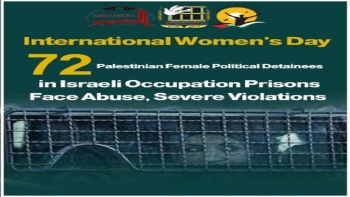
  • International Women’s Day: 72 Palestinian Female Political Detainees in Israeli Occupation Prisons Face Abuse, Severe Violations >

    Read More
  • Update on the Number of Political Prisoners in Israeli Occupation Prisons – February 2026 >

    Read More
  • 1