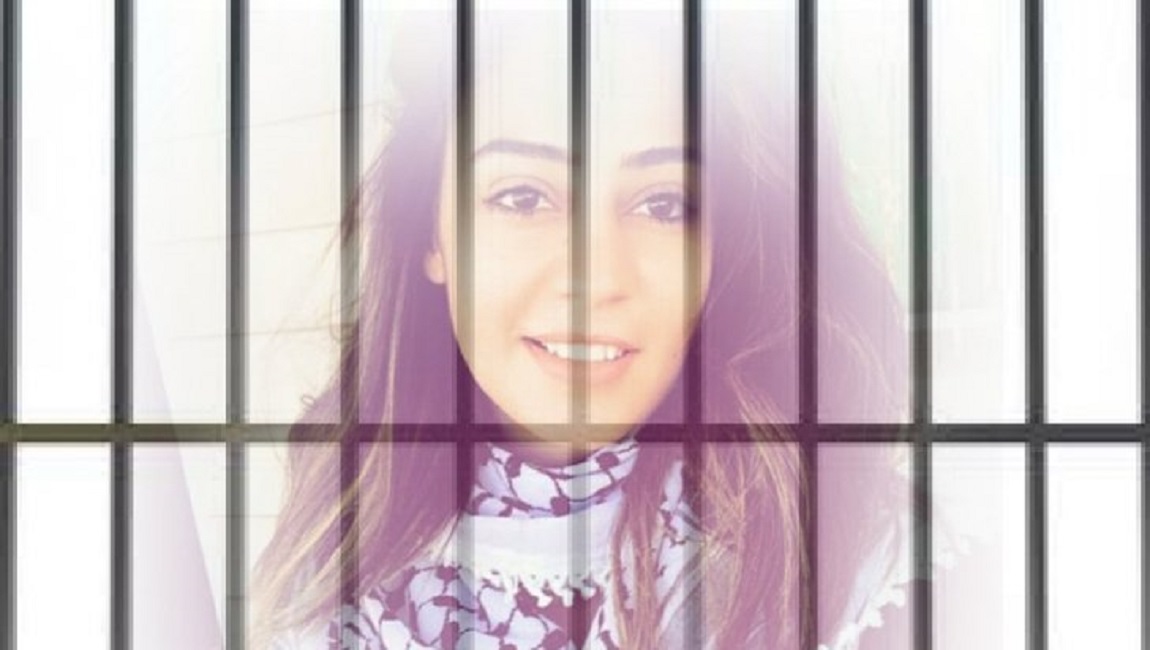
The confirmation of administrative detention against Hiba Labadi
on . Posted in slider
The Commission of Detainees Affairs stated that the Military court of Ofer issued a sentence of Administrative Detention against Hiba Labadi for five months, noting that she started a hunger strike since 24 days.
The commission pointed out that the decision of the court came after a closed session held for discussing the administrative detention against Hiba, after the great efforts by the Legal Department at the Commission of Detainees Affairs in
coincidence with Jordanian efforts to release her. However, all pleas were rejected.
The commission stated that issuing such a sentence against Labadi reveals the criminality of this occupation, where the Jordanian government claims international bodies to expend efforts to save her life.
How Israeli doctors enable the Shin Bet's torture industry
on . Posted in slider
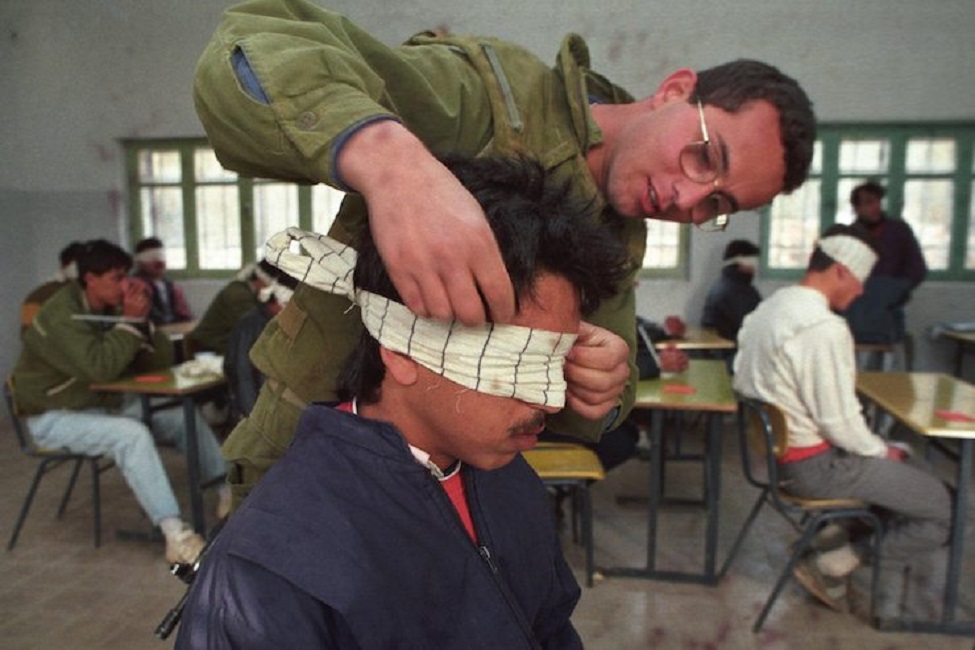
From approving brutal interrogation techniques to writing false medical reports, doctors in Israel have taken an active role in the torture of Palestinian prisoners.
By Ruchama Marton
If the Shin Bet runs a school for its agents and interrogators, the curriculum most certainly includes a class on how to tell a lie. The texts taught, it seems, do not change with the years. In 1993, responding to accusations that the Shin Bet brutally tortured Palestinian detainee Hassan Zubeidi, then Commander of the IDF Northern Command Yossi Peled told Israeli journalist Gabi Nitzan that “there is no torture in Israel. I served for 30 years in the IDF and I know what I am talking about.”
Twenty-six years later, Deputy Chief of the Shin Bet and former Shin Bet interrogator, Yitzhak Ilan repeated the same line to news presenter Ya’akov Eilon on national television while speaking about Samer Arbeed, a 44-year-old Palestinian who was hospitalized in critical condition after he had been reportedly tortured by the Shin Bet. Arbeed is suspected of organizing a deadly bombing that killed a teenage Israeli girl and wounded her father and brother at a spring in the West Bank in August. Ilan bristled at the notion that the Shin Bet was somehow responsible for Arbeed’s condition.
Putting aside these absurd forms of denial, as a doctor and founder of Physicians for Human Rights – Israel, I have always been troubled by how Israeli doctors cooperate with and enable Israel’s torture industry.
In June 1993, I organized an international conference in Tel Aviv on behalf of PHR against torture in Israel. At the conference, I presented a Shin Bet medical document that had been discovered by chance by Israeli journalist Michal Sela. In the document, the Shin Bet doctor was asked whether the prisoner in question had any medical restrictions when it came to keeping them in isolation, whether they could be tied, whether their face could be covered, or whether they could be made to stand for prolonged periods of time.
The Shin Bet denied such a document ever existed. “There is no document. It was simply an experimental paper that is not in use,” the agency claimed. Four years later, a second document, suspiciously similar to the first, came to light. That document asked doctors to sign off on torture in accordance with several previously agreed-upon clauses.
The first document, along with other findings, were published in the book titled “Torture: Human Rights, Medical Ethics and the Case of Israel.” The book cannot be found in Israel; Steimatzky, Israel’s oldest and largest bookstore chain, has banned its sale. Perhaps this is further proof that there is no torture in Israel.
After the document was uncovered, PHR turned to the Israel Medical Association and asked it to join the struggle against torture. The IMA requested that PHR hand over the names of the Shin Bet doctors who signed off on the document so that they could be dealt with internally.
I refused to hand over the names and told the IMA attorney that I was not interested in going after rank-and-file doctors — I wanted to change the entire system. That meant doing away with legitimacy granted to confessions exacted under torture, educating IMA members about non-cooperation with torturers, and particularly providing active help to those doctors who do report on suspicion of torture or brutal interrogations.
Back then, the IMA was satisfied with putting our statements while doing nothing to prevent the Shin Bet’s doctors from cooperating with torture. Furthermore, the organization failed to fulfill its obligation to establish a forum for doctors to report on suspected torture.
An ethical, moral, and practical failure
But it is not only doctors in the Shin Bet and the Israel Prison Service that collaborate with torture. Doctors in emergency rooms across Israel write false medical opinions in accordance with the demands of the Shin Bet. Take, for example, the case of Nader Qumsieh from the West Bank city of Beit Sahour. He was arrested in his home on May 4, 1993 and was brought to Soroka Medical Center in Be’er Sheva five days later. There a urologist diagnosed him a hemorrhage and a torn scrotum.
Qumsieh testified that he was beaten during his interrogation and kicked in his testicles.
Ten days later, Qumsieh was brought before the same urologist for a medical examination, after the latter had received a phone call from the Israeli military. The urologist wrote a retroactive letter (as if it had been written two days earlier), without actually conducting an additional examination of the patient, in which he said that “according to the patient, he fell down the stairs two days before he arrived in the emergency room.” This time, the diagnosis was “superficial hematoma in the scrotal area, which corresponds to local bruises sustained between two and five days prior to the examination.” The urologist’s original letter, written after the first examination, disappeared from Qumsieh’s medical file.
History teaches us that doctors everywhere easily and effectively internalize the regime’s values, and many of them become loyal servants of the regime. That was the case in Nazi Germany, in the United States, and in various countries in Latin America. The same goes for Israel. Qumsieh’s case, along with countless others, reflects the ethical, moral, and practical failure of the medical establishment in Israel vis-à-vis torture.
Already back in the 18th century, jurists — rather than doctors — published legal opinions accompanied by proof that there is no connection between causing pain and getting to the truth. Thus, both torture and confessions exacted through pain were legally disqualified. One can only assume that the heads of the Shin Bet, the army, and the police know this bit of history.
And yet, torture — which includes both mental and physical cruelty — continues to take place on a large scale. Why? Because the real goal of torture and humiliation is to break the spirit and body of the prisoner. To eliminate his or her personality.
The legal understanding for forbidding torture is based on the utilitarian idea that one cannot arrive at the truth through inflicting pain . But doctors are committed — first and foremost — to the idea that anything that causes physical or mental harm to a patient is prohibited.
The Shin Bet medical eligibility document allows for sleep prevention, it allows interrogators to expose prisoners to extreme temperatures, to beat them, to tie them for long hours in painful positions, to force them to stand for hours until the vessels in their feet burst, to cover their heads for prolonged periods of time, to sexually humiliate them, to break their spirits by severing their ties to family and lawyers, to keep them in isolation until they lose their sanity.
The Shin Bet’s medical eligibility form is not the same as the one used to check eligibility to join the air force or even to drive a car. This kind of “eligibility” leads the prisoner directly into the torture chamber — and the doctor knows this. The doctor knows to what kind of systematic process of pain and humiliation he or she is lending their consent and approval. It is doctors who oversee the torture, examine the tortured prisoner, and write the medical opinion or the pathology report.
Abu Baker: detainees cause needs real international intervention and serious Arab actions
on . Posted in slider
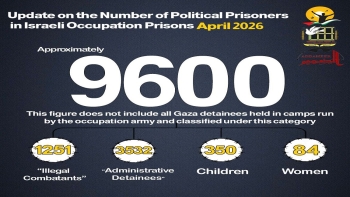
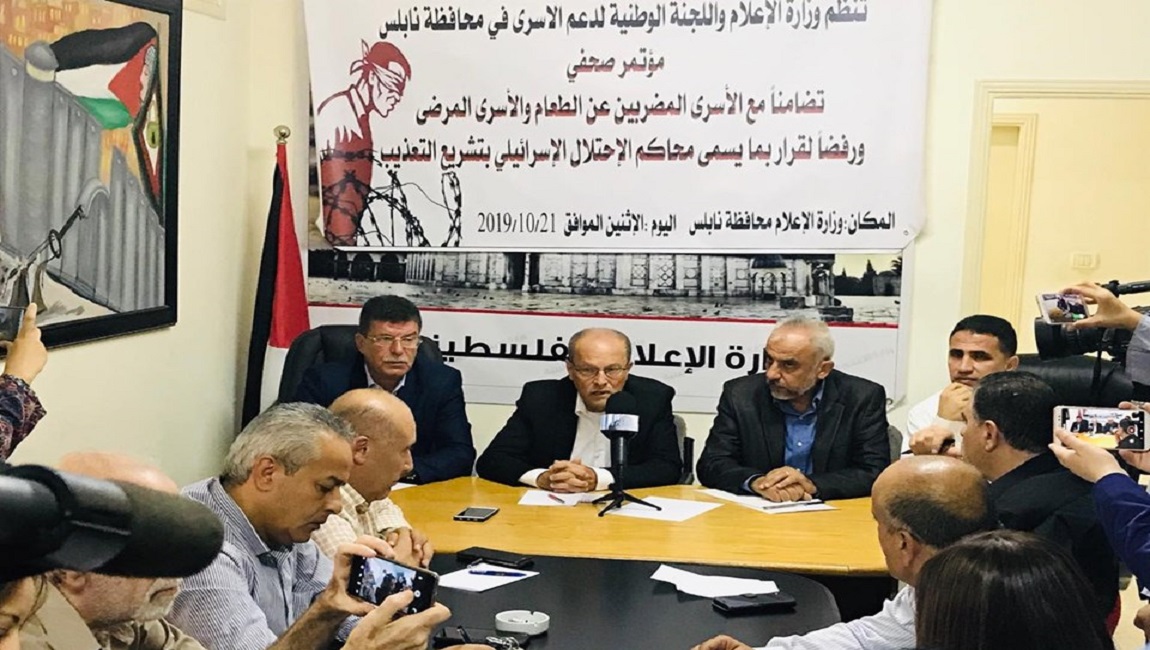
The cause of Palestinian detainees in Israeli jails needs real international intervention and serious Arab actions to stop the flagrant violations practiced against them, which breaches all humanitarian laws, said the Head of the Commission of Detainees; Affairs Qadri Abu Baker. Abu Baker pointed out, in a press conference organized by the Ministry of Information and the National Committee for supporting detainees, that there are 5.000 detainees distributed to 22 prisons, including 700 sick detainees, 230 minors, 43 women, 500 administrative detainees and 5 on hunger strike.
They live in bad and cruel detention conditions which require international, legal and human rights efforts to save them.
Abu Baker warned of the seriousness of health conditions of detainees on hunger strike, especially the detainee Ahmad Ghannam who entered a strike since 100 days, the detainee Hiba Labadi who entered a strike since 28 days, Tareq Qa'dan, Ismail
Ali, Mus'ab Hindi and Ahman Zahran.
The Commission of Detainees Affairs condemns the detention of the minor Khaled Ghannam from Qalqilia
on . Posted in slider
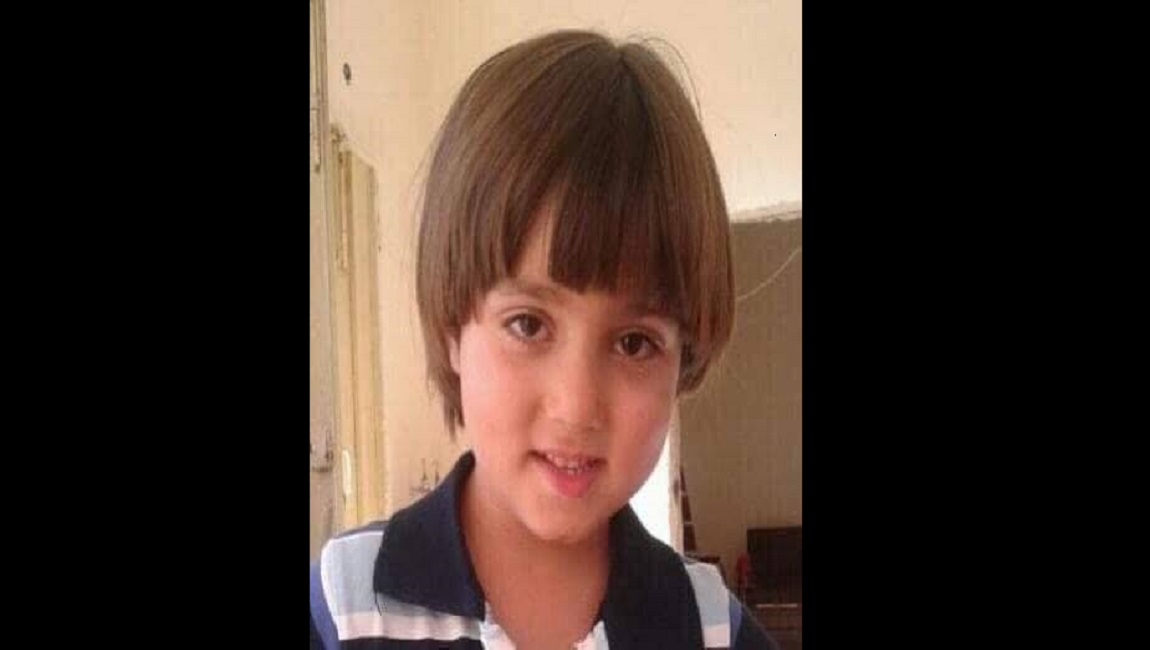
The Commission condemned the detention of the minor Khaled Ghannam, 12, from Qalqilia by the occupation authorities yesterday, where today is his birthday.
The commission stated that the detention of this child comes in the context of the ferocious attack against Palestinian children implemented by the occupation government and the Israeli Intelligence, which violates all international charters and
conventions that stipulated the necessity of protecting childhood rights.
The commission also stated that the Israeli government holds full responsibility on the detention of Ghannam, and warned of threatening him and exposing him to illegal interrogation to force him confess guilt.
However, the commission pointed out that the occupation authorities still commit crimes publicly against minors, and that the Palestinian childhood is under great danger due to the silence of the international community towards the Israeli
violations.

The Commission of Detainees' Affairs publishes distressful details on what the detainee Hiba Al-Labadi has been exposed to during detention and interrogation
on . Posted in slider
The Commission of Detainees' Affairs published precise and agonizing details on what happened with the detainee Hiba Al-Labadi, who started a hunger strike since 14 days protesting against her administrative detention. She's currently held in the isolation of Jalamah prison in hard conditions, where she was exposed to many violations by Israeli inspectors all the time.
The commission cited the full testimony of Al-Labadi through the advocate of the commission, and here is the full text of her testimony: "in August 20, 2019 I came from Jordan with my mother and aunt to attend my cousin's wedding. I planned for a vacation of five days full of joy, but the occupation took me to another word that I wasn't expecting even in my nightmares."
"We arrived at Allenby Bridge at 9:00 am. I was kept in a room for two hours and they closed the door, they opened it after I screamed. A female soldier kept guarding me, and during that time I got inspected, where I refused to take off my underwear. Then, I got handcuffed with plastic ties and blindfolded. They transferred me to a military base, and held me under the sunbeams for half an hour and then took me to a room. They questioned me about my health condition and inspected me again. I told the soldier that I have the period and that I must change my menstrual pads. The soldier agreed under the condition of entering the toilet with me. The toilet was so narrow and it has a capacity for one person only. She entered with me holding her gun machine and staring at me while changing. I was shocked, embarrassed and humiliated and felt of the flagrant violation of my privacy and my humanitarian rights. Then, they transferred me to Al-Maskoubya interrogation center. I remained there for 3 hours until they brought another woman, and then they transferred me to Petah Tikva interrogation center".
"I arrived at Petah Tikva at 8:00 pm. I was so tired due to the long hours of travel, the period and the harsh treatment of soldiers. I walked through narrow corridors and stairs and the cells were underground. The soldier kept pushing me and treating me aggressively. I took a rest for half an hour and then they interrogated me until the dawn of the next day".
"The interrogation was conducted at 9:00 am and continued to the next day in the first 16 days. During these long hours, they used to take me to the cell twice on mealtimes for half an hour each time. They transferred me to Megiddo and Jalamah prisons and they took me back to Petah Tikva interrogation center. I remained under interrogation for 35 days in very tough conditions".
"The interrogation was very cruel and violent, and it remained for long hours while I was setting tied to the chair, which caused pains in my back, hands and neck. Interrogators kept yelling at me loudly and they were setting close to me touching my leg deliberately in a provocative way. They spit on and described me with ugly descriptions. They cursed me saying: looser, mean, animal, ugly and many cruel words that I hear for the first time in my life. They told me that I am an extremist and they cursed the Islamic and Christian religions and said that Judaism is the best and that other religions are racist"
"They threatened me and said that they arrested my mother and sister in an attempt to force me confess. After they failed in this, they threatened me with the administrative detention. They told me "we do not have any evidence against you, but we have the administrative detention with the authority to renew it for seven years and a half, and then we will detain you in the West Bank and prevent you from going to Jordan and deprive you of family visits". They tried to stress me in all means.
"Many interrogators questioned me and they were treating me in a bad way. They held me in a narrow cell full of insects and gave me stinky pajamas. Walls are made of cement, very rough which I cannot lean on. The mattress is very thin and without any cover or pillow. Lights on all the time and there is no windows in the cell. There is high humidity, bad smell and there is no water. I asked to take me out of the cell but they refused and screamed on me. They intended to humiliate me.
The bathroom was like a grave, it's very ugly, without a splash of shower and there is no place for hanging the clothes. Soldiers stand outside the bathroom and I was afraid that one of them may open the door at any moment. The bathroom was scary and disturbing. They allege that they provide food and bathrooms for detainees, but the question is what the conditions of the food and the bathroom are?"
Food was very bad, since I am vegetarian. I refused to eat for a week which caused me dizziness and they took me to the clinic. Then I used to eat some bread and yoghurt, while interrogators were deliberately eating Kunafah in front of me"
"They used to blindfold and handcuff me during the transfer between courts and the transfer between interrogation rooms, which caused me severe pains all over my body".
"The Jordanian Consular visited me in September 3, 2019, and after this visit they transferred me to Jalamah prison for three days and then to Megiddo prison for three days to force me confess. They intended to bring men in front of the cell's door, pretending that they are detainees and they want to help me, and they also asked me to tell them about my statements in the interrogation, but I did not have anything to say".
"The conditions at Jalamah prison are very difficult. I felt like I'm living in a plastic house, where the cell has a yard covered with plastic from all sides and without ventilation. The humidity is very high that I could not turn on the fan. The cell is full of insects, ants and cockroaches, and the food was very bad".
"After that, they informed me that they will transfer me to Damoun prison with female detainees. When I arrived at Damoun prison I waited in the military vehicle “Bosta” for two hours and then they told me that I must go to the court. Then, they moved me to Megiddo prison for three days, where it was very cold and I asked for a blanket but they refused to give me. Instead, they gave me a thin mattress without a cover or pillow, and the room was full of ants."
"Thereafter, they took me back to Petah Tikva interrogation center. I was shocked because they told me that interrogation ended and that I will be transferred to Damoun prison. The head of the interrogation center said to me that if I could not bear the circumstances there I can give you sleeping pills. I said no, you ca give them to interrogators instead of me".
"It is worthy to mention that the Bosta "vehicle for transfer between prisons and courts" is another story of torture and suffering. They turn on the AC on high temperature and kept me inside for 3-4 hours. I stayed nine days in Petah Tikva, and they interrogated me 3-4 times. The last six days they did not interrogate but they kept me in the same difficult conditions".
"Psychological torture is harder than physical torture. It is more tiring and they intended to harm me. I did not see such an extent of hatred and aggression in my whole life. The place was full of iron, iron doors, iron locks and even iron hearts. I lost the sense of humanity, where they did not know what humanity means. I told the interrogator that the psychological torture they use is more difficult than the physical one, he said I know".
"In September 18, 2019 I was moved to section 3 in Damoun prison with women detainees. Each woman has a different story. I was shocked when I saw the detainee Israa Ja'abees and other wounded detainees."
In September 26, 2019 I got transferred to the cells of Jalamah prison as a punishment due to the hunger strike. The cell has 4 surveillance cameras, where I cannot change my clothes. The bathroom has a glass door, and the toilet also has a camera in front of it, but I use a blanket to cover it. The bathroom has no place to put a blanket to cover, therefore, I did not change my clothes since 4 days and I could not take a shower due to the lack of privacy".
"I asked for the Holy Quran and carpet of prayer, they refused at the beginning and then agreed after I told them that I have the right to practice my religious rights, and that I will inform Human rights organizations about this. They brought the Quran of mine and deprived me from other belongings which remained at Damoun prison".
"They prevented me from going out to the yard, and used to inspect me 6 times a day in a provocative way. I am stressed and I don’t sleep well due to disturbance. They came to inspect the room at any time without taking my privacy as female into consideration."
"Today they took me to a doctor in the clinic of the prison, where I had accelerated heartbeat and stomachache"
"What I suffered in the interrogation and the detention conditions of cruelty and atrocity, I felt that this might be just imagination, but I lived it. It is abnormal and unjust, where I heard about their treatment but it is different from the reality. This experience is the greatest injustice to humanity, thus, we prefer death rather than humiliation.
This statement was cited on September 29, 2019
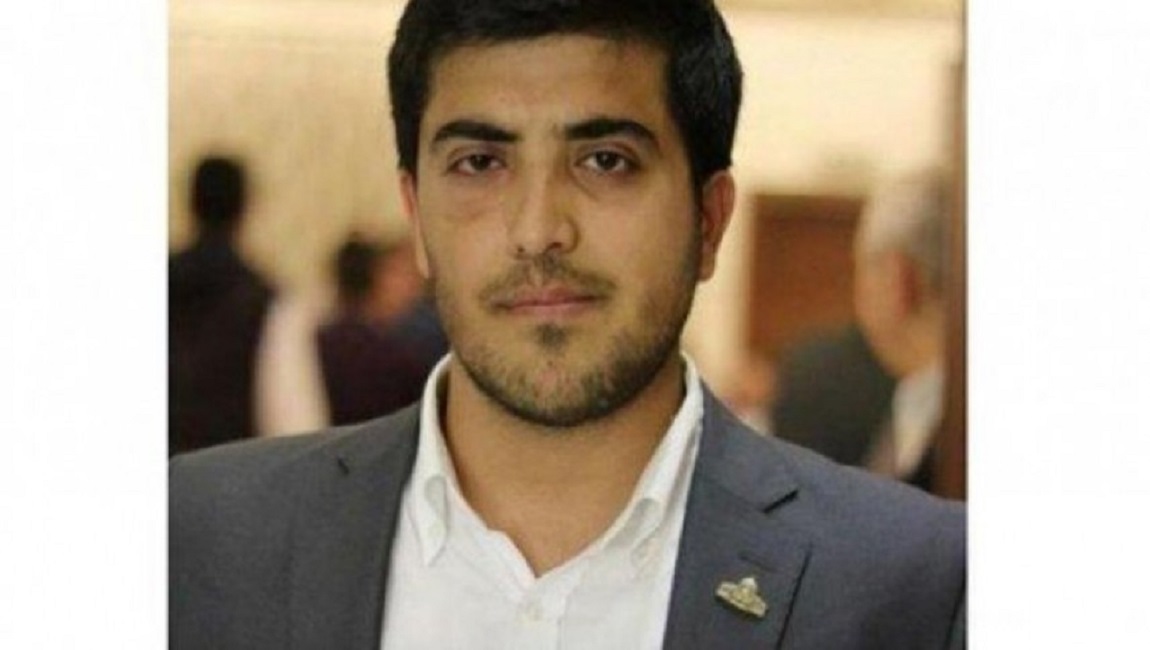
The Commission warns from the deterioration of health condition of the Jordanian detainee Abdulrahman Mary
on . Posted in slider
The Commission of Detainees; Affairs warns from the deterioration of health condition of the Jordanian detainee Abdulrahman Mar'y, 29, who is currently held at Ofer prison.
The commission stated that Mar'y is suffering from very serious health conditions, he has cancer since 2010 and he needs medical follow-up and needs to make regular checkups.
However, he suffering from medical negligence since he was arrested and was never provided any medication.
Occupation forces arrested Mar'y in 2/9/2019 while he was going to relative's wedding in the West Bank through Karamah crossing. The detainee threatened to enter a hunger strike last week in case the Israeli court insists on confirming his administrative detention for 4 months, noting that the next hearing in the court is going to be on October 23. It is worthy to mention that there are 25 Jordanian detainees in Israeli jails, including Hiba Labadi who is continuing her hunger strike since 27 days protesting against her administrative detention.

Detainees' institutions: occupation authorities arrested (514) Palestinians in September 2019
on . Posted in slider
Ramallah: the occupation authorities arrested 514 Palestinian citizens from the occupied territories in September 2019 including 81 minors and 10 women.
Detainees' institutions and Human Rights Organizations (the Commission of Detainees and Ex-detainees' Affairs, the Palestinian Society Prisoner's Club, Al Dameer Association for Human Rights) pointed out that the occupation authorities arrested 175 citizens from Jerusalem, 54 from Ramallah, 100 from Hebron, 36 from Jenin, 25 from Bethlehem, 45 from Nablus, 21 from Tulkarem, 8 from Salfit, 10 from Jericho and 11 from Gaza Strip.
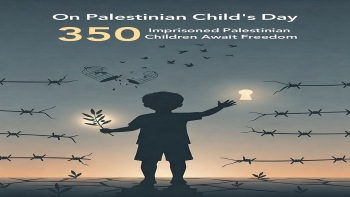
The total number of Palestinian detainees in Israeli jails until September 2019 reached up to 5000, including 43 women, 200 minors and 450 administrative detainees, while 101 administrative detention orders were issued.
Samer Arbeed… from Interrogation cells to Hadassah Hospital in critical condition
Occupation forces arrested Samer Arbeed in September 25, 2019 from his workplace. He got beaten by Special Forces since the first moment of detention. He has been kidnapped and transferred to Al-Maskoubya interrogation center and deprived of lawyer visits.
He was subjected to exceptional measures of torture at Al-Maskoubya interrogation center. Although he told the judge that he has pain in the chest and keep vomiting, the court paid no attention. Then, he has been transferred to hospital on Friday September 27, after he lost consciousness.
Occupation forces did not inform his family and lawyer about his health condition until Saturday September 28, where his lawyer received a phone call from occupation forces telling him that Samer is in the hospital. They did not allow the lawyer to visit him until Sunday, September 29 for ten minutes during which Samer was unable to communicate.
Occupation authorities refused to give his family and lawyer the medical reports, but they knew that has had fractures in the chest, bruises all over his body and kidney failure.
In spite of announcing the serious condition of Samer, occupation forces extended his detention for 5 days and prevented his lawyer again from visiting him until next Monday.
Despite the international criticism and reports issued by committees and bodies of the United Nations, Israeli forces still practicing torture against Palestinian detainees, without taking into consideration the international laws, especially the Anti-Torture convention.
Occupation authorities still hold 43 women including 16 mothers and other 3 under administrative detention in difficult conditions
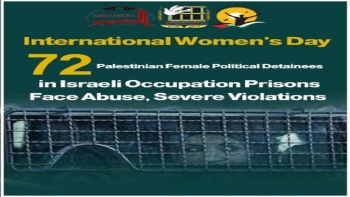
The Israeli occupation authorities still hold 43 Palestinian women at Damoun prison, practicing violations against them since the first moment of detention. Moreover, they do not pay attention to the health conditions of those women, impose high fines and detain them in cruel and difficult living conditions.
Detainees' institutions stated that 16 women of those who are held at Damoun prison are mothers, and other 3 are held under the administrative detention; Shorouq Al-Badan from Bethlehem, Alaa' Fahmi Basheer from Qalqilya and Hiba Al-Labadi.
Hiba has been sentenced to 5 months of administrative detention; she started a hunger strike since 17 days protesting against torture she's subjected to during interrogation.
Reports showed that 11 women are under arrest, where 29 women are sentenced. The longest sentence goes for Shorouq Dwayat and Shatella Ayyad who are sentenced to 16 years of imprisonment, Aysha Afghani and Maysun Jabalai who are sentenced to 15 years in prison.
Many of women detainees suffer from bad health conditions such as: Israa Ja'abees at Damoun prison. She suffers from burns and needs more surgeries to get better.
Administrative detainees continue their battle against detention
9 detainees in the Israeli jails continue their hunger strike against administrative detention during September 2019. Three of them had agreement to define their period of detention; Sultan Khalaf, Naser Jadaa' and Thaer Hamdan.
6 of them still under the hunger strike such as: Ahmad Ghannam since 89 days, Ismail Ali since 79 days and Tareq Qa'dan since 72 days. Hiba Al-labadi, Ahmad Zahran and Mus'ab Hindi started a hunger strike in September.
Hiba started the hunger strike in September 24, 2019, after she was exposed to physical and psychological torture for more than one month during interrogation, where she has been transferred to Damoun prison and then to Jalamah interrogation center.
Ahmad Zahran and Mus'ab Hindi started the hunger strike after the denial of their demands to end their administrative detention.
The administration of prisons and the judiciary system of the occupation still implementing abusive policies against detainees on hunger strike such as: holding them in cells unfit for human life, depriving them of their basic rights, preventing family visits and lawyers' visits.
Detainees' institutions pointed out that the hunger strike is the only way to confront the administrative detention imposed on them by the Israeli occupation, which increased after 2015.
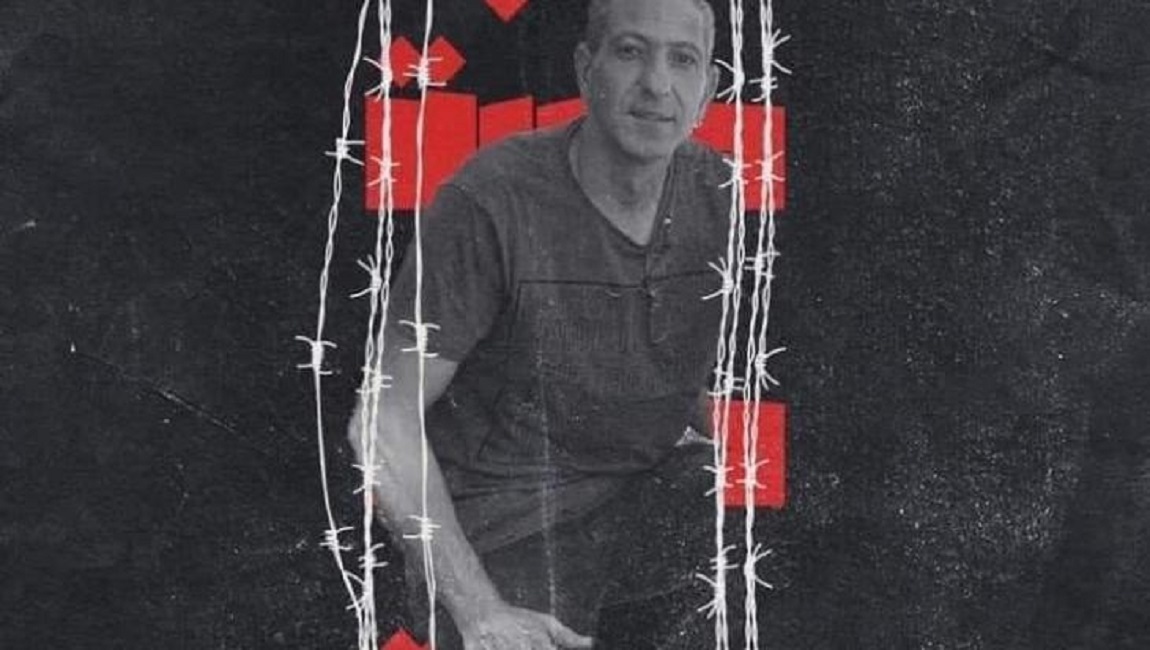
Samer Al-Arbeed … torture victim
on . Posted in slider
Samer Al-Arbeed, 44 Years old, He was arrested by the Israeli army on Wednesday 25 September 2019 in front of his workplace in Ramallah. He was beaten by Special Forces who arrested him according to his wife, who was with him at the time of his arrest. Then he was transferred to the Al- Maskoubia interrogation center – Jerusalem and prevented from seeing his lawyer.
Al-Arbeed was taken to Hadassah Hospital on Friday 27. September 2019 for treatment in critical condition due to the torture he suffered during interrogation. Al- Arbeed lost consciousness and suffered fractures in the rib cage, as a result of torture, bruises and beating throughout his body and severe kidney failure, and was taken to the hospital without telling his lawyer or family.
It turned out that the prisoner Samer Al-Arbeed told the military judge at the court hearing that he felt pain in his chest, and could not swallow and continue to vomit, and that he is suffering from severe health malaise. He was tortured in order to obtain security confessions under torture and that there were bruises on his body, neck, chest and feet, however his detention was extended by the military judge for 8 days on 26 September 2019 and was not transferred to hospital.
On Saturday 28 September 2019, the detainee officer told his lawyer that Samer was taken due to a serious health condition to Hadassah / Al-Issawiya Hospital. When the lawyer went to him, he was not allowed to visit and told that he was in a coma and could not talk. He was put on artificial respirators and suffered fractures in several areas of his body.
His lawyer applied for release because of his serious health condition, but was refused because he faces serious security charges and receives the necessary treatment.
The Yedioth Ahronoth newspaper quoted the Israeli security official as saying that Al- Arbeed had been subjected to an "emergency investigation," allowing torture to be carried out, on the grounds that Al-Arbeed was a "time bomb" and that torture was used to prevent security operations.
Second of October 2019, Nour Al-Arbeed, the wife of the prisoner Samer Al-Arbeed, said, there is no new information about his health condition. The occupation also refuses to give the family medical reports about his health. In addition, the family contacted Hadassah Hospital in particular and refused to give information about the health condition of Al-Arbeed. According to Al-Arbeed’s wife, they are getting information from the Hebrew media
Second of October 2019. His lawyer, Mahmoud Hassan, also explained that the military court rejected the request for the release of Al- Arbeed and his detention will be extended until Thursday. 10. October. 2019
Reports from lawyers on 8th October, said that Israeli authority still not allowed his family and his lawyer to visit him and to meet him at the hospital although he is in a critical health condition, and they extend his arrest until 15th October 2019.
In 1991, Israel signed the Convention against Torture ( Article 2), which obliges States parties to prohibit the use of torture and other unlawful or violent practices against detainees in interrogation rooms. Also torture prohibited in all its forms, according to International Covenant on Civil and Political Rights (Article 7).
Israel permits torture by using the pretext of the so-called security necessities as an exceptional circumstance. Israel violates international law and all international conventions by using torture against Palestinian detainees, which in many cases led to the death of many of them, such as the martyr Arafat Jaradat, Aziz Oweisat and the last martyr Nassar Taqatqa.
According to Article VII and VIII of the Rome Statute of the International Criminal Court, torture is classified as a crime against humanity and a war crime.
What is happening these days to Samer Arbeed confirm that Israeli authority is using torture in a systematic way and a policy towards Palestinian political prisoners.
The Commission of Detainees Affairs calls all the international human rights organizations to immediately investigate in the circumstances of the torture of Samer Al-Arbeed, and calls the United Nations and international institutions to stand up to their responsibilities and hold Israel accountable for its ongoing crimes against Palestinian prisoners.