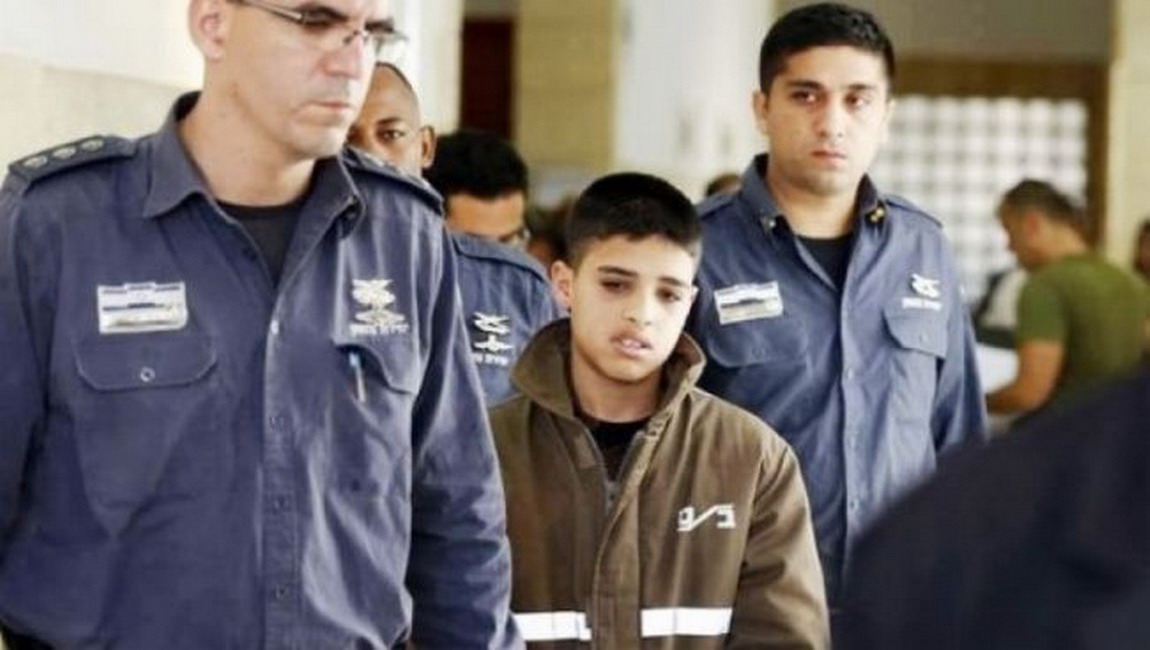
• Commission of Detainees uncovers details of abuses against detainee Mohammad Wajeeh Mahamid from Jenin

    Commission of Detainees uncovers details of abuses against detainee Mohammad Wajeeh Mahamid from Jenin

  • Medical neglect endangers the lives of detainees held in the clinic of Ramla prison

    Medical neglect endangers the lives of detainees held in the clinic of Ramla prison

  •  New Measures Against Administrative Detainees Entrench Ongoing Violations and Undermine International Law

    New Measures Against Administrative Detainees Entrench Ongoing Violations and Undermine International Law

  •  Palestinian Medic Abducted From Gaza During Kamal Adwan Hospital Siege, Killed in Israeli Occupation Prison

    Palestinian Medic Abducted From Gaza During Kamal Adwan Hospital Siege, Killed in Israeli Occupation Prison

  •  Deportation of Two Jerusalemite Prisoners Signals Broader Targeting and Forced Displacement Amounting to War Crimes & Crimes Against Humanity

    Deportation of Two Jerusalemite Prisoners Signals Broader Targeting and Forced Displacement Amounting to War Crimes & Crimes Against Humanity

  • 1
  • 2
  • 3
  • 4
  • 5

Commission of Detainees uncovers details of abuses against detainee Mohammad Wajeeh Mahamid from Jenin

on . Posted in slider

Commission of Detainees uncovers details of abuses against detainee Mohammad Wajeeh Mahamid from Jenin

February 22, 2026

⭕️ On 15/11/2023, he was brutally beaten on his right knee with prison guards’ batons, resulting in a grave injury that left him unable to walk without the aid of crutches. The prison administration intermittently confiscates these crutches, further aggravating his condition.

⭕️ On 29/3/2025, he was assaulted once again on the same knee, leading to extreme swelling. It was later confirmed that the knee had been fractured. Despite the severity of his health condition, the prison administration limited its response to providing pain relief medication only, without providing proper medical intervention or transferring him to an outside hospital, reflecting the continued implementation of a systematic policy of medical neglect against ill detainees.

⭕️ These abuses lay bare the harsh conditions endured by detainees inside detention facilities, where they are denied their most fundamental human rights to adequate medical care and treatment, amid deliberate neglect by prison authorities to their escalating suffering.

Palestinian Medic Abducted From Gaza During Kamal Adwan Hospital Siege, Killed in Israeli Occupation Prison

on . Posted in slider

 Palestinian Medic Abducted From Gaza During Kamal Adwan Hospital Siege, Killed in Israeli Occupation Prison

Commission of Detainees’ Affairs and the Palestinian Prisoner’s Society

February 12, 2026

Ramallah, occupied Palestine – 59-year-old Palestinian paramedic Hatem Ismail Rayyan, who was abducted by Israeli occupation forces from the Gaza Strip on December 27, 2024, during the siege on the Kamal Adwan Hospital, has been martyred in the Naqab (Negev) prison, the Commission of Detainees’ Affairs and the Palestinian Prisoner’s Society said on Thursday evening through information obtained from the PA’s General Authority for Civil Affairs.

Rayyan was arrested from the hospital along with his son Muath, who was injured by occupation forces, and remains behind bars. Rayyan had suffered a stroke before his arrest, according to his family. Nevertheless, he insisted on continuing to perform his humanitarian duty as a paramedic until Israeli occupation forces arrested him during the siege imposed on Kamal Adwan Hospital.

That period witnessed a wide-scale arrest campaign targeting many medical personnel, including Dr. Hossam Abu Safiya, who was arrested on the same day as Rayyan. The targeting of medical staff, along with the siege and destruction of hospitals, has been among the most prominent aspects of the occupation’s crime of genocide in Gaza. Since October 2023, there have been three killings of doctors.

The rise in killings and deaths of Palestinian political prisoners at the hands of the occupation’s prison system and personnel over the past three years comes amid accelerated efforts by to legislate a horrific law to execute of Palestinian prisoners, effectively transforming an extrajudicial execution policy into an officially codified and legalized one.

Rayyan is one of more than 100 Palestinian political prisoners killed in Israeli prisons and army camps since the beginning of the genocide, with the identities of 88 of them announced so far. These killings are the result of widespread torture, systematic starvation policies, medical neglect and abuse, sexual assaults, and a series of deprivation, abuse, humiliation, and detention under inhumane conditions—turning prisons into another arena of genocide and marking the most violent phase in the history of the Palestinian prisoners’ movement.

With the martyrdom of detainee Rayyan, the number of identified Palestinian prisoners who have been killed since the start of the genocide has risen to 88 people, including 52 detainees from Gaza. This brings the total number of identified Palestinian prisoner deaths since 1967 to 325, according to records of the relevant institutions.

Many detainees from Gaza who have died remain victims of enforced disappearance, in addition to dozens who were summarily executed in the field. Images of prisoners’ bodies and remains handed over after the ceasefire have provided clear evidence of systematic extrajudicial executions carried out by Israeli forces against prisoners.

The Commission and the PPS added that, according to available data as of the beginning of February 2026, approximately half of the total number of political prisoners in Israeli prisons are currently held without charge or trial, either under arbitrary administrative detention orders or under the classification of so-called “unlawful combatants.” The total number of Palestinians in Israeli occupation prisons exceeds 9,300, including 3,358 “administrative detainees” and 1,249 classified as “unlawful combatants.”

In conclusion, the Commission of Detainees’ Affairs and the Palestinian Prisoner’s Society hold hold the occupation authorities fully responsible for the martyrdom of detainee Hatem Rayyan. They renewed their call on the international human rights system to take effective and urgent measures to hold Israeli leaders accountable for war crimes committed against prisoners and the Palestinian people, and to end the state of impunity provided by the United States and international powers to the Israeli occupation system over decades—an impunity that has reached its peak during the genocide, despite overwhelming evidence of its commission against the Palestinian people in Gaza, in addition to war crimes and crimes against humanity committed against prisoners and detainees.

Update on the Number of Political Prisoners in Israeli Occupation Prisons – February 2026

on . Posted in slider

🔴 Update on the Number of Political Prisoners in Israeli Occupation Prisons – February 2026
* These figures are based on information provided by prisoners’ institutions and on what was announced by the Israeli occupation’s Prison Service up to February 2026.
* The number of Palestinian political prisoners and detainees held in Israeli occupation prisons exceeded 9,300 people, as of the start of February 2026.
* Among them are 56 female prisoners, including two girls.
* The number of imprisoned children stands at 350 children, held by the occupation in Megiddo and Ofer prisons.
* The number of administrative detainees held without trial or charge has reached 3,358 people, the highest proportion among prisoners who are sentenced, detained, or classified as “unlawful combatants.”
* The number of detainees classified by the occupation as “unlawful combatants” held without trial or charge is 1,249 people. This figure does not include all Gaza detainees held in camps run by the occupation army and classified under this category. It is also noted that this classification includes Arab detainees from Lebanon and Syria.

Palestinian Prisoners’ Institutions

Medical neglect endangers the lives of detainees held in the clinic of Ramla prison

on . Posted in slider

Medical neglect endangers the lives of detainees held in the clinic of Ramla prison

February 22, 2026

⭕️ The Commission of Detainees’ Affairs stated in a recent report that the conditions of ill and injured detainees held in the so-called “Ramla Prison Clinic” are rapidly worsening.

⭕️ These detainees are considered among the most severe medical cases within Israeli prisons. Yet the prison administration persistently procrastinates in transferring them to civilian hospitals for diagnostic tests or to continue their treatment, instead sending them back to the clinic before completing the required stages of medical care.

⭕️ The detainees further report the poor quality of meals provided, the extremely confined yard space allocated for outdoor time, and the lack of essential supplies, factors that intensify their daily suffering.

Deportation of Two Jerusalemite Prisoners Signals Broader Targeting and Forced Displacement Amounting to War Crimes & Crimes Against Humanity

on . Posted in slider

 Deportation of Two Jerusalemite Prisoners Signals Broader Targeting and Forced Displacement Amounting to War Crimes & Crimes Against Humanity

Commission of Detainees Affairs & Palestinian Prisoner’s Society

February 11, 2026

Ramallah, occupied Palestine - The Commission of Detainees’ Affairs and the Palestinian Prisoner’s Society stated that the occupation authorities’ decision to deport two Jerusalemite prisoners, one of whom is a released prisoner, constitutes a dangerous prelude to targeting thousands of prisoners and former prisoners in occupied Jerusalem and the 1948-occupied territories, whether holders of Israeli citizenship or Jerusalem ID cards.

The decision is based on a racist law — the Citizenship and Residency Revocation Law approved by the occupation in 2023 — which is considered one of the most prominent discriminatory legislations aimed at undermining the Palestinian presence in the territories occupied in 1948 and in occupied Jerusalem. Occupation leaders, foremost among them “Netanyahu,” who signed this decision, do not hide their intention to displace and deport Palestinians. Rather, they openly declare their commission of crimes before the eyes and ears of the world, and even compete in doing so.

The two institutions explained that deportations under this discriminatory law are carried out either to the occupied West Bank or to the Gaza Strip. According to the families of the two prisoners, they did not receive any official notification; instead, they learned through media reports about the revocation of citizenship and residency and the issuance of the deportation order.

The Commission and the PPS indicated that this dangerous precedent marks the foundation of a new phase in targeting prisoners and released prisoners in Jerusalem and the 1948-occupied territories, within the framework of a systematic policy that has targeted them and their families through various tools — foremost among them discriminatory legislation affecting different aspects of their lives — with the aim of forcible transfer by tightening restrictions on them using all the tools and policies available to the occupation system.

The two institutions affirmed that Jerusalemites have, even prior to the crime of genocide, faced an escalating series of Israeli policies that constitute a continuation of the Nakba against them. The pace of arrests, demolitions, seizures and confiscations has increased, in addition to deportation orders affecting thousands, particularly from Al-Aqsa Mosque and its surroundings. They added that heavy taxes, fines, and financial penalties estimated at millions of shekels annually, along with organized terror, all constitute tools of systematic forced displacement.

The Commission of Detainees Affairs and the PPS considered that the initiation of implementing this law, along with the occupation’s intention to expand its scope of application, represents a new tool of forced displacement under legal cover.

The two institutions renewed their call on UN bodies to end the state of systematic paralysis regarding the escalating Israeli crimes, which they said represent an extension of the crime of genocide through the collective targeting of Palestinian civilians, the destruction of the foundations of their lives, and pushing them toward forced displacement.

They also stressed that deportation is among the most dangerous of these tools, as it constitutes a crime amounting to a war crime and a crime against humanity under the Geneva Conventions and the Rome Statute of the International Criminal Court.

Critical health conditions and violent crackdowns against detainees in “Negev” Prison

on . Posted in slider

Critical health conditions and violent crackdowns against detainees in “Negev” Prison

February 3, 2026

The Commission of Detainees’ and Ex-Detainees’ Affairs stated in a report released today, Tuesday, following a visit by its attorney, that a number of detainees held in “Negev” Prison are suffering from serious medical conditions.

Among them is detainee Izz al-Din Abu Hamdi (25) from the city of Jenin, who has an injury to his left eye dating back to 2012, which led to loss of vision. After undergoing several surgeries, his eyesight was restored. However, since his arrest, the detainee has been subjected to violent assaults, during which he was beaten on the head and eye, causing him to lose vision once again in his left eye and suffer severe visual impairment in his right eye.
As a consequence, the detainee has fallen repeatedly, injuring his head, back, and knees while heading to the bathroom.
The detainee also complains of intense head pain during the night, forcing him to cry out and moan due to the severity of the pain.
Despite the detainee’s blindness and his urgent need for medical treatment, the prison administration deliberately neglects his condition and fails to provide him with the necessary care.

Meanwhile, detainee Rami Abu Khalil (37) from Nablus suffers from a curvature of the spine. In addition, his medical eyeglasses were broken, and the prison administration refuses to provide him with a replacement. He also suffers from a torn meniscus in his left knee prior to his arrest and was supposed to undergo surgery, but his detention prevented that.

As for detainee Mohammad Waked (47) from the village of Arqa/Jenin, he suffers from inflammation and pain in the chest area as a result of being assaulted by the “Keter” units, who shot him with two rubber bullets at point-blank range.

The detainee said: “Last Tuesday, on 21/1/2026, prisoners in Section 3 of ‘Negev’ Prison were subjected to a brutal crackdown by the ‘Keter’ unit, during which they were beaten and their ribs were broken.”
He added: “The detention conditions are extremely harsh. Since the war began and until now, there has been no improvement in living conditions. They are virtually non-existent, and the life the detainees are forced to endure is unfit (even for dogs).”
It is worth noting that the detainee is serving a 28-year prison sentence, of which he has already completed 25 years.

New Measures Against Administrative Detainees Entrench Ongoing Violations and Undermine International Law

on . Posted in slider

🔴 New Measures Against Administrative Detainees Entrench Ongoing Violations and Undermine International Law

🔴 Palestinian Prisoner’s Society & Commission of Detainees’ Affairs

February 18, 2026

Ramallah, occupied Palestine– The Commission of Detainees’ Affairs and the Palestinian Prisoner’s Society (PPS) stated that the Israeli occupation system’s move to introduce legal amendments that would further tighten detention conditions for administrative detainees—who are held without trial or charge and constitute the largest category among prisoners.

The two institutions affirmed that these amendments constitute a new attempt, under legal cover, to evade the fundamental rights guaranteed by international law to administrative detainees. International law has established clear and strict limitations on the use of administrative detention, preventing it from becoming a tool of collective punishment or open-ended imprisonment without trial.

The Commission and the PPS explained that the issue of administrative detainees has become one of the most significant transformations affecting the composition of the prisoners’ movement in occupation prisons, amid an unprecedented escalation in arbitrary arrest campaigns under what the occupation calls a “secret file.” These campaigns have targeted thousands of citizens since the beginning of the genocide in Gaza. Specialized institutions have recorded the highest historical rate of administrative detainees, currently numbering approximately 3,360 people, including women and children—about 36% of the total number of prisoners in occupation prisons.

The joint statement noted that the crimes and violations endured by administrative detainees, like other prisoners, have led to the killing of 12 administrative detainees since the beginning of the genocide. They are among 88 prisoners who have been martyred during the same period, whose identities have been officially announced. This figure reflects the bloodiest phase in the history of the Palestinian prisoners’ national movement.

The two institutions stressed that since occupying Palestine, the occupation authorities have systematically used arbitrary administrative detention without charges, indictments, or fair trial, based on what is known as the “secret file,” which neither the detainee nor their lawyer is allowed to access. Under Israeli military orders, an administrative detention order can be renewed an unlimited number of times. The order is typically issued for a maximum period of six months but is often repeatedly extended, effectively turning detention into open-ended imprisonment.

Administrative detention targets various segments of Palestinian society across different geographic areas, including university students, journalists, women, former members of the Legislative Council, human rights activists, workers, lawyers, mothers, and former prisoners. Notably, administrative detention has also escalated in the 1948 occupied-territories and in occupied Jerusalem, where detention orders are issued by decision of the occupation’s Minister of Security.

The statement further emphasized that the occupation’s judicial system, including military courts, has long served—and continues to serve—as a central tool in entrenching a system of repression, surveillance, and control, suppressing the Palestinian people and attempting to uproot active members of society while undermining any role that could contribute to self-determination. Following the genocide, these courts have continued functioning as the judicial arm that reinforces the crime of administrative detention and provides legal cover for intelligence agencies to carry out further arrest campaigns.

The two institutions added that over the years, human rights organizations have called for a comprehensive national decision to gradually boycott occupation courts, particularly regarding the handling of administrative detainees’ cases, given the serious national and strategic implications for the future of the prisoners’ cause. They reaffirmed that they still look with hope toward national-level support for this direction in order to take this pivotal step.

In conclusion, the institutions noted that the United Nations had previously called for the dissolution of the occupation’s military courts, with UN experts explaining how the military system has enabled control over the daily details of Palestinians’ lives and entrenched a discriminatory legal structure serving the occupation system.

The two institutions renewed their call to the international human rights system to take effective and urgent measures to hold occupation leaders accountable for war crimes committed against prisoners and the Palestinian people, and to end the state of impunity provided by the United States and international powers to the Israeli occupation system over decades—impunity that has reached its peak with the crime of genocide, despite compelling evidence of its commission against our people in Gaza, in addition to war crimes and crimes against humanity committed against Palestinian political prisoners.

Three detainees in Megiddo Prison facing severe health conditions

on . Posted in slider

Three detainees in Megiddo Prison facing severe health conditions

February 8, 2026

Three detainees in Megiddo Prison are experiencing grave health conditions as a result of deliberate medical negligence by the Israel Prison Service administration, in addition to starvation, deprivation of water, verbal abuse, daily inspections, and the absence of basic personal care supplies.

In this regard, a lawyer from the Commission visited Megiddo Prison and monitored several critical medical cases, including:

Detainee Abdullah Mahmoud Mazhar, 25, from Balata Refugee Camp – Nablus, arrested on 25/09/2025 and held in administrative detention. He has been suffering for nearly two years from an injury to his left eye caused by shrapnel. Prior to his arrest, he relied on a cleansing eye drop on a daily basis; however, this medication is no longer provided, leaving him with a constant burning sensation in his left eye. He also suffers from an old injury to his right hand, where a metal plate was implanted, causing him intense pain. The prison administration refuses to provide him with painkillers on the grounds that he requires surgical intervention. His condition is further aggravated by the continuous use of iron shackles on his hand and his repeated exposure to repression.

Detainee Mohammad Sobhi Hamadneh, 42, from Nablus, detained since 1/8/2024, contracted in February of last year a virus similar to amoebiasis. As a result, he endured severe diarrhea and became unable to breathe normally or stand. His weight dropped to 37 kilograms, and his hemoglobin level reached 5. He later lost consciousness and was transferred to “Emek” Hospital, where he remained for 29 days. He was discharged at his own responsibility after being physically assaulted by a nurse.

Meanwhile, detainee Yaqoub Mahmoud Qadri, 53, from Bir al-Basha – Jenin, has been suffering from thyroid disorders for three years and is in need of surgery. He also complains of herniated discs in his lower back at the fourth and fifth vertebrae, as well as three herniated discs in his neck for more than twenty years, in addition to severe dental pain that requires referral to a dental clinic.
It is noteworthy that Qadri is one of the heroes of the Freedom Tunnel, and he has been detained since 18/10/2003.

Severe Detention Conditions in Negev Prison

on . Posted in slider

Severe Detention Conditions in Negev Prison

February 3, 2025

The Commission of Detainees’ and Ex-Detainees’ Affairs stated in a report issued today that detainees in Negev Prison are enduring extremely harsh conditions.

During a visit by the Commission’s lawyer, detainees described the situation as “something the human mind cannot comprehend.”
In outlining their daily suffering, detainees reported being subjected to beatings, insults, and almost daily searches. They also indicated that most detainees are transferred to cells on a daily basis. Regarding food, they said that the portions provided are very limited.

The Israel Prison Service has imposed further restrictions by allowing detainees to have only one plate and one cup, in addition to enforcing heavy financial fines on detainees.

In the same context, detainee Mo’men Hossam al-Din Touqan, 36, from Jenin, who has been detained since July 8, 2025, is suffering from scabies and fungal infections across various parts of his body. The Negev Prison administration continues to refuse to provide him with the necessary medical treatment or even painkillers. The detainee is also experiencing malnutrition, having lost 15 kilograms of his weight.

ACTIVITIES AND EVENTS

  • The Commission of Detainees Affairs organized a symposium on "The Israeli terrorism and racial laws against detainees". >

    Read More
  • Abu Baker calls on the European Union to act immediately and hold Israel accountable for its crimes against the Palestinian detainees >

    Read More
  • The director of Media Department presents a paper on minor detainees in Brussels Conference >

    Read More
  • The Commission of Detainees' Affairs arranges a specialized workshop on house arrest against children from Jerusalem >

    Read More
  • 1

REPORTS AND ACHIEVEMENTS

  • Update on the Number of Political Prisoners in Israeli Occupation Prisons – February 2026 >

    Read More
  • The Hidden Genocide: Thousands of Palestinian Political Prisoners Suffer Severe Crimes and Extermination Behind Bars - 
December 2025 Briefing >

    Read More
  • UPDATE: Palestinian Political Prisoners in Israeli Occupation’s Custody – December 2025 >

    Read More
  • Electroshocks & Starvation: Escalating Torture of Palestinian Political Prisoners by the Israeli Occupation’s Prison System >

    Read More
  • 1