
- Details
- Written by: Sanaa
- Category: Children Detainees
- Hits: 139
Commission of Detainees' Affairs: Harsh detention conditions devastate juvenile detainees in Megiddo prison
August 2, 2026
The Commission of Detainees' Affairs and Ex-Detainees Affairs stated in a report issued today, Sunday, that juvenile Palestinian detainees held in Megiddo Prison are enduring extremely harsh detention conditions that have robbed them their childhood.
The Commission's advocate reported that detainee Mohammad Arafat Sidqi Sawafta, a 20-year-old from Tubas Governorate who has been detained since 17 June 2025, is battling serious health conditions. He suffers from arthritis, in addition to a stomach virus and another viral infection affecting his eyes. Although he received treatment for the eye infection, his health remains so poor that he is forced to walk with the aid of a walker, reflecting the severity of the medical suffering he continues to endure in detention.
The report further noted that all detainees have experienced significant weight loss as a result of severe malnutrition. The food portions provided are extremely inadequate and fail to meet even their most basic nutritional needs for survival.
Describing the detention conditions, the Commission's advocate stated: "detainees are transferred while handcuffed despite repeated objections to this practice. As a result, signing documents becomes extremely difficult, and they are often unable even to hold the telephone used to communicate during legal visits, turning these meetings into exhausting experiences that fall far short of the minimum standards required for confidential and effective legal consultations."
Detainees in Megiddo also suffer from a severe shortage of cleaning supplies. Shower water is available for only one hour per day, and even then, not on a regular basis. The same applies to the daily outdoor exercise period ("yard time"), which is limited to no more than one hour and is not consistently granted. Drinking water is obtained directly from the taps, while each detainee possesses only a single set of clothing.
The days pass painfully slowly for the detainees, made even harsher not only by the deprivation of their liberty but also by the physical, humanitarian, and psychological suffering they endure. They continue to face hunger, humiliation, and deprivation of the most basic necessities required for a dignified human life.
- Details
- Written by: Sanaa
- Category: Children Detainees
- Hits: 142
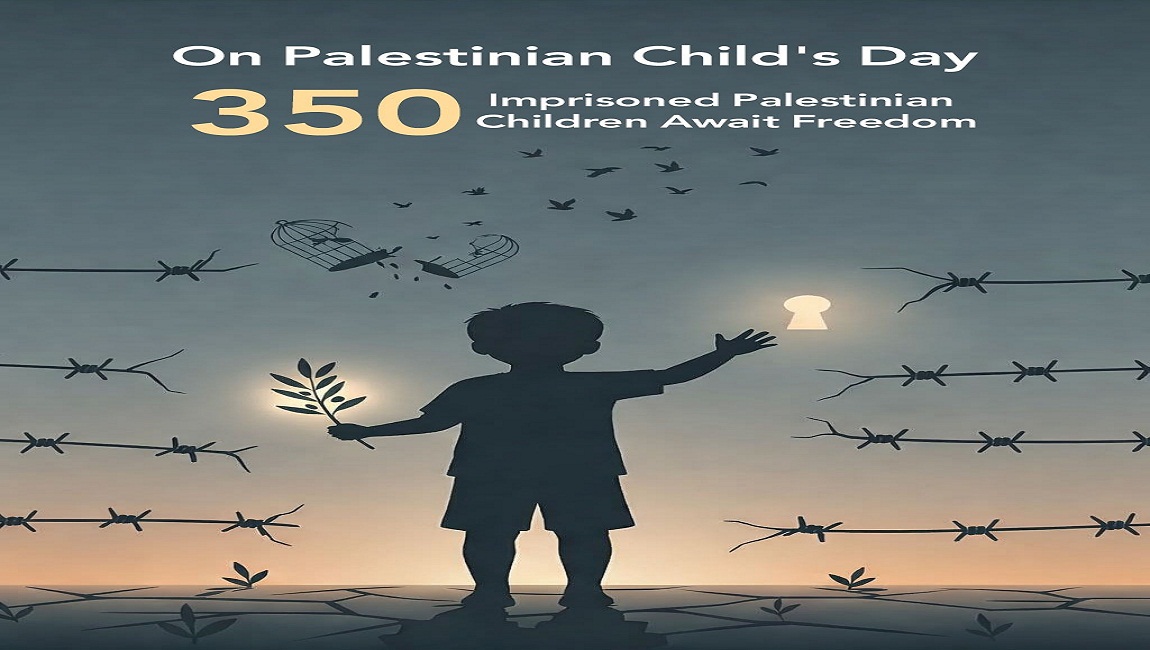
On Palestinian Child’s Day, marked annually on April 5, Palestinian prisoners’ institutions- Commission of Detainees’ Affairs, Palestinian Prisoner’s Society and the Addameer Prisoner Support and Human Rights Association- publish a special report about Palestinian child detainees in the Israeli occupation’s prisons.
Report in Arabic and English Below
#FreeThemAll
#StopTheExecutionLaw
Palestinian Child’s Day Highlights Escalating, Systematic Targeting of
Palestinian Children
Report by the Commission of Detainees’ Affairs, Addameer Prisoner Support and Human
Rights Association, and the Palestinian Prisoner’s Society
April 5, 2026
Ramallah, occupied Palestine - Palestinian childhood has never been outside the scope of Israeli occupation policies; it has been at their core. The detention of children is not exceptional or incidental, but a longstanding, systematic policy—deeply embedded over decades—reflecting a clear intent to subjugate and control an entire generation through organized repression and domination. As of April 2026, there are 350 Palestinian children detained in the occupation’s prisons.
Tens of thousands of Palestinian children have experienced detention—staggering figures that expose the scale and continuity of this practice. Their testimonies point to a comprehensive system of violations, carried out under legal cover and enforced with excessive violence, in disregard of age and of international child rights conventions.
Since the outbreak of the genocide in Gaza in October 2023, occupation authorities have intensified widespread arrest campaigns across the occupied Palestinian territories. These campaigns continue to escalate, targeting all segments of Palestinian society—across cities, villages, and refugee camps—in the West Bank, including Jerusalem, as well as in the Gaza Strip. They unfold within a broader pattern of daily, terrorizing military raids and incursions into homes, streets, and military checkpoints, without distinction by age or social group, reflecting a comprehensive policy of control and sustained repression.
Within this context, the targeting of children stands out as one of the clearest manifestations. Palestinian childhood has entered a more acute phase of direct targeting, where detention remains a systematic, deliberate tool of pressure and control—not an exception, but an enduring policy.
Field data issued by Palestinian prisoners’ organizations and human rights institutions have revealed an unprecedented escalation in the arrest of children. More than 1700 cases of child detention have been documented in the West Bank, including Jerusalem, over a short period of time—an indication of the expanding scope and accelerating pace of this targeting.
In addition, dozens of children from the occupied Gaza Strip have been detained during the genocide, under extremely dangerous conditions that included grave violations and organized crimes, such as enforced disappearance, denial of family and lawyers’ visits, and the complete cut
off of any means of communication with the outside world—making it extremely difficult to determine the actual numbers or the fate of many of them.
These practices constitute a clear and direct violation of the Convention on the Rights of the Child, which prohibits the arbitrary detention of children and requires that detention be used only as a measure of last resort and for the shortest possible period, while ensuring humane treatment and respect for dignity. They also clearly violate Article 37, which prohibits torture and cruel or inhuman treatment, and guarantees the child’s right to maintain contact with their family and to access legal assistance. Moreover, these practices breach the principles of international humanitarian law, particularly the Geneva Conventions, which mandate special protection for children as civilians and prohibit any form of abuse or neglect against them.
The First Moments of Arrest
The first moment of arrest often begins with a violent and sudden attack, usually in the early pre- dawn hours, when occupation forces break into homes without any prior warning. Families wake to the sounds of explosions and doors blown open, accompanied by heavily-armed, often masked, soldiers, shouting and raiding every corner of the house, creating an atmosphere of fear and chaos—especially for children facing such a harsh experience. Children are forced awake from their sleep amid direct threats and a heavy military presence.
During the raid, the child and their family are informed of the arrest decision. In many cases, children—particularly those who are ill or injured—are denied access to their medication or necessary medical care, further exacerbating their health conditions.
Following this, children are taken out of their homes into military vehicles, where they are handcuffed and subjected to strict restraints on their movement. During transport—often involving passage through multiple checkpoints and military facilities—some are subjected to beatings or harsh treatment, in addition to being held for long hours without food or water.
In many cases, children are transferred while blindfolded, deepening their sense of fear and confusion and leaving severe psychological effects from the very first moments of detention. Cases of enforced disappearance of children from the occupied Gaza Strip have also been documented, amid a lack of any information regarding their whereabouts or conditions of detention.
Interrogation Rooms Under Genocide: A Systematic Policy of Retaliation Against Childhood
The interrogation phase is one of the harshest stages in the experience of child detention within occupation prisons, as it is conducted in an environment designed to break their will and extract confessions from them as part of a systematic and consistent policy. Children are held in conditions that lack even the most basic necessities of life and are subjected to prolonged hours of continuous interrogation without the presence of their parents or a lawyer. Testimonies indicate that this stage is often exploited to psychologically intimidate the child and pressure them into confessing under the weight of isolation and fear.
The severity of these violations has escalated dangerously in the context of the genocide, as children have been subjected to even more tragic conditions inside closed and harsh interrogation rooms, where deprivation of sleep and rest is intensified.
These practices reinforce a reality that completely disregards the specific needs of the child and their right to humane treatment, turning interrogation into a repressive tool that extends beyond pre-genocide practices, but under far more brutal and unrestrained conditions.
Thus, the interrogation period—supposed to be a legal procedure—turns into a space of systematic violations aimed at undermining the rights of the child. This policy, which has intensified under the genocide, leaves deep and lasting impacts on children’s lives and futures as a result of continuous pressure and a detention environment that lacks the most basic human rights.
Palestinian Children in Occupation Prisons Face Systematic Violations
Inside Israeli central prisons and military camps, Palestinian children face harsh detention conditions that constitute a systematic violation of their fundamental rights. These conditions include severe overcrowding in poorly ventilated rooms, shortages of clothing and blankets, as well as near-total restrictions on their movement and the confiscation of their personal belongings.
For over two and a half years, children have been completely denied contact with their families, further deepening their isolation and intensifying the psychological impact of detention, amid ongoing raids and repression within the prison sections.
Violations linked to denial of medical care are also escalating amid a severe lack of health services and the denial of appropriate treatment for children. Overcrowding and the lack of hygiene supplies have led to the spread of skin diseases, most notably scabies, while medical responses are often limited to providing inadequate painkillers or delaying treatment, along with the refusal to transfer serious cases to hospitals.
Children also suffer from food deprivation as part of a policy of starvation, which has negatively affected their health and led to the worsening or emergence of new illnesses, within detention conditions that threaten both their physical and psychological well-being.
Detention Without Charge: Enforced Disappearance of Children Behind the Cells of Administrative Detention
Administrative detention of Palestinian children is considered one of the most egregious manifestations of the repressive system, whereby a child – like adults - is held without charge or trial, based on what is referred to as a “secret file.” This policy, long adopted by the occupation as a tool of collective punishment, repression, and control, has undergone a profound shift and historic escalation in the context of the genocide, as prison doors have been opened to thousands of Palestinians under this designation—children among them bearing a significant share of this systematic abuse.
Within this expansion, the number of children held under administrative detention has reached unprecedented levels. Palestinian human rights organizations have never previously recorded such figures, with approximately 180 children currently held under administrative detention—reflecting a clear intent to disappear an entire generation behind bars without any legal justification or defined timeline for release.
A child held under administrative detention lives in a state of continuous psychological torment, facing uncertainty every minute of every day. Detention orders are often renewed at the very last moment before the expected release, depriving both the child and their family of any sense of stability or hope. In the context of the genocide, the number of administrative detainees has surged dramatically, accompanied by total isolation and denial of visits or communication with the outside world—leaving children especially vulnerable to policies of starvation, abuse, and intimidation within the cells.
The targeting of children through administrative detention at this scale confirms that the occupation is in clear violation of all international conventions prohibiting the detention of minors without trial. With the total number of administrative detainees in prisons reaching 3442 it becomes evident that this policy has become a central pillar within the genocide—aimed at dismantling the Palestinian social fabric and targeting childhood itself.
Walid Ahmad: The Palestinian Child Who Starved to Death
Walid Khaled Ahmad, from the town of Silwad near Ramallah in the central occupied West Bank, was a detained Palestinian child who starved to death in Megiddo Prison in March 2025.
His case constitutes a stark example of inhumane and dangerous policies of starvation, deprivation, and ill-treatment against minor detainees, within a broader context of violations affecting prisoners. According to documented medical autopsy reports, the findings revealed severe physical deterioration, including extreme emaciation, and the absence of muscle mass and subcutaneous fat, along with indicators of malnutrition, dehydration, intestinal infections, and infection with scabies—reflecting a gradual health collapse inside detention.
The occupation recently announced the closure of the investigation into the circumstances of his murder under the pretext of “exhausting all legal procedures,” despite the serious findings outlined in the medical reports of starvation and health deterioration. This reflects a continued pattern of disregarding medical evidence and obscuring accountability for crimes committed against child detainees within prisons, in the complete absence of oversight and accountability for such violations.
Testimonies of Children from Inside Occupation Prisons
Child (Q.N.), who was arrested from his home on January 7, 2026, recounts that he was severely beaten before being handcuffed, blindfolded, and transferred to a military camp, then to Megiddo Prison. He reports repeated assaults both during transport and inside the prison.
He confirms that the minors’ section in prison is subjected to frequent raids and beatings, amid severe cold, overcrowding, and a shortage of clothing and insufficient food. They also face restrictions on outdoor time (“fora”) and access to showers, along with a lack of basic supplies and constant disturbing lighting. He further points to the absence of adequate care and the existence of designated rooms for scabies patients under harsh detention conditions.
In the same context, child (M.S.), who was arrested from his home in Bethlehem on February 19, 2025, at the age of just 15, was later placed under arbitrary administrative detention without trial or charge. He recounts that his arrest began at dawn with a home raid, after which he was transferred to Etzion detention center, then to Al-Moskobiya detention center in occupied Jerusalem, where he underwent a 21-day period of detention and interrogation before being transferred to Megiddo Prison.
Since then, he has been held in an overcrowded minors’ section (Section 8), with six to 10 prisoners per room, forcing some to sleep on the floor. There is a clear shortage of blankets, towels, and basic necessities, in addition to a very short daily outdoor period that does not exceed half an hour, with limited facilities including a small number of bathrooms shared among several rooms.
He also suffers from dental pain without receiving treatment, pain relief, or referral to a clinic, amid repeated raids and acts of repression within the section—making the conditions of detention in Megiddo harsh and ongoing, particularly as he is a child held under administrative detention.
Similarly, the detained child (A.K.), aged 17, describes a harsh detention trajectory from the moment of arrest, extending from checkpoints to detention centers and then to closed facilities.
He states: “I was completely stripped of my clothes, handcuffed, blindfolded, and thrown onto the ground,” adding, “I remained sitting on my knees for hours and was subjected to continuous severe beatings.”
He describes this phase as filled with humiliation and both physical and psychological violence, with repeated transfers between unknown detention locations and extremely harsh conditions from the very first hours.
Later, he recounts the brutal detention system inside the prisons, describing his first days: “I was handcuffed to the front and blindfolded 24 hours a day, even while eating and showering,” along with “very poor food in extremely small quantities” and repeated deprivation of hygiene and rest. He also describes weekly repressive raids involving “firing bombs inside the rooms, random beatings, and forcing prisoners to lie on the ground,” in addition to harsh interrogations that included “beatings, threats, electric shocks, and loud music as psychological torture,” within an environment he describes as based on continuous humiliation and systematic violence throughout detention.
Children from the occupied Gaza Strip have not been spared from widespread arrest campaigns during the genocide. Several were detained and transferred to military detention facilities. Among these testimonies is that of child (F.Sh.), born in 2010, who was a school student prior to his arrest.
He recounts being arrested in Khan Younis alongside four others, stating: “They arrested me with four people, and I was the only child among them. Then they handed us over to the army, which transferred us to Sde Teiman camp.” He adds that he was placed in barracks with adult detainees and another child, describing life there as “pure humiliation,” noting that he remained for approximately 40 days “handcuffed in front with iron restraints, without blindfolds.”
He describes daily life inside the camp, stating that “food is scarce and water is scarce,” with meals consisting of “sliced toast bread with a small amount of jam or tuna that does not satisfy hunger.” Sleeping conditions were extremely harsh: “You sleep on a very thin mattress, as if you are lying on stones,” while blankets were only provided at night despite severe daytime cold. Showering was permitted “twice a day for only a few minutes.”
He further recounts that raids and repression occurred “about once a week,” during which detainees were forced to the ground, restrained tightly, and beaten. He states that he was interrogated twice, each session lasting about an hour, noting: “There was no special treatment for me—they treated me like the adults.” He remained in Sde Teiman until his eventual release.
With the continuation of grave violations against Palestinian children in places of detention, coinciding with Palestinian Child’s Day, our organizations affirm that the arbitrary detention of children, the harsh conditions of confinement, and degrading treatment constitute a flagrant violation of international law—particularly the Convention on the Rights of the Child—and amount to war crimes and crimes against humanity.
We stress that our primary demand is the immediate and unconditional release of all detained Palestinian children, as their detention in itself constitutes an unlawful violation. We further call on third states to take urgent action to compel the occupying power to halt all violations against children, ensure their protection, and respect and implement the advisory opinion issued by the International Court of Justice regarding the illegality of the occupation, in addition to enforcing accountability for all crimes committed against Palestinian children.
*********

- Details
- Written by: Sanaa
- Category: Children Detainees
- Hits: 328
Prisoner institutions: On World Children’s Day, the Israeli occupation is carrying out physical and psychological destruction against child prisoners
Since the beginning of the genocidal war, one child prisoner has died of starvation in the occupation’s prisons, and more than 1,630 boys and girls have been arrested from the West Bank, along with dozens of children from Gaza
Full report in English below
to download the file click here

- Details
- Written by: Sanaa
- Category: Children Detainees
- Hits: 691
Minor detainees are taken to visits with heads covered in black bags… a blatant violation of their human dignity
”Minors Held in Harsh Conditions at “Megiddo Prison”
August 13, 2025
The Commission of Detainees and Ex-Detainees Affairs reported that the Israeli Prison Service continues to enforce abusive measures against detained minors, comparable in severity to those imposed on adult prisoners since October 7.
These children are kept in bare, empty cells, placed under heightened isolation, and denied family visits, part of the broader policy that has barred thousands of detainees from seeing their families.
The Commission explained that, in Megiddo Prison, minors are deliberately brought to family visits with their hands and feet shackled, blindfolded, and their heads covered with black bags. Upon entering the visiting room, the blindfold is removed, but their hands remain restrained in a way that makes holding the phone extremely difficult, while their feet remain chained. Despite repeated appeals from legal representatives to remove the restraints during visits, prison authorities consistently refuse.
Following a recent visit to the minors, the Commission’s lawyer reported that the prison cells fail to meet even the most basic international standards for the rights of children and detainees. They are filthy, infested with insects, poorly ventilated, and inadequately lit. The detained minors are subjected on a daily basis to verbal abuse, beatings, solitary confinement, sexual harassment, and collective punishment.

- Details
- Written by: Sanaa
- Category: Children Detainees
- Hits: 736
Palestinian Minors in Megiddo Prison Facing Hunger, Illness, and Abuse
The Commission of Detainees’ Affairs has issued a stark warning regarding the inhumane conditions endured by child detainees in the Israel’s Megiddo Prison.
According to the Commission’s latest report, these minors are subjected to ongoing collective punishment, harsh living conditions, and gross medical neglect. Daily life is marked by poor-quality food, inadequate portions, and the total absence of basic hygiene products.
One of the detainees, Jihad Maher Hijaz (15 years old) from Al-Mazra’a Al-Sharqiya/ Ramallah, shared his recent experience. He described how, about a month ago, he was violently assaulted by a prison guard who struck him in the chest, leaving him with severe pain and a fractured rib.
“It felt like the bone was pushed out of place from the force of the beating. I never received any medical care, and to this day I don’t know if it has healed.”
Hijaz has been in custody since February 15, 2025, without sentencing, and is awaiting a court hearing on July 7, 2025.
Another detainee, Aws Mohammad Theeb, 19, from the town of Silwad, has reportedly lost more than 30 kilograms due to severe food deprivation. He is also suffering from scabies, yet remains untreated. Theeb was detained on September 30, 2024, and is scheduled to appear in court on June 4, 2025.
Further testimony came from Ali Tareq Abdullah Thiab, 18, from Kafr Aqab, who has been imprisoned since May 5, 2024, under administrative detention, which has been renewed three times without formal charges. He described widespread hunger among detainees:
“Food is scarce and never enough. We’ve all lost significant weight. Most days we fast just to save our three small meals and eat them together in hopes of feeling even slightly full. We're not living, we're surviving.”
The Commission is calling for immediate international intervention to end the suffering of these minors and to hold the Israeli prison authorities accountable for systematic violations of children’s rights under international law.

- Details
- Written by: Sanaa
- Category: Children Detainees
- Hits: 613
Palestinian Children Behind Bars
Annual Palestinian Child’s Day Report
April 5, 2025
Report prepared by the Palestinian Prisoner’s Society (PPS), Commission of Detainees’ Affairs & Addameer Prisoner Support and Human Rights Association
Ramallah, Palestine - At least 350 Palestinian children are currently being held by the Israeli occupation in various central prisons and military camps across the country, including more than 100 of them who are incarcerated without trial or charge under Israel’s unlawful military court system.
On the occasion of the Palestinian Child’s Day marked annually on April 5, Palestinian political prisoners’ legal defense and advocacy groups issue this report highlighting key facts and figures surrounding the children held in difficult conditions behind Israeli bars amid the most violent period yet in the Palestinian people’s struggle against the occupation.
Like the rest of the thousands of political prisoners held by the occupation, Palestinian children face a wide array of abuses and rights violations including torture, starvation, deprivation of medical care and systematic maltreatment. These policies lead to the killing of the first child detainee since the start of the genocide in Gaza in October 2023. The minor, 17-year-old Walid Ahmad from the town of Silwad near Ramallah in the central occupied West Bank, was martyred in Israel’s Megiddo prison on March 22, 2025.
In parallel with Israel’s significantly increasing mass arrests since the genocide, children have not been spared. No less than 1,200 cases of arrests among children in the occupied West Bank and Jerusalem have been recorded since October 2023. As for Gaza, Israeli authorities have blocked the ability of Palestinian lawyers and prisoner groups from gaining access to information on the number of cases of arrest among children as well as the number who remain in custody with many subject to the severe crime of enforced disappearance.
Over the past few months, legal teams of prisoner groups have been able to carry out visits to many child detainees in the Israeli prisons of Ofer, Megiddo, and Damon, despite the heavy restrictions imposed on lawyer visits. During these visits, dozens of testimonies were collected from the children, reflecting the level of brutality they are subjected to.
They have been enduring an unprecedented level and scale of abuse behind bars. Severe physical assault by Israeli occupation guards is one of the most prominent abuses taking place inside prisons, including through sudden, violent raids on their cells by specialized prison units leaving many of them wounded. Statistics and documented testimonies indicate that the majority of the children arrested are subject to one or more forms of physical and psychological torture, through a range of systematic methods that violate enshrined protection laws, international standards and child rights agreements.
Additionally, there have been cases of executions of Palestinian children during their arrest as well as documentation of cases where occupation soldiers used children as hostages to pressure family members into surrendering. There are also instances where the occupation’s intelligence services summon the families of the children, forcing them to bring their children for military interrogations. Dozens of children are also being subject to mass field interrogations.
The abuse of Palestinian children begins from the moment of their arrests in the late hours of the night, where dozens of heavily armed soldiers raid Palestinian homes in a violent manner and cause intentional vandalism and destruction before the arrest, terrorizing the child and their entire family.
Many of these children are injured or ill, and during their arrests, occupation soldiers use humiliating and degrading methods that violate their dignity. The majority of them are held in detention centers belonging to the occupation army under tragic conditions, with threats, insults, severe beatings, and deprivation of food and access to restrooms for long hours. This is done in an attempt to pressure them into making confessions. Children are also coerced into signing documents written in Hebrew which they do not read or understand. In addition, dozens of sick and wounded children have been denied medical treatment by prison authorities, including those suffering from chronic and serious diseases and various levels of injuries.
Starvation of Child Detainees
The crime of starvation, which is being perpetrated against prisoners, including children, has taken center stage in testimonies collected after the war on Gaza. Hunger looms over the child prisoners’ sections in an unprecedented manner, to the point where many of them are being forced to fast for days. What the prison administration refers to as meals are, in fact, mere scraps of food. While prisoners have, for decades, established certain standards within the sections with the help of adult prisoner supervisors, this system has effectively ceased to exist. The prison administration now exclusively controls the children, with no oversight as to what happens to them. The care that prisoners had attempted to establish through sacrifice was dismantled by the prison administration, just like all the previous conditions of prison life prior to the genocide.
Walid Ahmed, a 17-year-old child, was arrested from his family home in Silwad on September 30, 2024. During the months he spent in Megiddo prison, he faced systematic crimes, the most notable of which was the crime of starvation, which led to his martyrdom on March 22, 2025. Walid had suffered from scabies (the skin disease) for several months and was subjected to denial of medical care alongside intentional starvation, being completely deprived of treatment until his death. According to the post-mortem medical report of his autopsy, the primary cause of death was starvation.
Dozens of Children Contracted Scabies in Megiddo Prison and Were Denied Treatment
In recent months, child detainees have been suffering from skin diseases, most notably scabies, which has become a health disaster across several central prisons. The occupation has effectively used this disease as a tool to torture prisoners, including child detainees, by depriving them of treatment and of the necessary tools to eradicate the disease. The prison administration deliberately failed to take any measures to limit the spread of the diseases, which can be life-threatening if left untreated.
According to numerous legal team reports, many prisoners, including children, who went for visits had their bodies covered in sores and complained of being unable to sleep due to the intense itching they continuously endure. Despite some efforts by prisoner organizations to pressure the prison administration to provide the necessary tools to prevent the spread of the disease, particularly by ensuring an acceptable level of hygiene, the disease continues to spread widely among the prisoners, leading to the martyrdom of some prisoners in the past months due to the physical complications that arose from this disease.
Over 100 Children Held Without Trial or Charge
Israel’s military court system allows for the detention of Palestinian children without trial or charge under a “secret file” which neither the detainee nor the lawyer have access to in what is referred to as “administrative detention.” Since the genocide, the occupation’s practice of using this pretext to detain and incarcerate Palestinians, including children, has reached unprecedented levels. The number of Palestinians held under administrative detention as a whole reached 3,498 by early April 2025. Among them, there are over 100 children, including some under the age of 15, being held in administrative detention. These figures have never been recorded historically, even during the peak of confrontations in the most prominent uprisings against the occupation.
Occupation’s Military Courts: Part of the Brutality Against Children
The occupation relentlessly continues its crimes against Palestinian children, subjecting them to unjust military trials that lack the fundamental guarantees of due process, just as with all Palestinian political prisoners under Israeli detention. These sham trials serve as a tool for further oppression, where the rights of Palestinian children are systematically violated. Israeli military courts in the West Bank and the occupation courts in Jerusalem have become central instruments in this widespread abuse.
A particularly alarming and inhumane practice is the imposition of house arrest, which has become a prevalent tactic against Palestinian children, especially in occupied Jerusalem. This policy effectively transforms their homes into prisons, confining children to their residences under harsh conditions. The occupation authorities impose house arrest in a manner that isolates these children from their communities, education, and essential support networks, further exacerbating their suffering and denying them the most basic rights afforded to children under international law.
Call for International Action
Palestinian prisoners’ institutions persist in urging the international human rights system to take decisive action to hold the leaders of the occupation accountable for the war crimes they continue to commit against our people. They demand the imposition of comprehensive sanctions on the occupation to isolate it on the global stage, thereby restoring the international human rights system to its rightful role in upholding justice and human dignity. This is essential to break the paralyzing inaction that has allowed the ongoing genocide and aggression to persist unchecked. The institutions also call for the immediate end to the exceptional immunity granted to the occupying state, which has consistently evaded accountability, judgment, and punishment for its systematic violations of international law. It is time to hold the occupation to account and ensure that its impunity comes to an end.
- ENDS.