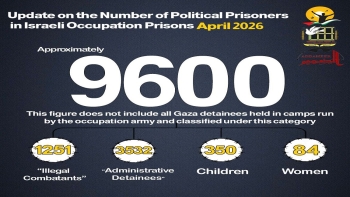
•  April 2026 Update on Numbers of Palestinian Political Detainees in Israeli Occupation’s Prisons

    April 2026 Update on Numbers of Palestinian Political Detainees in Israeli Occupation’s Prisons

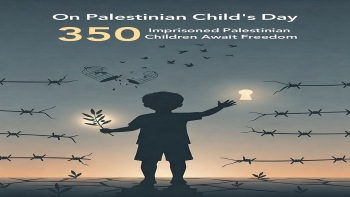
  • Palestinian Child’s Day Highlights Escalating, Systematic Targeting of  Palestinian Children

    Palestinian Child’s Day Highlights Escalating, Systematic Targeting of Palestinian Children

  • After Passing the Death Penalty Law, the EU Must Suspend the EU–Israel Association Agreement and Take Immediate Action

    After Passing the Death Penalty Law, the EU Must Suspend the EU–Israel Association Agreement and Take Immediate Action

  • Israeli Occupation Approves Law To Execute Palestinian Political Prisoners

    Israeli Occupation Approves Law To Execute Palestinian Political Prisoners

  • ONGOING URGENT APPEAL: STOP THE EXECUTION OF PALESTINIAN PRISONERS’ LAW

    ONGOING URGENT APPEAL: STOP THE EXECUTION OF PALESTINIAN PRISONERS’ LAW

  • 1
  • 2
  • 3
  • 4
  • 5

the occupation authorities arrested (504) Palestinians on January 2022

on . Posted in slider

Detainees' Institutions: the occupation authorities arrested (504) Palestinians on January 2022

Ramallah: the Israeli occupation authorities arrested (504) Palestinians on January 2022, including (54) minors under the age of 12, and (6) women. In addition, (96) administrative detention orders have been issued, including (51) new orders and (45) renewals.

This report was issued in participation with detainees' institutions (the Commission of Detainees' Affairs, the Palestinian Society Prisoner's Club, Al Dameer Association for Human Rights and Wadi Hilweh Information Center), where it shows that the number of detainees in Israeli prisons is currently (4500), including (34) women, (180) minors and (500) administrative detainees.

The report monitored the policies and measures implemented by the occupation authorities against detainees, in addition to the conditions lived by detainees.

Occupation's policies and measures

The report reviews part of the violations accompanies the daily arrest process and the conditions of interrogation and detention, which breach many rights guaranteed for detainees in accordance with the international humanitarian law and international human rights law, such as:

Collective arrests, exile and house demolishing

The occupation authorities proceeded in the campaign of arrest in an attempt to confront the struggle of Palestinians. The number of daily arrests reached to (16) cases, which are accompanied by many violations such as breaking through houses late at night and attacking the detainee and his family. Jerusalem witnessed a fierce campaign of arrests which included many towns such as AL-Tour, Issawyeh and Silwan. More than (70) persons have been arrested, under the pretext of throwing balls of snow towards police officers and army forces.

Sheikh Jarrah district witnessed a campaign of collective arrests in 19/1/2022 against 25 Palestinians during the demolishing of Salhyeh family, and then they released the most of them except for 5 persons, who got released in the next day under the condition of exile from Sheikh Jarrah.

Another case in point is the family of Hamed, where the occupation authorities arrested three of them; Hamed Yaseen Hamed (51 years), and his two sons Imad and Ahmad (24 years). They got arrested from their house at Silwad/ Ramallah after breaking through their house at 3:00 am and destroying its belongings.

Live ammunition and arrests at Birzeit University campus

The occupation authorities proceed in their policy in arresting students of Palestinian universities for their student activities, where (10) student have been arrested last month, including (7) from Birzeit University and (3) from The American Arab University. Although this constitutes an extension of the consecutive violations, starting with the killing, arresting and threatening of students, the recurrence of these violations sheds light on the grievousness of occupation's crimes.

A case in point is the student Ismail Barghouthi, who was gunshot in his leg before he was arrested with his colleagues Qassam Nakhla, Abdulhafeth Sharabati, Waleed Harazneh and Muhammad Khateeb. They have been arrested after the occupation army broke though the campus and attacked the students, and this is not the first time to break through the university.

Chasing former detainees and expelling them

The Israeli authorities chase the former detainees after ending their sentences by re-arresting them and impose restrictions against them as a means of threat. A case in point is the former detainees Anas Ewaisat and Basel Obaidat, who have been re-arrested after being released from Naqab prison. They got interrogated for a long time at Maskoubya detention center, and then got released on the condition of deportation from Jerusalem for one week.

Another case in point is the former detainees Areen Zaaneen, Ashraf Hedreh, Ibraheem Zaghal and his father and his brother.


The situations of detainees in Israeli prisons

 Palestinian detainees are subjected to several violations in Israeli prisons that breach many of their rights guaranteed by the international standards of detainees, such as:

The policy of medical ignorance (slow killing)

The Israeli occupation authorities practice a systematic policy in depriving detainees from medical care, and procrastinate in providing the appropriate treatment for sick detainees. Thus, many of them passed away due to this policy, and the sick cases are deteriorating such as the detainee Naser Abu Hmaid (49 years) from Ramallah, who suffers from cancer in the left lung.

Naser entered a coma since the beginning of January and has been transferred to Barzulai Hospital, and his health condition is very critical where he got transferred to the clinic of Al-Ramla prison. He uses a wheelchair and needs help in his daily activities.

The spread-out of Coronavirus increased the risk on detainees' lives, especially those who suffer from chronic diseases, where it spreads the most at Ofer prison with more than (500) cases. Many sick detainees are held at this prison, such as the detainee Amal Nakhla (18 years) who suffers from myasthenia, which is a serious and chronic disease that requires urgent medical care.

The occupation takes advantage from Coronavirus, and uses it as a means of torture and suppression against detainees, which is represented in depriving the detainees' of their rights under the pretext of the spread-out of the virus without taking into consideration the risks on their fate inside the prisons, which constitute a stimulating environment for the spread of diseases, with the absence of the necessary preventive measures.

Extreme cold... annual renewed suffering that affects detainees

Detainees' suffering is renewed every year in the Israeli prisons and increases in the winter, where there is a lack in blankets and clothes.

In such weather conditions, the occupation’s prison administration deliberately disregards the lives and demands of detainees, especially the newly arrested persons, and put them into tragic living conditions. Detainees are forbidden from obtaining blankets and clothes from their families, and they are given light clothes which does not protect them from the cold weather.

Detainees held at detention centers made of caravans are the most affected by the bad weather conditions, such as in Huwara detention center and Itzion detention center, where both centers are not suitable for human life, in addition to the prisons in the desert such as (Naqab, Nafha, beersheba and Remon) prisons.

The prison administration is still disclaiming its responsibilities and duties in providing detainees with the necessary blankets and clothes, which help them to overcome the hard climatic conditions, thus, detainees are forced to buy them at their expenses from the canteen.

Administrative detainees continues in boycotting the occupation's courts until achieving their goals

 (500) Administrative detainees are proceeding in boycotting the military courts as a protest step to end the administrative detention and its arbitrary policy implemented by the occupation against the Palestinian people. The boycott campaign started last January under the slogan of "our decision is freedom", and it was coordinated between administrative detainees and institutions working in the field of detainees and human rights. It is worthy to mention that the Captive movement supported the courageous decision of the administrative detainees of boycotting the courts.

Administrative detainees suffer from the continuous extending for administrative detention orders against them, where (45) orders have been renewed including the representative in the Legislative Council Muhammad Abu Tair for the second time, in addition to Amin Shwaiki, Muhammad Mansour Amal Nakhla, Abdulbaset Maa'tan and Mujahed Najjar. It is worthy to mention that all administrative detainees are committed to the struggle steps for the boycott campaign, where it is necessary to take advantage from this bold step carried out by administrative detainees, to shed more light on the issue of administrative detention and the suffering of detainees, and to internationalize it through communication with human rights organizations.

The detainee Abu Hmeed suffers from a critical health condition

on . Posted in slider

The commission of detainees’ affairs revealed in its reports on Tuesday, that

The latest developments on the health condition of the Nasser Abu Hmeed (49) years old, who suffers from cancer, as where the prison service and prison's clinic is purposely delaying transferring the sick detainee to get his chemotherapy (12) session as his health condition is getting worse each day.

 It is worth the mention that the detainee Abu Hmeed had a surgery where the doctors removed cancer tumor in his lungs last October, where 10 cm of the tumor were removed, and then he was transferred to Ashkelon prison before getting full recovery from the surgery. He still suffers from pains at the place of the surgery, meanwhile the prison service satisfied in giving him some pain killers which doesn’t work.

The detainee stated, through the commission’s lawyer, that “he refused to be transferred to Ramla prison’s clinic (Almarash) to get checkups, due to the difficult and inhumane conditions. He asked to have checkups in Berzalai hospital where it's closer to him.

It is worthy to mention that the detainee Nasser Abu Hmeed from Amary camp, Ramallah, is detained since 2002 and sentenced to7 life sentences and 50 years, where he is 1 of 5 brothers who are sentenced to life imprisonments. Their house was demolished couple of times by the Israeli forces, and their mother was deprived of visiting them for many years.


Torture testimonies for minors during their arrest

on . Posted in slider

قامت هيئة شؤون الاسرى والمحررين بتوثيق شهادات اعتقال لاطفال تعرضوا للضرب المبرح من قبل شرطة الاحتلال اثناء اعتقالهم، ومنهم الطفل محمد علاء عصمت عبيد(15 عاما )/ العيسوية قضاء القدس والذي تعرض لحظة اعتقالة الساعة الواحدة والنصف ظهرا للضرب من قبل رجال الشرطه الاسرائيلية وقيدوه بقيود بلاستيكية محكمة، ليقتادوه بعد ذلك الى منطقة حائط البراق لمدة اربع ساعات متواصلة ومن هناك نقل الى شرطة القشلة، ومن ثم الى سجن المسكوبية وبقي13 يوم وبعد ذلك نقل الى سجن الدامون حيث يقبع هناك .
اما عن حال الاسير الطفل منتصر عيد سبته (18عاما) من بلدة العيسوية قضاء القدس أعتقل من ساحات المسجد الاقصى الساعه الواحدة والنصف ظهرا بعدما تعرض لهجوم وحشي من قبل رجال الشرطة الاسرائيلية ليقتادوه بعد ذلك الى شرطة القشلة، ليحققو معه وهو مكبل اليدين والارجل بقيود بلاستيكية وأنهالوا عليه بالضرب التعسفي وعلى اثر ذلك اصيب بالرضوض والكدمات .
وفي سياق متصل يذكر أن هناك في قسم 4 / الدامون 38 اسيراً ( 35 اسيرا شبل و3 بالغين ).


M.G Abu Baker denounces the recurrent barbaric attacks against the Palestinian youth during arrest

on . Posted in slider

This is how the occupation's army let the dog tear and frighten the lad Malek M'aala

M.G Abu Baker denounces the recurrent barbaric attacks against the Palestinian youth during arrest

16/2/2022

The Head of the Commission of Detainees' Affairs denounced the criminal attacks against the Palestinian people while arresting them, indicating that using this manner contradicts all international charters and treaties that guarantee human rights.

Abu Baker emphasized that the Israeli army use the excessive force and torture intentionally against detainees, especially minors and lads, which is represented in attacking them with intensive beat, drag along the ground, humiliation, cursing, holding them harsh conditions, torturing and threatening them. He asserted that 99% of detained persons are subjected to many kinds of humiliation, suppression and physical and psychological torture.

In this context, the Commission of Detainees' Affairs observed distressful and cruel details for detaining the 19-year-old lad Malek M'aala from Al-Beirah/Ramallah.

The Commission explained the surrounding conditions of detaining the young man, indicating that last Monday the occupation forces broke in to an industrial facility in Al-Beirhah, where Malek was working as a guard. He got surprised and they started to put the laser light towards him and then let the dog bite him. They took him to unknown destination and his family does not know anything about him.


It is worthy to mention that M'aala was working as a guard in order to attain the university fees so he can be able to register for next semester. It is another proof that clarifies the ongoing methods of the occupation aiming at breaking the will of our people to build a successful and stable future. This barbaric act coincides with absence of the role of human rights organizations in defending the minimum rights of our people in building their future and obtaining freedom.


The detainee Ja'abaas has been breathing through her mouth for 7 years and the occupation is still punishing her by neglecting her health conditions.

on . Posted in slider

the commission of detainees’ affairs stated on Sunday, that the injured detainee Israa Riad Ja'abaas (37) years old, from south of occupied Jerusalem, as she entered her 7th year in prison, where she still experience the policy of medical neglect.

The commission also stated that the detainee Ja'abees, who was detained on 11/10/2015 while driving on the road next to (za’aym) as she was accused   with false charges by the occupation authority that she was trying to run over Israelis with her car.

Jebaas’s car got on fire while she’s was in it, where she suffered severe burn all over her body. As a result, she now can only breathe through her mouth, also her fingers were melted and she has several burn marks all over her body.

It was pointed out that the detainee Ja'abees sentenced to 11 years in prison, where she is detained in Damon prison, where she is in urgent need to undergo several surgeries, but that prison service is deliberately procrastinate in providing her with the appropriate medical care.

In the same context, the commission pointed out that the detainee Fayrouz Al Baw (23) years old from A’zarya, is suffering from a leg injury after shooting her by the Israeli soldiers, while arresting her 4 months ago.

 She underwent two surgeries in her leg, and she got interrogated without taking into consideration her difficult health condition.

She got transferred to Ramlah prison, where she was isolated in a dirty cell, and then she has been transferred to Sharon detention center, and then to Damoun prison.    


The Israeli Authorities arrested (467) Palestinians on October 2021

on . Posted in slider


The Israeli Authorities arrested (467) Palestinians on October 2021

Ramallah: The Israeli authorities arrested (467) Palestinians on October 2021 including (135) minors and (10) women.

Detainees' institutions and human rights organizations (the Commission of Detainees and Ex-detainees' Affairs, the Palestinian Society Prisoner's Club, Al Dameer Association for Human Rights and Wadi Hilweh Information Center) issued a report and pointed out that the number of Palestinian detainees in Israeli prisons is nearly (4650) detainees, including (34) women, (160) children and (500) administrative detainees.

The report shows all policies and procedures that were carried out by the Israeli authorities against Palestinian detainees, in addition to situation and conditions of detainees in Israeli prisons, and the fierce attacks against the institutions of civil society by labeling them as terrorist organizations.

The occupation's policies and measures

The report reviews part of the occupation's policies and violations that accompany the daily arrests in terms of the condition of detention and the violations related to courts guarantees, which breaches the rights of detained guaranteed by the international humanitarian law.

The policy of administrative detention

(106) administrative detention orders have been issued on October 2021, including (49) new orders and (57) renewals, where the Israeli authorities resort to this policy as a method to reveal the charge of detainee, aiming at undermining the detainees' demands and protests related to the fateful rights of the Palestinian people.

In 2015, the Israeli Supreme Court legitimized the order of "freezing" the sentence of administrative detention against detainees on hunger strike. However, specialized organizations considered this decision as a tool to reinforce the policy of administrative detention. This decision does not cancel the administrative detention order. Rather, it represents abdicating the responsibility of the prisons' administration and the Israeli Intelligence on the fate of the detainee, and turning him into an unofficial “detainee” in the hospital, and he remains under the guardianship of the “security” of the hospital instead of the jailors.

A change took place in dealing with this order during October, through what happened when the prosecution refused to freeze the administrative detention of the detainee Alaa A'raj despite of his critical health condition. This refusal is based on the medical report issued by the Israeli hospital, which did not confirm the possibility of death.

Another case in point is the case of Kayed Fasfous and Miqdad Qawasmeh whose hunger strike exceeded 110 days. This change appeared obviously after activating the administrative detention against Fasfous and Qawasmeh after freezing it.

To the date of publication of this report, six detainees are continuing their hunger strike in a protest against their administrative detention, and all of them are facing critical health conditions. These detainees are; Kayed Fasfous, Miqdad Qawasmeh, Alaa A'raj, Hisham Abu Hawash, Ayyad Hraimi and Luai Ashqar.

Torture and collective punishment during arrests

The occupation authorities use the policy of daily arrests to confront the struggle of Palestinians and to deprive them of their rights and freedom. The range of daily arrests is about (15) cases, accompanied by storming houses and attacks against the detainee and his family.

This is represented in what happened during storming a sit-in in Jerusalem near Alyousifya cemetery, when the occupation forces chased the young men and prevented them from setting in the place. They arrested many young men and released them in few days, but some of them have been charged of throwing stones and obstruct police work.

The majority of detainees were subjected to beat and torture during the process of arrest, such as the 21-year-old detainee Mu'tasem Rajabi, who was going to the supermarket and got arrested there.

Rajabi said that he has been beaten on his face and mouth and lost his consciousness, and then he had a bleeding from his mouth and got his teeth broken. He added "the forces gone after beating me and then we got surprised when the forces came back and arrested me without any reason, and transferred me Qishle police center. I was held from 10:00 pm – 2:00 am, and they refused to give me first aid". The police released him under the condition of house arrest for three days.

Besides, other cities in Palestine are subjected to night storming, especially at the city of Jenin, where the six detainees who freed themselves belong to.  

Arrests based on using social media

Arresting Palestinians on the basis of social media posts represents a punitive measure to detain the largest possible number of children, women and youths. A case in point is the 17-year-old Omar Hashlamon from Jerusalem, who has been arrested on the basis of posting on Facebook "I am not sure of being so long in the world, but I hope I've made good memories that last forever". He got summoned after minutes for interrogation, and he got astonished to be interrogated under the suspicion of "planning for terrorist acts". He got prosecuted in the next day and then released.

Detainees' conditions in Israeli prisons

The systematic medical ignorance

The occupation’s systematic method of depriving the detainees of real medical care and the deliberate delay in providing treatment to the sick and injured detainees are among the most important ways and methods of weakening the will and the bodies of detainees.

By monitoring the health status of detainees, it becomes obviuos that the level of health care for them is very poor. Thus, dozens of detainees have been martyred since the beginning of the Israeli occupation of Palestine, and the number of patients has increased.

A case in point is the 94-year-old detainee Naser Abu Hmaid from Ramallah.  He suffered from deterioration in his health, particularly from chest and lung pain, and after a long delay, he was subsequently transferred from Ashkelon Prison to Barzulai Hospital in Israel.

It is worthy to mention that the detainee Naser is imprisoned since 2002 and sentenced to life imprisonment and 50 years. He also has four brothers who are sentenced to life imprisonment. Their house got demolished many times and their mother is prevented from visiting them for many years.

Hunger strike to refuse the measures of jailors

The detainees' confrontation of the punitive measures continues since the "freedom tunnel" act, where the strike of the Islamic Jihad detainees, which lasted for 9 days and included (250), constituted an important phase in the confrontation.

Detainees reached an agreement in 21/10/2021 with the administration of prison to fulfill a number of their demands, such as: stopping the fierce attack against detainees, including the Islamic Jihad detainees, canceling the collective punishments imposed on them since the heroic Operation “Freedom Tunnel”, and returning all the isolated detainees, including the leaders of the organizations to the main sections.

Targeting the Palestinian organizations by the occupation authorities

In continuation of undermining the detainees' organizations and Palestinian human rights organizations, the occupation authorities targeted six of Palestinian civil society organizations, labeling them as terrorist organizations. The six organizations are "Addameer Association, the Union of the agricultural work committees, the International Movement of defending the child, Union of Arab Women's Committees and Bisan Research Center", which are leading institutions in defending the rights of Palestinians against the violations of the occupation and exposing its crimes against detainees and children.

It is obvious that this matter will expose thousands of Palestinians, including detainees, to further violations after the occupation deducts their allocations from the clearance funds, and especially that two of these institutions are directly concerned with detainees and children affairs in the occupation prisons.

Despite the efforts of these organizations on the international level to refute this decision, it is a subject of closure and prosecution. The danger of this targeting is not limited to the six organizations only, but it is a step for the occupation to pave the way to target the rest of the Palestinian organizations, especially those concerned with the affairs of political detainees. There is no doubt that these organizations are in dire need for popular support and solidarity, in addition to international support, where the success of the occupation in destroying these organization means that Israel is able to silent the voice of the Palestinian civil society.

In conclusion, the partner organizations confirm that the occupation's practices against the Palestinian people violate the International Humanitarian Law, which bans the acts of collective punishments and revengeful acts against people under occupation.

As article (33) of the Fourth Geneva Convention which applies to the occupied Palestinian territory, gives the Palestinian people, as a people living under occupation, the status of protected persons under the international law, and confirms the Palestinian detainees' rights to be recognized as freedom fighters, in addition to their rights to health care, food and education, and the right to enjoy fair trial guarantees, the right to family visits and respecting their dignity.


Detainees' Institutions: occupation authorities arrested nearly (8000) Palestinians in 2021

on . Posted in slider


Ramallah: the Israeli occupation Forces arrested (8000) during 2021, including (1300) minors and (184) women, in addition to (1595) orders of administrative detention.

Detainees' institutions and human rights organizations (the Commission of Detainees and Ex-detainees' Affairs, the Palestinian Society Prisoner's Club, Al Dameer Association for Human Rights and Wadi Hilweh Information Center) pointed out that there are currently (4600) detainees in Israeli prisons, including (43) women, (160) minors, (500) administrative detainees and (9) representatives of the Legislative Council.

Moreover, the number of sick detainees is (600), including (4) detainees who suffer from cancer and (14) detainees who have tumors in different degrees. A case in point is the (81-year-old) detainee Fuad Shobaki, in addition to (Khaled Shaweesh, Mansour Muwqadeh, Mu'tasem Raddad and Nahed Aqraa). The vast majority of them are held at the clinic of Ramlah prison, and they witnessed the martyrdom of a number their colleagues over the years during their detention. The number of martyrs of the Captive Movement reached to (227), after the martyrdom of the detainee Sami Al-Omour who passed away due to deliberate medical ignorance, in addition to hundreds of former detainees who passed away as a result of illnesses inherited during their detention, such as the detainee Husain Masalmeh.

There are currently (547) detainees who are sentenced to life imprisonment, the highest of whom is the detainee Abdullah Barghouthi, who is sentenced to life imprisonment (67) times. 4 of them have been sentenced in 2021: (Yaser Hattab, Qasem Asafreh, Nsiar Asafreh and Yousef Zhour).

The Israeli occupation continues to implement its systematic policy of retaining martyrs bodies, where (8) martyrs' bodies are currently retained: Anees Doleh, Azeez Ewaisat, Fares Baroud, Nassar Taqatqa, Bassam Sayeh, Saad Gharable, Kamal Abu Waar and Sami Al-Omour.

The number of long-term detainees, who were detained before the Oslo Accord reached 25, the oldest of whom were Karim Younis and Maher Younis, who have been detained since January 1983, in addition to the detainee Nael Al-Barghouti, who is serving the longest detention period in the history of the captive movement. He entered his 42nd year in the prisons of the occupation. It is worthy to mention that he was released in 2011 in an exchange deal, but he got re-arrested in 2014.

The report showed that the Israeli occupation authorities continued in 2021 the systematic policy of torture, where it violated the detainees' rights which are guaranteed by international agreements and treaties.

The operation of the "freedom tunnel" which took place on September 2021 constituted an important transformation on the confrontation inside the prisons and on the abusive measures imposed against detainees, the most prominent of which was the solitary confinement.

The report presents an observation for all policies and procedures implemented by the occupation authorities against Palestinian detainees, in addition to the situations of detainees in Israeli prisons, based on documentation and observation works in addition to field and legal follow-up conducted by the four institutions.


Occupation's policies and measures

The report shows part of the occupation's policies and violations that accompany the daily arrests and interrogation sessions, in addition to the breaches related to trial guarantees which violate detainees'' rights guaranteed in accordance with the International Humanitarian Law and the Human Rights International Law, including:

Daily arrests

The Israeli occupation authorities continue to use the policy of daily arrests in an attempt to confront the Palestinian struggle. The number of daily arrests reached to (22) case, the highest of which was recorded on May 2021 and reached (3100) cases, including (2000) cases from the lands occupied in 1948. The lowest rate of arrests was recorded on August 2021 with (345) cases.

Related to cities, the highest rate of arrests was recorded on Jerusalem since the beginning of the year with (2784) cases, including (750) minors and (120) women.

Occupation authorities escalated targeting towns and refugee camps that witness a continuous confrontation with the occupation. Baita Town was a case in point, where the number of arrest cases exceeded (60) cases on May 2021, and included women and children.

Moreover, released detainees were also targeted, where the majority of them have been arrested under the administrative detention.


Violations during arrests and collective punishments

The daily arrests are accompanied by many measures, starting with breaking into houses late at night, abuse and attacks against the detainee and his family. In addition, the occupation forces use excessive force during arrests, in an arbitrary and collective manner. The collective punishment extends to all stages of detention, such as abusing the family as a means of pressure against the detainee during the investigation process.

A case in point is the 18-year-old detainee Ahmad Abu Snaineh, who was shot with a rubber coated bullet that led to the loss of one of his eyes during storming of Al-Aqsa Mosque.  Besides, the 13-year-old detainee Omar Ajlouni from Jerusalem, who was arrested near Al-Amoud Gate, and he got beaten on his head during arrest which led to injury in the skull.

Furthermore, the Israeli occupation forces have implemented collective punishments against towns and villages, such as Turmusayya, Aqraba, Beer Al-Basha and Jenin city, by intrusions, raids, checkpoints and preventing people from passing by and interrogating them in the field.


Torture during interrogation

The occupation forces pursue the policy of physical and psychological torture in different methods, which are represented in deprivation of sleep during long sessions of interrogation, handcuffing, beating, slapping and cursing. In addition, detainees are threatened of arresting family members, sexual harassment or house demolishing. They are also deprived of using the toilet, taking a shower or changing their clothes. A case in point is the 36-year-old detainee Jalal Jabbareen from Hebron, who was subjected to interrogation at Al-Maskoubya detention center and was tortured for ten days. He underwent an interrogation for (38) hours while being handcuffed and tied to the chair, in addition to depriving him of sleeping, eating and meeting his lawyer. Another case in point is the 41-year-old detainee Hazma Zahran from Jerusalem, who underwent a harsh interrogation at Ofer and Ashkelon detention centers for (56) days, and got subjected to intensive beat, slaps on his face, handcuffing, hanging and he got interrogated for (42) hours continuously.

Arresting women

Palestinian women are subjected to arrests and attacks by the Israeli occupation authorities, without taking into consideration their health, psychological and social situations. Special Forces implemented recurrent and unprecedented suppressive actions against women detainees on December 2021, where they got beaten and threatened and punished with different measures such as depriving them of visits and three of them got isolated.

There are currently (34) women detainees in Israeli prisons, the youngest of whom is the 14-year-old detainee Nufouth Hammad, and the oldest of whom is the detainee Maysoun Mousa. The highest sentence goes to the detainees Shurouq Dwayat and Shatella Abu Ayyad who are sentenced to (16) years of imprisonment, and Maysoun Mousa and Aysha Afghani who are sentenced to (15) years. Moreover, there are (11) mothers in prisons such as Shuroiq Badan, in addition to injured detainees such as the detainee Israa Jabees from Jerusalem, who is sentenced to (11) years of imprisonment.

The occupation authorities still violating Palestinian women's rights in Israeli prisons, contradicting the 1987 United Nations Convention against Torture, which banned the inhumane and degrading treatment, and also contradicts the United Nations Standard Rules for the Treatment of Prisoners of 1955.

Women detainees live in inhumane conditions, where their rights of physical and psychological safety are not taken into consideration and they are subjected to physical attacks and medical ignorance. They are also deprived of enjoying their privacy due to installing surveillance cameras at the prions yard, which force the detainee to stay in their hijab most of the time.

Furthermore, they are deprived of their right to make handicrafts, in addition to being subjected to abuse during the process of transportation to the courts or hospitals, where the transportation process takes long hours, during which they are attacked by the forces of “Al-Nahsun.”

Arresting children

The Israeli occupation authorities does not differentiate between adults and children in arrests and violations, but it was proved that they do this deliberately and take advantage from their sensitive conditions and the effects of detention on their psychology. This contradicts all International Laws regarding the treatment of children, despite of signing the Convention on the Rights of the Child of 1991, which guarantees a special care for children and their rights to health care, education and social integration.

Children are subjected to attacks and mistreatment during arrest. A case in point is the child Muhammad Natsha who was beaten severely during his detention. They are also subjected to humiliation, deprivation of sleep, threating of harming family members and naked inspection. Cases in point are the minors Muhammad Daa'na, Amal Nakhla and Saleem Jwabreh who got tortured and humiliated.

Children are held at three prisons: Ofer, Damoun and Magiddo in harsh conditions, where they are deprived of contacting their families and their right to education.

More than (1300) children have been arrested in 202, (6) of them are arrested under the administrative detention, where (4) of them are still held: Muhamad Mansour, Amal Nakhla, Baraa Muhammad and Ahmad Bayed, which contradicts Convention on the Rights of the Child that stipulates "children detention should be the last resort and for the shortest possible period of time".

Arresting representatives and candidates of the Legislative Council   

The Israeli occupation authorities escalated its violations against the rights of Legislative Council representatives and breached the immunity they enjoy. It is estimated that more than 50% of the representatives have experienced detention in Israeli prisons, and the vast majority of them were arrested under the administrative detention. The occupation authorities also pursued the candidates for the Legislative Council elections, after announcing the holding of legislative elections during the first months of 2021.

The occupation forces arrested tens of candidates, and the arrests were accompanied by night raids on houses, inspections and vandalism of family belongings. They also practiced systematic methods of repression and intimidation, which extended to collective punishments.

The process of targeting and arresting elected representatives is a retaliatory political measure that is not based on any legal justification, and constitutes a flagrant violation of the human, moral and democratic values.

Till the end of 2021, there are currently (9) representatives of the Legislative Council held at the Israeli prisons, such as Marwan Barghouthi, who was arrested since 2002, and Ahmad Saadat, who was arrested since 2006, in addition to Nizar Ramadan, Khaled Tafesh, Yaser Mansour, Ahmad Mubarak, Nayef Rjoub, Muhammad Abu Tair and Hasan Yousef.

Arresting journalists and activists based on posts on social media

Israeli occupation authorities arrested tens on journalists, the oldest of whom is the detainee Mahmoud Issa from Jerusalem, who is sentenced to life imprisonment.     

The intensity of the attacks escalated with the confrontations took place in May 2021, and was concentrated in Jerusalem and increased with the arrest and beating of journalists, Guevara Al-Budairi, Heba Makiya and Zina Sanduqa.

Another prominent case in point is the journalist Raafat Abu Ayesh (27) years old from Naqab, who was arrested while practicing his journalistic work covering a stand for Palestinian students at Beersheba University. He was subjected to many violations such as interrogating him for long hours, handcuffed and tied to the chair, and deprived of meeting his lawyer. The occupation authorities pursue the policy of arresting journalists and activists in an attempt to undermine their social, cultural and political role.

Regarding the detention based on social media activities, tens of arrest cases have been recorded this year. The prosecution justified this kind of detention as posing a threat to the state of occupation, because it contained inciting expressions.


Targeting university students

The occupation authorities launched a fierce attack against the university students in 2021, where tens of them have been arrested in an attempt to prevent them from enjoying their basic rights in participation in political life.  Through using this policy, the occupation intends to intimidate Palestinian students and deprive them of their right to practice and participate in union and student activities, breaching all international charters and treaties which guarantee this right. A case in point is arresting (35) students from Birziet University after visiting the house of the detainee Muntaser Shalabi, and arresting (100) students during 2021.

The policy of administrative detention and the hunger strikes as a response

(1595) orders of administrative detention have been issued in 2021, where this year witnessed an increase in the number of detainees who faced the policies of the occupation. The most prominent policy used by the occupation authorities is the administrative detention "without charge or trial", which is faced by hunger strike. (60) Administrative detainees have entered a hunger strike, in addition to collective hunger strikes conducted by detainees of Islamic Jihad.

The institutions followed many transformations that accompanied the issue of individual strikes, which is related to holding detainees in bad conditions in spite of the deterioration of their health conditions.

The policy of administrative detention was and still is the most prominent policy that forced the detainees to engage in individual strikes, in addition to a number of abusive policies, such as deliberate medical ignorance (slow killing), solitary confinement, arbitrary transfer, and repression and torture in interrogation centers.  

The administration of prisons continued practicing a series of abusive and retaliatory measures against detainees on hunger strike, which constitute part of the systematic policies, in an attempt to force detainee end their strike, such as; depriving them of family visits, prohibiting lawyer meeting, repeated transfer between prisons and isolation in inappropriate cells.

Occupation authorities delay responding to detainees' demands in order to cause them serious health conditions, in which it will be hard for detainees to be treated later.

The military courts were the basic tool to inforce the policy of administrative detention, through breaching the guarantees of fair trial such as refusing to inform the detainee and his lawyer about the charges.

It is worthy to mention that the majority of detainees have suspended their hunger strike after making agreements that determine the period of their detention.

Financial penalties    

The Israeli occupation authorities exploit the Palestinian detainees financially by imposing compensations and fines against detainees and their families. There are two kinds of fines: the first one is related to courts and sentences, the second one is related to penalties, which is imposed by the administration of prison illegally.

The average of fines imposed against Palestinian detainees annually is nearly (15 million shekels).  This sum is transferred directly to fund the Israeli military courts, army and prisons' administration.

Children were the major victims for these fines in 2021, where they got arrested without any charge. They are subjected to many violations which contradict the Convention on the Rights of the Child, where 100% of minor detainees are sentenced to financial penalties. This act became a firm policy to take revenge of Palestinian childhood and make money. The families of the detainees, especially the minors, are forced to pay the financial fines imposed on their children in order to set them free, and if they did not pay the detainee will be held at prison for months or years.

However, there is another aim of the financial fines which is the collective punishment against Palestinian families, through putting them in a real economic crisis. It is worthy to mention that the Palestinian National Authority has stopped paying the fines imposed on detainees since 2014, to prove for the occupying state that we will not be partners in the crime.

The occupation invented a new means to rob the money of detainees, which is represented in financial penalties imposed on detainees, starts from (200 shekels) and reaches to (5000 shekels). This penalty is justified by (breaching the laws of prisons' administration).  


Situation of detainees in Israeli prisons

Palestinian detainees are subjected to different kinds of violations in Israeli prisons, which affect the rights guaranteed to them in accordance with the international standards of detainees.

Medical ignorance and slow killings

Depriving detainees of appropriate medical care and procrastinating in providing treatment are systematic measures conducted by the Israeli authorities to undermine the will and body of Palestinian detainees.

Through monitoring the health conditions of detainees, it is obvious that the level of medical care is very poor, especially with the spread of Coronavirus among detainees. Due to the difficult health conditions in Israeli prisons, tens of detainees have been martyred since the beginning of the occupation, and the number of sick detainees has risen. Therefore, medical care of detainees has become a means of blackmail by the Israeli authorities, where the administration of prisons including jailors and medical staffs have went too far in the methods that increase the torture and suffering against detainees.

Accordingly, (72) detainees have been martyred in Israeli prisons due to medical ignorance since 1967, where there are (600) sick detainees who need intensive health care, (4) detainees who suffers from cancer, such as Naser Abu Hmaid, in addition to (14) detainees at least have tumors in different degrees.

The most prominent medical crime committed in 2021 is the murder of the detainee Sami Al-Omour. He martyred in 18 December 2021 after being subjected to a series of violations during transferring him by the "Bosta" vehicle, and making him wait for long hours before taking him to the hospital. He remained 14 hours at Beersheba prison before transferring him to hospital, neglecting his bad health condition.

Solitary confinement

 The occupation prison service did not ever stop using the solitary confinement policy, where it’s the most prominent systematic policies that the occupation system uses to target the detainees physically and psychologically.

This policy is the most dangerous and cruelest kind of violations practiced by the Israeli authorities against detainees, which has become a systematic method, where the detainee is imprisoned for long time individually in a dark, narrow and dirty cell.

In 2021, the detainees' institutions monitored isolating tens of detainees, which increased after the "operation of freedom tunnel", where the confrontation between the detainees and the prison service became more serious. The prison service isolated a number of detainees, from the Islamic Jihad Group, including the six detainees who were able to set themselves free from Jalbou prison last September, this came as a punishment for their actions. Some sections have been turned into isolation cells, such as section (6) at Negev prison, which was burnt in a refusal of the punishments against the Islamic Jihad detainees. 14 detainees have been isolated in burnt rooms without any belongings for more than 35 days.

It is worthy to mention that the isolation process undergo many levels, where detainees witnessed collective solitary confinement, through turning some sections into cells, by taking out all their belongings. This coincides with the incursions and suppression attacks that took place in all prisons. The last of which, is what happened with women detainees at Damoun prison of unprecedented attacks and torture actions and isolating three of them, such as Shoruq Dwayyat, Marah Bakeer and Muna Qaa'dan, which was followed by a acts of suppression at Nafha prison, where many detainees are still at the solitary confinement as a punishment till the issuance of this report.

The institutions also monitored an increase in the number of detainees, who started to suffer from psychological health conditions, due to this policy in comparison with previous years.


Policy of collective punishment in Israeli prisons

The administration of prisons escalated the use of collective policy against detainees in 2021, especially after the "freedom tunnel" escaping, through collective punishment including detainees of Islamic Jihad. This policy is represented in a series of abusive measures and systematic violations, and imposing a higher level of violence such as isolation, preventing visits and imposing high fines.

Detainees faced this policy through organized struggle methods which took part by all detainees, represented in the hunger strike conducted by the detainees of Islamic Jihad.

Since 2019, detainees witnessed an increase in suppressive measures as one of the most prominent tools of collective punishment policy, during which dozens of detainees were injured. A case in point is the attacks took place at Jelboua prison, especially after the "freedom tunnel" escaping, where tens of detained were subjected to torture and punitive measures. Many detainees got injured, especially those who are held at section (3) after the confrontation escalated between detainees and the administration of prison. The confrontation extended to "Negev" and "Remon" prisons.


Obstacles to regular family visits

Family visit is of the basic rights to detainees guaranteed by international charters, where the international agreements included obvious texts in this regards, and guaranteed the right to receive visitors on a regular basis. A case in point is article (116) of the Fourth Geneva Convention, stipulating "Every internee shall be allowed to receive visitors, especially near relatives, at regular intervals and as frequently as possible. As far as is possible, internees shall be permitted to visit their homes in urgent cases, particularly in cases of death or serious illness of relatives".

Such texts remained as a favor given by the occupation authorities to the Palestinian detainees whenever they decide and taken at any time under feeble pretexts. The occupation authorities have resorted to this measure in order to abuse detainees and used it as a collective punishment procedure, where they prevented the vast majority of detainees from relatives' visits, including their children and parents. Furthermore, the Israeli occupation authorities have legislated laws that contradict the core of the International Humanitarian Law, and invented new methods of physical and psychological torture.  Family visits were turned into a pressure and bargaining method and a means of punishment based on trivial reasons, which made it a double punishment for the detainee and his family, and a complex crime committed by the occupation authorities against them.

Since the outbreak of the "Corona" pandemic on March 2020, the Israeli occupation authorities have stopped all visits under the pretext of avoiding transmitting the infection to detainees. However, it did not take the necessary measures to protect the detainees in its prisons. Instead, it used Corona as an excuse to punish the prisoners and their families, and to deprive the two parties of visiting and meeting, which exacerbated their suffering and anxiety.

(547) detainees are sentenced to life imprisonment  

The number of detainees sentenced to life imprisonment has risen to (547) in 2021, where four new detainees have joined the list: Yaser Hattab, Qassem Asafreh, Nsair Asafreh and Yousef Zhour.

It is worthy to mention that 25 detainees are imprisoned before the Oslo Accord, and these detainees are called "senior detainees", being the oldest detainees in Israeli prisons. On the Palestinian level, they are known as "the fourth group", who were supposed to be released in 2014 under negotiations, but the Israeli government went back on its word and kept the detainees held.  The oldest of which are the detainees Kareem Younes and Maher Younes who were detained in 1983, in addition to Muhammad Tous, Ibrahim Abu Mukh, Waleed Daqqah, Ibraheem Bayadseh, Ahmad Abu Jaber and Samir Abu Ne'meh.

By the end of 2021, the number of detainees who served more than (20) years has risen to (112) detainees, including (35) detainees served from (25) to (35) years, (13) detainees served more than (30) years, and (8) detainees served more than (35) years.

In addition, there are (49) detainees who got released in 2011 and rearrested in 2014, such as the detainee Nael Barghouthi who served (42) years on two terms, which considered the longest term in the history of the Captive Movement.


Education in Israeli prisons

Detainees in Israeli prisons were able to obtain many achievements in 2021, including their education. They pursued to follow a national strategy based on guiding each new detainee to invest in his time in prison and develop his abilities, as part of a confrontation method and to protect themselves from the policies of jailors.

According to the latest information, there are (113) detainees who pursued their education and had their BA degree through Al-Quds University and (564) detainees has the BA from Al-Quds Open University.

As for the master’s program through Al-Quds University/ Abu Dis, the number of detainees enrolled is (49), and the number of those enrolled through the University of Palestine in the Gaza Strip is (44) detainees, in addition to (486) who met the conditions of the Secondary School Exam (Tawjihi).

Liberated sperm (freedom ambassadors)

Many detainees were able to make a new life and have children from behind the bars of Israeli prisons through the liberated sperm, especially detainees with long terms. The detainee Ammar Zeben from Jenin was the first detainee to succeed in this experience on August 2012, which increased the motivation for other detainees and their wives to go through this experience.

Thereafter, sperm liberation operations continued, and detainees' wives gave birth to tens of children. In recent years, attempts have increased and the number of children who came through this procedure is (102), the last of which was the detainee Nahed Hmaid from Gaza Strip, who had twins by the liberated sperm. It must be noted that the occupation authorities, as soon as they know of the birth of a child through a liberated sperm, they begin to take revenge of the detainee who took this step, by imposing disciplinary punishments such as: increasing his term, isolating him, and imposing high fines against him, in addition of taking revenge of the children who came through this procedure by refusing to recognize their birth certificate or ID numbers given to them by the Ministry of Interior. In addition, they are deprived to visiting their fathers in Israeli prisons.

However, there are some cases of liberated sperm children who succeeded in visiting their parents inside prisons, such as the child Milad Walid Daqqa, after conducting a DNA test to prove her lineage, and submitting a petition to the occupation courts to allow her to visit.


Changes on the legal and political levels

In this aspect, the report monitors the Israeli political and legislative attempts regarding Palestinian detainees, which affects the rights guaranteed to them in accordance with the international law.

Designating 6 human rights organizations as terrorist organizations

Since the decision of the Israeli Minister of Army of designating six Palestinian civil society organizations as “terrorist” organizations under the Israeli Anti-Terrorism Law of 2016, and following his decision by a military order granting the army a permission to “pursue them and close their headquarters”, the organizations have been exposed to the imminent danger of closing them and prosecuting their employees. This decision came as an attempt to inforce the occupation policy based on apartheid and systematic discrimination, by imposing control over the Palestinian people and silencing the voices of defenders of their rights.

After two months of designating the six organizations as terrorist organizations: (Addameer Prisoner Support and Human Rights Association, Defense for Children International, Al-Haq, Union of Agricultural Work Committees,  Union of Palestinian Women's Committees and Bisan Center for Research and Development), the organization continue to work to achieve their goals in exposing the racist occupation regime and exposing its crimes, despite the continuous obstacles they face in monitoring and documenting human rights violations.

These organizations contributed since decades in activities of the Palestinian civil society, and participated in improving human and detainees' rights, protecting children, supporting women and reinforcing the research, agricultural and economic aspects.

The occupation's policies in Jerusalem

The judicial advisor of the occupation Avichai Mandelblit and the Minister of Justice Gedon Saer approved the resolution of withdrawing the Jerusalemite ID from the liberated detainee, the lawyer Salah Hamouri on October 2021, under the pretext that he poses a threat to the state and citizens, disloyalty to Israel and affiliation to the Popular Front).

Hamouri was handed an order on September 2020 provides for the intention of the Ministry of Interior in the Israeli Government to withdraw the Jerusalemite ID from him.

It is worthy to mention that Hamouri served nearly nine years in Israeli prisons and he was prevented to enter the West Bank. In 2016, his wife was prevented from entering to Palestine.

The occupation authorities continued to implement the decision of the Minister of the Army issued last year, to cut off the salaries of Palestinian detainees from Jerusalem on the pretext that they “receive monthly salaries from the Palestinian Authority, which encourages them to do terrorist actions and carry out operations,” according to their description.

Through the past two months, the occupation authorities carried out incursions to houses of liberated detainees, and confiscated their money and imposed a seizure on their bank accounts.

The Israeli authorities also cut off the health insurance for more than 30 detainees in Israeli prisons and their families, as a means of collective punishment.

They also imposed house arrest on four detainees: Ya'qoub Abu Asab, Naser Hedmi, Saleem Ju'beh and Majed Ju'beh for 3-6 months, and renewed the house arrest for Abu Asab for 3 months, and turned the detainee Majed Ju'beh to administrative detention.

Draft laws targeting detainees

The occupation government sought to prove its racism through declaring many draft laws and racist legislations, which target to impose abusive measures against detainees. 

It should be confirmed that detainees' cause face dangerous challenges in regard with the legislations declared by the occupation government and the committees formed by a political decision to impose torture and abusive measures against detainees.

The most prominent draft law of the Israeli government is to withdraw the nationality form detainees of 1948 lands as a racist punitive measure, in addition to a draft law stipulates to decrease the number of visits to one visit each year.

The last draft law approved by the Israeli Knesset with the first read on December 2021 which aims at summoning more troops of the Israeli army to the prison service, in order to inforce the presence of the army in prisons to impose more suppression and terrorism against them.

These legislations came in line with a series of military orders issued in the last years, which increased the risk on this cause.

Robbing detainees and martyrs' allocations

It is pointed out that the war against detainees and martyrs' allocations still continuous, where it affects the Palestinian right to struggle and the right to self-determination.

Moreover, the Israeli Cabinet decided to continue the deduction of the Palestinian clearance tax under the pretext that it is paid for detainees and martyrs' families. This act came as an implementation of the law approved by the Israeli Knesset on July 2018, which allows deducting Palestinian allocations that equals the amount paid for detainees and martyrs' families.     


The number of striker detainees increases to three

on . Posted in slider

The commission of detainees’ affairs stated in its report issued on Tuesday that the number of striker detainees got increased to 3,after the detainee Nedal Mazen Balout from hebron ,joined the two striker detainees Hisham Abu Hawash and Loay Alashkar.

The detainee Balout was arrested on 29.10.2021 where he was transferred   to Askelon prison and then to Ofar prison for interrogations.

The Israeli Intelligence convicted Balout with many charges, without any actual evidence, as he was under interrogations for more than 20 hours, daily in his first week of detention. Also he was threatened to be transferred to administrative detention

Protesting against that, the detainee Balout started his hunger strike since his first day of detention, where he has been striking since 28 days.

The detainee Balout mentioned through the commission’s lawyer that he was assaulted and beaten by the occupation soldiers while being arrested where he still suffers from pain and he wasn’t allowed to go to the hospital despite the lawyers' request.

In the same context the two striker detainees Hisham Abu Hawash and Loay Alashkar continues their hunger strike battle refusing their administrative detention, where it marks day (101) for the detainee Abu Hawash and day (46) for the detainee Alashkar.

It is worth to mention that there are almost 60 detainees who went through hunger strike, In a protest against their administrative detention, where we as a commission call on all humanitarian institutions, International organizations and the red cross to do their job towards this fair humanitarian cause and to prevent the slow killing policy that is being practiced by the Israeli occupation against the Palestinian people.


The detainee Fasfous is in critical and dangerous health conditions, where he could lose his life at any time.

on . Posted in slider

The commission of detainees’ affairs stated that the so-called "Israeli Supreme Court" refused the commission’s request to release the striker detainee Kayed Fasfous who’s going through a critical health condition; where this is the fourth plea of the commission, amid a state of ignorance by the Israeli authorities.

The commission warned of health condition of the detainee Fasfous, who’s on hunger striking since 124 days, where he is held at (Barzulai) hospital, as he gets closer to death every minute.

The commission pointed out that the detainee Fasfous is suffering from arrhythmia, low blood pressure, and pains all over his body.  As a result, this situation puts the detainee Fasfous in a very dangerous health conditions.

ACTIVITIES AND EVENTS

  • The Commission of Detainees Affairs organized a symposium on "The Israeli terrorism and racial laws against detainees". >

    Read More
  • Abu Baker calls on the European Union to act immediately and hold Israel accountable for its crimes against the Palestinian detainees >

    Read More
  • The director of Media Department presents a paper on minor detainees in Brussels Conference >

    Read More
  • The Commission of Detainees' Affairs arranges a specialized workshop on house arrest against children from Jerusalem >

    Read More
  • 1

REPORTS AND ACHIEVEMENTS

  • April 2026 Update on Numbers of Palestinian Political Detainees in Israeli Occupation’s Prisons >

    Read More
  • Palestinian Child’s Day Highlights Escalating, Systematic Targeting of Palestinian Children >

    Read More
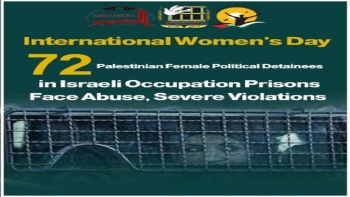
  • International Women’s Day: 72 Palestinian Female Political Detainees in Israeli Occupation Prisons Face Abuse, Severe Violations >

    Read More
  • Update on the Number of Political Prisoners in Israeli Occupation Prisons – February 2026 >

    Read More
  • 1