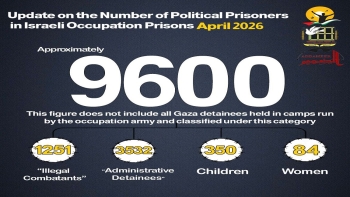
•  April 2026 Update on Numbers of Palestinian Political Detainees in Israeli Occupation’s Prisons

    April 2026 Update on Numbers of Palestinian Political Detainees in Israeli Occupation’s Prisons

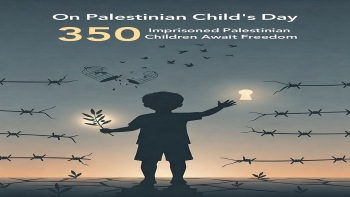
  • Palestinian Child’s Day Highlights Escalating, Systematic Targeting of  Palestinian Children

    Palestinian Child’s Day Highlights Escalating, Systematic Targeting of Palestinian Children

  • After Passing the Death Penalty Law, the EU Must Suspend the EU–Israel Association Agreement and Take Immediate Action

    After Passing the Death Penalty Law, the EU Must Suspend the EU–Israel Association Agreement and Take Immediate Action

  • Israeli Occupation Approves Law To Execute Palestinian Political Prisoners

    Israeli Occupation Approves Law To Execute Palestinian Political Prisoners

  • ONGOING URGENT APPEAL: STOP THE EXECUTION OF PALESTINIAN PRISONERS’ LAW

    ONGOING URGENT APPEAL: STOP THE EXECUTION OF PALESTINIAN PRISONERS’ LAW

  • 1
  • 2
  • 3
  • 4
  • 5

Continuous punitive measures and harassment at “Gilad” camp in Ofer Prison

on . Posted in slider

Continuous punitive measures and harassment at “Gilad” camp in Ofer Prison

November 9, 2025

The Commission of Detainees and Ex-Detainees Affairs reported today, on the harsh conditions faced by Palestinian detainees held in the “Gilad” camp inside Ofer Prison, noting that their suffering worsens daily amid ongoing raids and constant restrictions affecting every aspect of their lives.

According to the Commission’s attorney, the camp accommodates between 100 and 120 detainees, divided among 12 rooms, each holding around 16 detainees.
Detainees endure severe shortages of clothing and hygiene supplies, where shirts and underwear are changed only once a week, while pants are replaced solely when torn, forcing many to wear the same pair for months.

The report pointed out that detainees are compelled to shower with cold water outside their rooms, using dishwashing liquid instead of shampoo. Showers are permitted only during two brief recreation periods in the morning and evening, each lasting no longer than twenty minutes.

In terms of food, detainees said that their daily meals mostly consist of bread and yogurt, with tuna or sausages served only once a week.

The attorney further described the sleeping conditions as extremely difficult, where the metal beds are covered with very thin mattresses, and due to overcrowding, some detainees sleep on the floor. Each detainee receives only one blanket and a towel, which are replaced after several weeks and often in an unclean state.

Detainees also noted that the camp’s weather is bitterly cold, as open iron windows allow wind and rain to enter. Meanwhile, daily raids and punishments continue for trivial or no reasons at all, such as standing near a window or performing group prayers.

According to the report, prison authorities punish detainees with solitary confinement, beatings, and even electric shocks, as was the case with Mohammad Al-Qadi from Al-Jalazon Refugee Camp and Ali Abu Atiya from Beitunia/ Ramallah.

In another incident, Sheikh Jamal Al-Tawil was sprayed with gas for refusing to address an officer with the Hebrew word “Toda” (meaning “thank you”).

Additionally, detainees are forced to kneel during the four daily counts and are prohibited from sleeping after 6 a.m. or staying awake late into the night. They are also shackled by the hands and feet and blindfolded during family visits, forced to walk with their heads bowed toward the ground.

Abu al-Hummos urges the world to halt the approval of the execution law for detainees in Israeli prisons

on . Posted in slider

Abu al-Hummos urges the world to halt the approval of the execution law for detainees in Israeli prisons

November 3, 2025

The Head of the Commission of Detainees and Ex-Detainees Affairs, Raed Abu al-Hummos, called on the international community on Monday morning to take immediate action and pressure the Israeli occupation government to halt the procedures aimed at approving a law that would authorize the execution of Palestinian detainees held in Israeli prisons and detention centers.

Abu al-Hummos stated that the so-called National Security Committee of the Israeli Knesset approved earlier today a bill permitting the execution of individuals accused by Israel of carrying out operations that resulted in the deaths of Israelis. He added that a comprehensive draft has already been prepared for a first reading vote, which is expected to take place within the coming days.
He further explained that the occupation authorities claim the law would apply to those allegedly involved in the events of October 7, 2023, noting that Israel is attempting to fabricate justifications to sway global opinion and legitimize this law as if it were a natural right of Israel.
Abu al-Hummos voiced grave concern over the lives of all Palestinian detainees, warning that the enactment of this law would threaten to end the lives of countless freedom fighters detained in Israeli facilities. He stressed that it would also create a dangerous space for Israeli extremism and racism to carry out executions driven by vengeance and political motives.
He called to the United Nations, as well as to all human rights, humanitarian, regional, and international organizations, and to every free and honorable voice around the world, to rise against this dangerous development and act to stop Israel from committing further crimes against the Palestinian people.
He confirmed that this law, if passed, would represent a blatant violation of international law and humanitarian conventions.
Abu al-Hummos underscored the urgency of rapid international intervention, warning that once the bill is submitted to the Knesset for approval through its three readings, it would come at an unbearable cost and effectively legitimize executions as state policy.
He also pointed out that such a move aligns with the extremist agendas of Netanyahu, Ben-Gvir, and Smotrich, who have all expressed their support for legalizing this measure.

He further revealed that Israel has already been practicing the execution policy, confirming that 81 detainees known to the Commission were executed over the past two years. He added that there are certainly dozens, if not hundreds, of other detainees who were killed after being detained, whose cases Israel continues to conceal. Abu al-Hummos condemned what he described as Israel’s theft of the skin and organs of martyrs, a crime verified through medical examinations of bodies recently returned in Gaza.

Detainees face winter without clothes or blankets

on . Posted in slider

Detainees face winter without clothes or blankets

October 26, 2025

In a report released today, Sunday, the Commission of Detainees and Ex-Detainees Affairs, citing its attorney, stated that detainees in Negev Prison are enduring dire living conditions due to the harsh measures imposed on them by the prison administration. They are continuously subjected to beatings, humiliation, and frequent raids on their cells, in addition to systematic starvation and medical neglect.

According to the Commission, detainees have been complaining about a severe shortage of clothing. They have not yet received winter apparel, even though nighttime temperatures have already begun to drop, leaving them exposed to the biting cold with only the thin garments they currently have.

The Commission added that its lawyer was able to visit the following detainees, who were reported to be in good health:

. Adam Abu Bakr (19), from Zbuba village near Jenin, held under administrative detention.

. Kamal Zarifeh (69), from Nablus, under administrative detention for the third consecutive time, with the current order set to expire on February 10, 2026.

. Anwar Afandi (22), from Nablus, under administrative detention for the fourth time in a row, with the latest extension ending on October 27, 2025.

. Adham Khader (21), from Jerusalem, serving a three-year prison sentence.

The Commission placed full responsibility on the Israeli occupation authorities and the prison administration for the detainees’ safety and living conditions. It urged international human rights and humanitarian bodies to intervene immediately to compel Israel to abide by international laws and conventions, and to ensure that Palestinian detainees receive their basic rights.

With the onset of winter, expected to be exceptionally cold according to global forecasts, the Commission stressed the urgent need to provide proper clothing and blankets and to allow their swift delivery to the prisons.


Update on the number of detainees in Israeli occupation prisons

on . Posted in slider

Update on the number of detainees in Israeli occupation prisons

November 2025

- This data is based on information published by detainees’ institutions and what has been announced by the Israeli Prison Service as of November 2025.

- The number of detainees held in Israeli occupation prisons has exceeded 9,250, the majority of them are detainees held under administrative detention and those who still under arrest. It is important to note that this figure does not include those held in military camps subordinate to the Israeli army.
- According to the Israeli Prison Service, as of November 2025, the number of sentenced detainees reached 1,242.
- The number of female detainees stands at 49, including one woman from Gaza.
- The number of minor detainees has reached 350, held in Ofer and Megiddo prisons.
- The number of administrative detainees stands at 3,368.
- The number of detainees classified as “unlawful combatants” stands at 1,205. This figure does not include all detainees from Gaza who are held in army camps under this same classification. It is worth noting that this category also includes Arab detainees from Lebanon and Syria.

Detainees’ Institutions

Elderly Palestinian Political Detainee from Jenin Killed in Occupation’s Prisons

on . Posted in slider

Elderly Palestinian Political Detainee from Jenin Killed in Occupation’s Prisons

November 2, 2025

Ramallah, occupied Palestine – Israeli occupation officials have revealed the martyrdom of a 63-year-old Palestinian political detainee, Mohammad Hussein Mohammad Ghawadra, who hails from Jenin in the northern occupied West Bank. Ghawadra was arrested on August 6, 2024 - just over a year ago - and was held in “Janot Prison” (formerly Nafha and Ramon) until his martyrdom. The circumstances of his killing remain unclear due to the complete information blackout that occupation authorities continue to impose on Palestinian detainees.

The martyr Mohammad Ghawadra was the father of currently-held administrative detainee Sami Ghawadra, and of released prisoner Shadi Ghawadra, who was deported to Egypt after being freed as part of the prisoner exchange deal concluded earlier this year.

The Commission of Detainees’ Affairs and the Palestinian Prisoner’s Society affirmed that the martyrdom of prisoner Mohammad Ghawadra comes amid ongoing systematic incitement led by the occupation authorities, represented by the fascist minister Itamar Ben Gvir, who is pushing for legislation to execute prisoners and boasts of his crimes against them—at a time when Palestinian prisoners are subjected to one of the most severe manifestations of comprehensive and ongoing genocide within Israeli occupation prisons. The killing of the martyr Ghawadra adds to a series of compound crimes carried out by the occupation system against prisoners, aimed at killing them slowly and destroying them psychologically and physically.

The two institutions noted that following the ceasefire agreement, the Israeli Prison Service escalated its crimes and violations against detainees. Testimonies and statements by released prisoners provided irrefutable evidence of compound torture crimesand field executions inside prisons—evidence that was clearly reflected in the bodies of the martyrs returned as part of the agreement.

With the martyrdom of detainee Mohammad Ghawadra, the number of martyrs of the prisoners’ movement since the start of the genocide has risen to 81 people whose identities have been confirmed, amid the ongoing crime of enforced disappearance affecting dozens of detainees. This phase in the history of the prisoners’ movement is the bloodiest since 1967, with the total number of identified martyred detainees reaching 318 people since the occupation of 1967, according to documented data from prisoner institutions. The number of prisoners whose bodies the occupation continues to withhold—both before and after the war—has risen to 89, including 78 since the war began.

The two institutions stressed that the accelerating pace of prisoner martyrdom at this unprecedented rate confirms that the Israeli occupation’s prison system continues implementing a policy of slow killing—as hardly a month passes without a new martyr among the prisoners. With the ongoing daily crimes inside prisons, the number of martyrs is expected to rise, as thousands of detainees remain held in conditions devoid of the most basic necessities of life, and are subjected to systematic violations including torture, starvation, physical and sexual assault, medical crimes, and the spread of infectious diseases, foremost among them scabies, which has returned to spread among prisoners—alongside unprecedented deprivation policies in their severity and scope.

The institutions also added that the field executions that have targeted dozens of detainees confirm the criminal nature of the occupation system. The images of the prisoners’ bodies handed over after the ceasefire provided conclusive proof of the extent of the crimes committed against them in the field.

The Commission of Detainees Affairs and the Palestinian Prisoner’s Society hold occupation authorities fully responsible for the martyrdom of detainee Mohammad Ghawadra, and renewed their call to the international human rights system to take effective measures to hold the occupation leaders accountable for war crimes committed against the prisoners and the Palestinian people.

The two institutions also called for the imposition of clear international sanctions that isolate the occupation, restore the original role of the international human rights system for which it was established, and end the horrifying state of paralysis that has afflicted it during the genocide. They further demanded an end to the impunity still enjoyed by “Israel,” due to the support of international powers that continue to treat it as an entity above law and accountability.

The Commission of Detainees’ Affairs and the Palestinian Prisoner’s Society

Palestinian Prisoner’s Society & Commission of Detainees’ Affairs

on . Posted in slider

Elderly Palestinian Political Prisoner Killed in Israeli Occupation Prisons

Palestinian Prisoner’s Society & Commission of Detainees’ Affairs

October 20, 2025

Ramallah, occupied Palestine – Israeli occupation authorities have disclosed the martyrdom of 69-year-old Palestinian political prisoner Kamel Mohammed Mahmoud Al-Ajrami who was abducted from the Gaza Strip on October 25, 2024 – less than a year ago.

Al-Ajrami was married and was a father to six children. He passed away at the occupation’s Soroka Hospital on October 10, 2025, after being held in Naqab Prison.

The Commission of Detainees' Affairs and the Palestinian Prisoner’s Society (PPS) confirmed that Al-Ajrami is the latest martyr of the prisoners’ movement killed in Israeli occupation prisons due to systematic practices that have escalated to unprecedented levels since the start of the genocide. His killing, just one day after that of detainee Mahmoud Abdullah from Jenin camp, highlights a new peak in brutality—the bloodiest phase in the movement’s history.

The Commission and the PPS stressed that the crimes committed against detainees are a direct extension of the genocide, as confirmed by the testimonies of hundreds of released prisoners, documenting torture, starvation, medical neglect, and sexual assault. The testimonies of detainees from Gaza remain the most horrifying, reflecting an unprecedented level of brutality by the Israeli prison system.

The two institutions added that the announcement of Al-Ajrami’s martyrdom comes at a time when the minister Itamar Ben-Gvir continues to call for the enactment of a law to execute prisoners, tying the fate of his fascist government to its approval.

With Al-Ajrami’s killing, the number of martyred Palestinian political prisoners since the start of the genocide has risen to 80 people, with dozens of others whose bodies have forcibly disappeared. This period is witnessing the highest levels of bloodshed since 1967. The total number of identified martyred prisoners since 1967 stands at 317 people, while the number of prisoner bodies held by the occupation has reached 88, including 77 bodies held since the war.

The institutions emphasized that the accelerating pace of killing among prisoners in this unprecedented manner proves that the Israeli prison system continues to implement a policy of slow killing. Not a month passes without the death of a new prisoner. With the continuation of daily crimes inside the prisons, the number of martyrs is expected to rise, especially as thousands of detainees are held in conditions that lack even the minimum standards of life, subjected to systematic violations including: torture, starvation, physical and sexual assaults, medical neglect, and the spread of infectious diseases—chief among them scabies—alongside unprecedented policies of deprivation and dispossession.

The institutions also pointed to field executions carried out against dozens of detainees, with the recently returned bodies after the ceasefire providing undeniable evidence of the level of criminality inflicted on them on the ground.

The Commission and the Palestinian Prisoners’ Society hold the Israeli occupation authorities fully responsible for the martyrdom of detainee Al-Ajrami, and renewed their call to the international human rights system to take effective measures to hold occupation leaders accountable for the war crimes committed against detainees and the Palestinian people. They called for the imposition of clear international sanctions that would isolate the occupation, restore the role of the international rights system to its original purpose, and put an end to the horrifying paralysis it has shown during the genocide. They also demanded an end to the exceptional immunity still granted to the occupation by some international powers, as if it were an entity above the law and accountability.

Commission of Detainees Affairs reports two painful arrest testimonies of female detainees by Israeli forces

on . Posted in slider

Commission of Detainees Affairs reports two painful arrest testimonies of female detainees by Israeli forces

November 3, 2025

In a report released on Monday, the Commission of Detainees and Ex-Detainees Affairs highlighted, based on its lawyer’s account, the harrowing experiences of two Palestinian women, Amani al-Najjar and Masa Ghazal, who endured verbal abuse, humiliation, and mistreatment during their arrest by Israeli occupation forces.

Amani al-Najjar, 41, from al-Fawwar village near Hebron, was summoned by an Israeli army officer who contacted her by phone and instructed her to appear at the “Zif” checkpoint. She arrived at around 1:00 p.m., where she was informed that she is under arrest. Her hands were cuffed, and she was taken to the Kiryat Arba detention center for questioning. Later, she was transferred to al-Moskobiya interrogation center, where she remained for 22 days, before being moved to Ramleh, then to the Hasharon transit facility, and finally to Damon Prison, where she is currently held.

Al-Najjar described the Hasharon transit center as extremely harsh. She said she was kept in a small, cold cell under constant camera surveillance, denied food and water, and forced to sleep on a thin mattress that caused her severe back pain. She added that Damon Prison is also in very poor condition, with difficult living circumstances and a shortage of food in both quality and quantity. The prison administration, she said, often punishes detainees for making even the slightest noise, laughing is forbidden, and they are silenced with insults and curses.

It is noteworthy that al-Najjar is a mother of five and works as an English teacher.

The report also detailed the case of Masa Ghazal, 23, from Nablus, who faced similar abuse. Israeli soldiers stormed her home around 1:30 a.m., ransacking its contents. Ghazal recounted:
“I was arrested without being allowed to prepare myself. I was still wearing my prayer clothes, and the weather was freezing. They blindfolded me, tied my hands, and took me to Huwara detention center. Later, I was moved to Ariel detention center, where I was kept sitting on the floor with my hands shackled while being interrogated. Afterwards, I was transferred to Hasharon Prison under very harsh conditions, and later to Damon Prison, where I was subjected to verbal abuse and repeated cell raids. The most recent one occurred on October 13, 2025, when the guards threw our food and bedding on the floor, poured tea on us, and punished us by denying recreation time for a week, simply because we had carved our names on the wall.”
Ghazal added that she has lost about 20 kilograms due to the poor quality and insufficient amount of food.
Currently, 50 Palestinian women are being held in Damon Prison.

Harsh conditions in Megiddo Prison and Continued deterioration since the ceasefire

on . Posted in slider

Harsh conditions in Megiddo Prison and Continued deterioration since the ceasefire


The Commission of Detainees and Ex-Detainees Affairs stated in a report issued today, following a visit to Megiddo Prison, that the situation of prisoners has been steadily worsening since the ceasefire declared in mid-October.
It pointed out that both living and health conditions have become more difficult than in previous periods.

According to the Commission, detainees are subjected to repeated assaults and beatings, while the prison administration frequently transfers them from one cell to another without prior notice, further increasing the state of tension within the sections.
The report also noted that outdoor recreation time is not granted on a daily basis, and that winter clothing has not yet been distributed despite the cold weather.

The Commission’s lawyer added that healthcare services inside the prison are almost nonexistent. Detainees are not permitted to shower daily, only during the short recreation periods, and food portions have decreased in both quantity and quality.
Razors and nail clippers are rarely provided, while hygiene supplies are extremely limited, with each detainee receiving only about a quarter of a plastic cup of shampoo and one roll of tissues per week.

In a related incident, the Commission reported that on June 19, 2025, detainee Abdul Aziz Abu Samra was shot three times by Metsada special units during a raid on one of the prison sections. Prisoners Ahmad al-Ghazawi and Nadeem Zayed were also injured during the same operation, yet none of them were transferred to the clinic or provided with any medical treatment.

The Commission emphasized that these actions represent a clear violation of the detainees’ basic human and legal rights, and urged the concerned international organizations to take immediate action to halt such abuses and to ensure that detainees are held in humane conditions in accordance with international law.

🔴 Palestinian Detainee in West Bank Martyred in Occupation’s Custody

on . Posted in slider

🔴 Palestinian Detainee in West Bank Martyred in Occupation’s Custody

Commission of Detainees’ Affairs and the Palestinian Prisoner's Society

October 19, 2025

Ramallah, occupied Palestine – Israeli occupation authorities have disclosed to Palestinian officials the martyrdom of Palestinian political detainee, 49-year-old Mahmoud Talal Abdullah, from the Jenin Refugee Camp on Sunday while he was held at the occupation’s Assaf Harofeh Hospital.

Abdullah was arrested by occupation forces on February 1, 2025. After his arrest, his health condition deteriorated significantly, and it was later revealed that he had advanced-stage cancer. He was transferred from Megiddo Prison, then Gilboa Prison, and later to the Ramleh Prison Clinic. Despite medical tests confirming his cancer diagnosis at an advanced stage, the occupation refused to release him and kept him in custody until he died. He died just one day after being transferred to Assaf Harofeh Hospital.

Abdullah was a former prisoner who was detained during the Second Intifada in 2002, spending two years behind bars. Before his latest arrest, he suffered from health problems and was undergoing treatment. His re-arrest deprived him of completing his medical care.

The Commission of Detainees’ Affairs and the Palestinian Prisoner's Society hold the occupation authorities fully responsible for the martyrdom of detainee Mahmoud Abdullah. His martyrdom adds to a series of complex crimes committed by the occupation system, as part of a systematic policy of killing prisoners, within the framework of an ongoing genocide against the Palestinian people. This crime is a direct continuation of the testimonies of hundreds of released prisoners, which document systematic torture and violations, considered crimes against humanity and war crimes, confirming that what takes place inside the prisons is part of a part of the genocide.

With the killing of detainee Mahmoud Abdullah, the number of identified martyred Palestinian prisoners since the beginning of the genocide has risen to 79 people, amid ongoing crimes of forced disappearance affecting dozens of detainees. This current phase marks the deadliest period in the history of the prisoners’ movement since 1967. According to documented data from prisoners’ organizations, the number of known prisoner martyrs has reached 316 people, and the number of withheld bodies (before and after the war) has risen to 87 people, including 76 people since the war began.

The two institutions emphasized that the accelerating pace of prisoner killings in this unprecedented manner confirms once again that the Israeli prison system continues to implement a policy of slow killing. Not a month goes by without the announcement of a new martyr among the detainees. With daily crimes ongoing inside prisons, the number of martyrs is expected to rise, especially as thousands of detainees are held in conditions lacking the most basic necessities of life, and are exposed to systematic violations, including: torture, starvation, physical and sexual assault, medical neglect, spread of infectious diseases, particularly scabies as well as unprecedented levels of deprivation and punitive measures.

In addition to all this, there have also been field executions of dozens of detainees. The images of bodies recently returned after the ceasefire serve as clear evidence of the level of brutality inflicted on numerous prisoners in the field.

The PPS and the Commission call on the international human rights system to take effective measures to hold the leaders of the occupation accountable. They called for the imposition of clear international sanctions that would isolate the occupation, restore the true role of the human rights system, and put an end to its paralyzing state of inaction during the genocide. They also demanded an end to the exceptional impunity granted to the occupation by certain global powers—treating it as if it were above the law and accountability.

ACTIVITIES AND EVENTS

  • The Commission of Detainees Affairs organized a symposium on "The Israeli terrorism and racial laws against detainees". >

    Read More
  • Abu Baker calls on the European Union to act immediately and hold Israel accountable for its crimes against the Palestinian detainees >

    Read More
  • The director of Media Department presents a paper on minor detainees in Brussels Conference >

    Read More
  • The Commission of Detainees' Affairs arranges a specialized workshop on house arrest against children from Jerusalem >

    Read More
  • 1

REPORTS AND ACHIEVEMENTS

  • April 2026 Update on Numbers of Palestinian Political Detainees in Israeli Occupation’s Prisons >

    Read More
  • Palestinian Child’s Day Highlights Escalating, Systematic Targeting of Palestinian Children >

    Read More
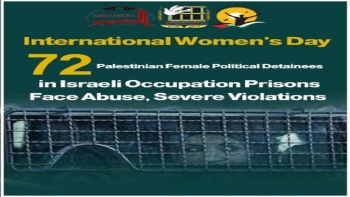
  • International Women’s Day: 72 Palestinian Female Political Detainees in Israeli Occupation Prisons Face Abuse, Severe Violations >

    Read More
  • Update on the Number of Political Prisoners in Israeli Occupation Prisons – February 2026 >

    Read More
  • 1