

Detainee Mohammad Rabee’ Victim of Systematic Medical Negligence
on . Posted in slider
Detainee Mohammad Rabee’ Victim of Systematic Medical Negligence
20/07/2025
Following his recent visit to Gilboa Prison, the lawyer from the Commission of Detainees and Ex-Detainees Affairs reported that Mohammad Osama Rabee’ (21 years old), a resident of Beit Anan near Jerusalem, is being subjected to systematic and deliberate medical negligence, an approach increasingly used to slowly kill Palestinian detainees, as witnessed in numerous similar cases across Israeli prisons.
Rabee’ had undergone lung surgery prior to his arrest in 2021. However, his health condition has significantly worsened since he was brutally assaulted by prison special forces. He now suffers from intense chest pain and severe breathing difficulties, in addition to chronic headaches. Moreover, he has been battling an advanced case of scabies for over a year, although signs of recovery have recently begun to appear.
Despite his critical health condition, Rabee’ has repeatedly submitted requests to the prison administration seeking medical attention and access to the prison clinic. All his appeals, however, have been systematically rejected.
It is important to note that Rabee’ was arrested on 07/03/2024 and was originally sentenced to nine months in prison. Yet upon completing his sentence, he was shocked to discover that his case had been transferred to administrative detention. He is currently serving his second term under this arbitrary and indefinite form of detention.

🔴 The number of Palestinian detainees in Israeli occupation prisons has risen to nearly 10,800
on . Posted in slider
🔴 Issued by Detainees’ Organizations
🔴 The number of Palestinian detainees in Israeli occupation prisons has risen to nearly 10,800
🔴 This figure does not include those detained in military camps subordinated to the Israeli occupation army.
● An update on the total number detainees held in Israeli occupation prisons as of the beginning of July 2025.
● The total number of Palestinian detainees in Israeli occupation prisons has reached nearly 10,800.
This figure does not include those held in military camps subordinate to the Israeli army, representing the highest recorded since the Second Intifada in 2000, based on detainees organizations’ documentation.
● Female Detainees : (50) women are currently held in detention, including two from Gaza.
● Child detainees: As of today, the number exceeds (450) children.
● Administrative detainees: As of the beginning of July, their number reached (3,629), representing the highest percentage compared to the number of sentenced detainees , pre-trial detainees, and those classified as "illegal combatants."
● Detainees classified as "illegal combatants": The number has reached (2,454) individuals. This figure does not include all Gaza detainees held in military camps operated by the Israeli army. It is the highest number since the beginning of the genocide war. This classification also includes Arab detainees from Lebanon and Syria.

Testimonies of Torture: Occupation Soldiers Force Palestinian Detainees to Drink Alcohol, Pour Boiling Water on Them
on . Posted in slider
Testimonies of Torture: Occupation Soldiers Force Palestinian Detainees to Drink Alcohol, Pour Boiling Water on Them
Issued by the Commission of Detainees’ Affairs and the Palestinian Prisoners' Society
Thursday, July 24, 2025
Ramallah, occupied Palestine – Following lawyers’ visits to several Israeli occupation prisons in July 2025, the Commission of Detainees’ Affairs and the Palestinian Prisoner’s Society (PPS) publish a short report highlighting the horrific testimonies gathered from Palestinian political detainees abducted from the occupied Gaza Strip.
These testimonies once again reflect the unprecedented level of crimes they endured during their arrest and interrogation, in addition to their current conditions of detention, which include severe medical violations, systematic starvation, and continuous assault and abuse inside detention centers and camps that have resulted in the killing of dozens of detainees while many others remain victims of enforced disappearances.
The legal teams obtained these brief testimonies during visits to the following detention centers: Naqab (Negev), Ofer, Sde Teiman, and the Russian Compound (Al-Maskoubiyyeh) in occupied Jerusalem.
One testimony included an account of guards pouring boiling water on a detainee’s body, while another described being forced to strip naked and then violently beaten. One detainee reported being forced to drink alcohol, and another was subjected to psychological torture that led him to attempt suicide after an interrogator falsely informed him that his family had been killed — only to later learn that his family was safe. Another detainee was attacked by a police dog, resulting in injury.
Detainee (M.Y): "They poured boiling water onto my body"
"I was arrested in February 2024 and subject to field interrogation, then transferred to Sde Teiman military camp for 25 days, then to a camp near Jerusalem, later to Ofer Prison, and then to Naqab Prison. Throughout this period, I was subjected to all forms of torture. When I was transferred to Naqab Prison, boiling water was poured onto my body.
Today I am held in the tent section of the Naqab Prison, where 27 detainees are held in each tent in extremely harsh conditions. We suffer from constant assault, starvation, and daily humiliation. The food is inedible, so we are forced to fast all day and save it for one meal in the evening. We are also denied treatment, even for scabies, which many detainees have contracted and which has worsened due to the lack of hygiene and the absence of preventive and curative measures."
Detainee (M.Y): "I was stripped naked and forced to drink alcohol"
"I was arrested in February 2024 from the safe passage in Gaza, then transferred to the Gaza envelope area for 25 days, and after that to a camp near Jerusalem, then to Ofer Camp, where I stayed for 60 days, and then to Naqab Prison. In the Gaza envelope, I was beaten with a sharp object, and my wound required [surgical] staples which remained in my head for 119 days, causing a scalp infection. In the camp near Jerusalem, I was completely stripped and forced to drink alcohol."
Detainee (H.N): "I attempted suicide after the interrogator told me my family [in Gaza] had been killed"
"I was arrested in December 2024 via the [Israeli army] Civil Administration checkpoint. I was severely beaten and stripped of my clothes. The interrogator told me that the occupation army had killed all my family members, which caused me a severe psychological crisis that drove me to attempt suicide inside the cell. I would have died if not for the intervention of my fellow detainees. During my visit, the lawyer told me that my family is fine. I broke down in tears and couldn’t believe what I heard."
Detainee (H.D): "We live in constant fear and terror around the clock"
"I was arrested in October 2024 via the [Israeli army] Civil Administration checkpoint. I was subject to field interrogation, then held in the barracks in the Gaza envelope for 110 days before being transferred to Naqab Prison. We continue to live under extremely harsh conditions, facing daily inspections, assaults, and humiliation. They force us to sit on our knees with our hands behind our backs during what they call the 'count – security check.' Diseases are widespread, and fear and terror never leave us, in addition to being denied medical treatment and deliberately starved."
Detainee (A.W): "I suffered severe eyesight damage due to beatings"
"I was arrested in February 2024 from a school in Khan Younis, where the occupation army arrested more than 100 citizens. I was transferred to the barracks for 23 days, then to a detention center near Jerusalem, then to Ofer Prison, and later to Naqab Prison. During the transfer from Ofer to Naqab, I was struck on the head with handcuffs, which caused severe impairment in my left eye, persistent headaches, and loss of balance. I also contracted scabies, which returned after I recovered due to the unsanitary conditions."
Detainee (Kh.Y): "My leg was broken and I received no treatment"
"I was arrested in December 2023 from a school in the Shuja'iyya neighborhood after displacement. I was transferred to the barracks in the Gaza envelope, then to Naqab Prison. During the arrest, I was severely beaten, which caused a fracture in my right ankle joint. I did not receive any treatment despite the intense pain — not even painkillers. I suffer from difficulty walking and constant pain."
Detainee (H.R): "I was attacked by a police dog that tore into my foot"
"I was arrested in October 2024 from Rafah and subject to field interrogation, then stripped of my clothes. A police dog attacked me and bit into my foot. I was later transferred to the Gaza envelope, where I was subjected to 'disco interrogation' method* and other interrogations by intelligence officers, then to Ofer camp, and then to the Russian Compound (Al-Maskoubiyyeh) cells, where I was placed in solitary confinement for four months and subjected to military interrogations in Asqalan. Just a week ago, I was brutally beaten with batons."
*Disco interrogation is a method employed by the Israeli prison forces and was used in Guantanamo to pressure to detainees to make confessions, in which they expose the detainee to very loud music or sounds for prolonged periods of time causing disorientation.
Key Facts About Palestinian Political Detainees Abducted From Gaza:
- Since the genocide in October 2023, human rights organizations have been unable to obtain the exact number of those abducted from Gaza due to the crime of enforced disappearance. However, the number is estimated to be in the thousands.
- The testimonies of detainees taken from Gaza are the most severe, given the scale of crimes committed against them.
- The Israeli occupation has established new camps specifically for holding detainees abducted from Gaza. The most prominent include: Sde Teiman, Anatot, Ofer Camp, Naftali, and the Rakevet section under Ramla Prison.
- The majority of detainees taken from Gaza are held in Naqab Prison and Ofer Prison/Camp.
- According to the Israeli Prison Service, as of early July 2025, the number of Gaza detainees classified as "unlawful combatants" (held without trial or charge) reached 2,454 people— the highest figure recorded since the beginning of the genocide. This number doesnot include those held in army camps, but only those under the management of the Israeli Prison Service.
- The "Unlawful Combatant Law" serves as a main tool for legitimizing the crime of enforced disappearance. It also fundamentally violates international law in both its structure and substance and facilitates the widespread use of torture against Gaza detainees.
In this context, the Commission of Detainees’ Affairs and the Palestinian Prisoners’ Society affirm that the occupation continues its extermination and crimes in full view of the world, without any meaningful change that might contribute to halting the genocide and the comprehensive aggression against our people. One form of this is the ongoing crimes against prisoners and detainees. Moreover, the continued passage of time while the genocide goes on means that the state of paralysis afflicting human rights organizations has gone beyond mere failure — prompting a necessary question about the purpose of the human rights system itself, especially as the reality of Israeli exceptionalism on the international stage continues to expand.
----ENDS---

Palestinian Political Detainee from Jenin Martyred 7 Days After Arrest
on . Posted in slider
Palestinian Political Detainee from Jenin Martyred 7 Days After Arrest
17 July 2025
Commission of Detainees' Affairs & Palestinian Prisoner's Society
Ramallah, occupied Palestine - A 53-year-old Palestinian political detainee, Sameer Mohammad Yousif al-Rifai, has been martyred in the Israeli occupation’s custody, just seven days after his arrest from his home in the village of Rummaneh in Jenin in the northern West Bank, on July 10.
The Palestinian Commission of Detainees’ Affairs was informed of the development this morning, July 17. Al-Rifai was a husband and a father of five. He was scheduled to have his first Israeli military court session today, at the Salem military court near Nablus. According to medical reports provided by his family, he suffered from heart problems prior to his arrest and required continuous medical follow-up and care.
Al-Rifai now joins the long list of martyrs of the prisoners’ movement, who have died or were killed as a result of the systematic crimes carried out by the Israeli prison system in an unprecedented manner since the start of the ongoing genocide in Gaza - foremost among them: torture, medical neglect, and starvation.
The Commission and the Palestinian Prisoner’s Society (PPS) hold the Israeli occupation fully responsible for his death.
They added that with the death of detainee Al-Rifai, the number of identified martyred Palestinian political prisoners since the start of the genocide has now risen to 74 people. This number comes amid the continued crime of enforced disappearance, making this period the bloodiest in the history of the prisoners’ movement. Accordingly, the total number of identified martyrs of the prisoners’ movement since 1967 has now risen to 311 people as of today.
The Commission and PPS stress that the increasing number of prisoner killings and deaths has become an inevitable outcome, growing ever more dangerous as thousands of detainees remain imprisoned in Israeli jails and continuously subjected to systematic crimes, most notably: torture, starvation, various forms of assault, medical neglect, sexual violence, and the deliberate imposition of conditions that lead to the contraction of serious and contagious diseases, especially scabies, in addition to unprecedented policies of deprivation and abuse.
The death of detainee Al-Rifai constitutes a new crime added to the record of the Israeli system of brutality, which employs all forms of violence aimed at killing prisoners—a manifestation and extension of the ongoing genocide.
The Commission and the PPS renew their call on the international human rights system to move forward in taking effective decisions to hold Israeli leaders accountable for the war crimes they continue to commit against the Palestinian people. They also called for the imposition of sanctions on Israel to isolate it internationally, and to restore the credibility and core purpose of the human rights system, by ending its paralyzing failure during the genocide and revoking the exceptional impunity granted to Israel, which has placed it above accountability, justice, and punishment.

*Comprehensive Update on the Number of Palestinian Detainees in Israeli Occupation Prisons – As of Early June 2025
on . Posted in slider
Issued by Detainees’ Organizations
*Comprehensive Update on the Number of Palestinian Detainees in Israeli Occupation Prisons – As of Early June 2025
● The number of Palestinian detainees in Israeli occupation prisons has surpassed 10.400, a figure that excludes those held in Israeli military camps, indicating that the actual number is likely even higher.
● Female Detainees : As of June 4, 2025, there are 49 Palestinian women imprisoned, including 8 held under administrative detention without charge or trial.
● Children: Over 440 Palestinian children remain in Israeli prisons.
● Administrative Detainees: The number of Palestinians held under administrative detention, without any formal charges, has reached 3,562.
● Gaza Detainees Classified as “Unlawful Combatants”: There are 2,214 detainees from Gaza classified under this label, a number that does not include all those detained in Israeli military camps, meaning the actual figure is likely significantly higher.

Detainee Tasneem Odeh: Arrested for old Facebook posts and held in cruel conditions
on . Posted in slider
Detainee Tasneem Odeh: Arrested for old Facebook posts and held in cruel conditions
July 27, 2025
A lawyer from the Commission of Detainees and Ex-Detainees Affairs, reported, following a visit to Damoun Prison, that Israeli occupation forces arrested 22-year-old Tasneem Barakat Odeh from Jerusalem on December 12, 2024. Tasneem was while she was driving her private car to transport students. It is worth noting that she is in her final year at the Faculty of Law at Al-Quds University.
She was taken from outside a school without any explanation. Officers stormed her car, confiscating her phone and iPad. She was then transferred to the Moscobiya Interrogation Center, and held for 14 days under the pretext of old Facebook posts from 2022 in which she mourned her father. During this period, she was subjected to daily interrogations lasting between six and seven hours, during which she was repeatedly insulted and cursed.
She was moved to Hasharon Prison after interrogation, where she spent one night in extremely difficult conditions, including a full strip search. She was later transferred to Damon Prison.
Tasneem pointed out: “During one of my court sessions at the Jerusalem Magistrate Court, I was beaten on the head and face by a prison guard. I was also held in the detainees’ transport vehicle (Bosta) for more than two hours with the engine and air conditioning turned off, which caused me to nearly lose consciousness due to suffocation.”
She further noted that prison forces had recently raided the women's section using police dogs and tear gas. The cells were thoroughly searched, and the female detainees were subjected to collective punishment for trivial and unreasonable reasons, such as old writings on the walls. Among the punishments was a seven-day ban on going out to the prison yard.
In addition, Tasneem highlighted that the cells in Damon Prison are fully sealed, with no ventilation, despite the severe overcrowding and high temperatures. A total of 43 female detainees are currently being held there.
Mid-Year Review (January-June 2025)
on . Posted in slider
Fact Sheet: Palestinian Political Prisoners
Mid-Year Review (January-June 2025)
Prepared by Commission of Detainees Affairs’, Palestinian Prisoner’s Society (PPS), Addameer Prisoner Support and Human Rights Association
Ramallah, occupied Palestine – Israeli occupation authorities continue their systematic policies of mass arrest and abuse of Palestinians across the occupied West Bank and Jerusalem.
The first half of 2025 was an extension of the horrific phase of genocide in occupied Gaza, which saw a severe worsening of the nature of the occupation’s crimes and policies—both in terms of systematic arrest campaigns and accompanying violations, as well as the conditions faced by political detainees in the occupation’s prisons and military camps, which emerged as yet another aspect of the genocide.
In this fact sheet, Palestinian prisoner defense and advocacy organizations present key specific statistical data covering the first half of 2025 based on their monitoring and documentation of hundreds of crimes and testimonies since the start of the genocide. This includes data related to the reality of mass arrest campaigns in the occupied West Bank, including Jerusalem, as well as statistics pertaining to these campaigns since the beginning of the genocide, in addition to other data concerning crimes committed within Israeli prisons and military camps.
3,850 Arrests Recorded in the West Bank and Jerusalem
During the first half of 2025, a total of 3,850 arrest cases of Palestinians were recorded in the West Bank and Jerusalem. These figures include those who were arrested and remain in detention, as well as those who were later released.
- Including approximately 400 arrests among children and 125 among women.
- The highest number of arrests occurred in March, with 800 arrests documented.
- The arrests span all segments of society, with young men, former prisoners, and recently released detainees being the most targeted.
- The highest concentration of arrests was recorded in the governorates of Jenin and Tulkarem, which are being subject to the longest military aggression since the Second Intifada.
- In Jenin, there were 920 arrest cases, and in Tulkarem 455 arrests recorded during the first half of 2025.
This widespread aggression was accompanied by the forced displacement of tens of thousands of residents from refugee camps in the two governorates, as well as the demolition of hundreds of homes, along with assassinations and field executions.
Other West Bank governorates also witnessed mass arrest campaigns and extensive field interrogations affecting thousands of individuals. These operations were accompanied by home invasions, destruction and looting of property, beatings, the use of civilians as hostages and human shields, in addition to organized acts of terror and threats including death threats.
In recent months, field interrogations, during which the resident is detained and questioned on site, have occurred more frequently than actual arrests. Field interrogations of men, women and children were accompanied by violations no less severe than those experienced by detainees in interrogation and detention centers. Hundreds of individuals reported being tortured, abused, and assaulted in various ways.
Additionally, settler violence in various governorates contributed to the rising number of arrest cases, particularly in villages near illegal settlements or areas adjacent to them, which are built on stolen Palestinian land.
Crimes Committed Against Palestinian Detainees
in Israeli Prisons & Military Camps
The occupation’s prison system continues to commit all forms of crimes—escalating them to unprecedented levels since the start of the ongoing genocide in Gaza. Key violations include: torture, severe beatings, starvation, denial of medical care, deliberate spread of diseases, sexual assaults, as well as theft, deprivation, humiliation, and complete isolation—with no family visits or communication—imposed since the genocide began.
Human rights organizations documented the killing of at least 19 Palestinian political prisoners during the first half of 2025, including 10 who were arrested from Gaza and 9 who were arrested from the West Bank. The 17-year-old child Walid Ahmad from the town of Silwad near Ramallah is among the 19 prisoners killed.
Hundreds of testimonies from detainees—both current and recently released—reveal the horrific scale of abuse, with Gaza detainees reporting the most severe violations.
The ongoing scabies outbreak has infected the majority of prisoners and is a central cause of health deterioration among thousands of prisoners. This, along with the broader abuse, poses a major challenge to organizations monitoring prison conditions.
A major and ongoing development since the genocide began is the widespread use of arbitrary administrative detention under the pretext of a “secret file.” As of early July 2025, over 3,600 Palestinians are held this way, including 87 children and 10 women, one of whom is a girl.
Administrative detention—used systematically to strip individuals of freedom without charge or trial—targets mostly former prisoners, many of whom have spent years detained without formal charges. Today, administrative detainees make up the largest category of Palestinian prisoners, surpassing those in pre-trial, sentenced, or “unlawful combatant” status.
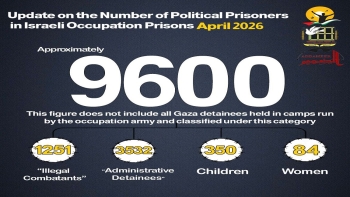
Update on the number of Palestinian political prisoners as of early July 2025:
🔴 The number of Palestinian political prisoners in the Israeli occupation’s prisons has risen to approximately 10,800 people.
🔴 This figure does not include detainees held in Israeli military camps.
This represents the highest total of political prisoners since the Second Intifada in 2000, based on documentation available from monitoring institutions.
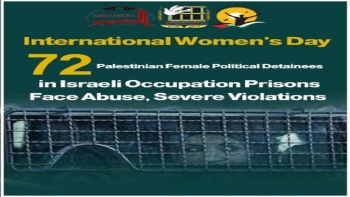
- Females: Their number as of today stands at 50 female prisoners, including two women from Gaza (this number does not represent all the detained women from Gaza).
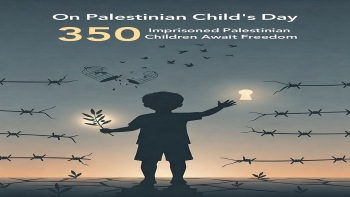
- Children: As of today, their number exceeds 450 children.
- “Administrative detainees”: As of early July, their number is 3,629, the highest compared to those held under charges, convicted prisoners, and those classified as “unlawful combatants.”
- Detainees classified as “unlawful combatants”: Their number is 2,454.
This number does not include all Gaza detainees held in Israeli army camps.
The highest recorded number of people held under this category since the genocide. This classification also includes Arab detainees from Lebanon and Syria.
Key Data Since October 2023:
- The number of arrest cases since October 2023 in the occupied West Bank and Jerusalem, has exceeded 18,000. This figure does not include arrest cases in Gaza, which are estimated to be in the thousands.
- 560 arrests among women.
- More than 1,450 cases of arrests among children.
- The number of identified prisoners who were killed since the start of the genocide has reached 73, including 45 abducted from Gaza. It is worth noting that dozens of other detainees, particularly from Gaza, remain forcibly disappeared by the Israeli army.

Detainees of the Captive Movement
on . Posted in slider
June 1, 2025
Detainees of the Captive Movement
Today marks the 604th day of the Israeli war on the Gaza Strip, a war that has become one of the most brutal genocides in modern history. Nearly two million Palestinians in Gaza remain trapped under relentless bombardment, starvation, siege, and the looming threat of forced displacement. With no protection and no weapons, they stand alone against a ruthless occupying power, while the world watches in disgraceful silence. To date, this war has left behind almost 55,000 martyrs, over 130,000 injured, and more than two million forcibly displaced, and the bloodshed continues without pause.
Inside the prisons of the Israeli occupation, over 10,000 Palestinians are currently detained, including 45 women, more than 400 children, and approximately 3,577 administrative detainees held without charge or trial. Among them are at least 1,846 detainees from Gaza, classified under the unjust and illegal label of “unlawful combatants”, a designation created by Israeli law to justify indefinite detention of civilians without due process, without evidence, and without fair trial, based on so-called "secret files" withheld even from legal counsel. The exact number of Gaza’s detainees remains unknown due to Israel’s systematic practice of enforced disappearance.
This report exposes a grave and escalating crisis: the growing number of martyrs within the Palestinian Captive Movement, particularly since October 7, 2023. While the suffering of Palestinian detainees has been ongoing for decades, through torture, humiliation, and medical neglect, the post-October 7 period has seen an unprecedented surge in violence, cruelty, and death. Since the start of this war, 70 Palestinian detainees have been killed in Israeli custody, bringing the total number of detainees martyrs to 307. Since1967 to just before October 2023, the number of martyrs from the Captive Movement was 237, averaging four per year. In contrast, the past two years have seen a tenfold annual increase.
These martyrs have died under torture, starvation, sexual abuse, and deliberate medical neglect. Many were exposed to horrific conditions designed to weaken and slowly kill, including filthy, overcrowded cells that became breeding grounds for infectious diseases, such as scabies, and other chronic, untreated illnesses.
The findings in this report are based on verified information and official correspondence with Israeli authorities, who have repeatedly attempted to manipulate the truth by providing contradictory, misleading, and false data. They continue to withhold the bodies of martyrs and hide the circumstances of their deaths in an effort to erase evidence of their crimes.
Martyrs of the Captive Movement since 1967:
The number of martyrs from the Captive Movement has reached 307 as of the writing of this report, including 70 martyrs who died after the genocide war (October 7, 2023), representing 23% of the total number of martyrs in the Captive Movement.
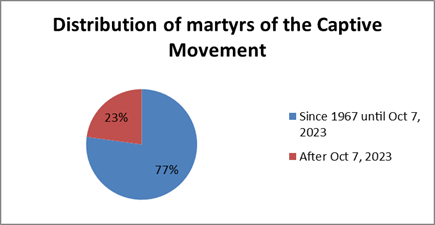
This report will highlight the 70 detainee martyrs who died after October 7, 2023, as it is the most brutal period in the history of the captive movement, in order to shed light on the crimes committed by the occupation against our detainees, as outlined below.
Relative distribution of martyrs by region (after the October 7 war):
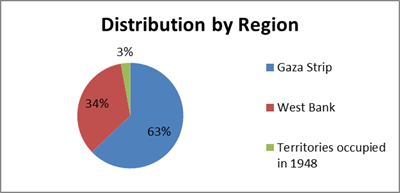
The chart above shows that the majority of martyrs, 44 in total, accounting for 63%, are from the Gaza Strip. The West Bank follows with 24 martyrs, representing 34% of the total (including one from Jerusalem). Meanwhile, 2 martyrs, 3%, are from the occupied territories within the 1948 borders.
Relative distribution of martyrs by the date of martyrdom (after the October 7 war):
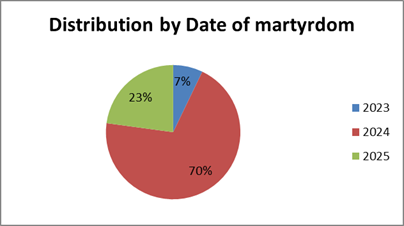
As shown in the chart above, detainees' organizations reported the deaths of 5 detainees in 2023, accounting for 7% of the total. In 2024, the number rose sharply to 49, making up 70%, marking it as the deadliest year in the history of the captive movement. In the current year, up to the date of this report, 16 detainees have been declared martyred, representing 23%.
Note: The date of announcement does not necessarily coincide with the actual date of death. These announcements are typically based on official responses from Israeli occupation authorities, who are known to routinely obscure facts in an attempt to cover up their crimes.
Relative distribution of martyrs by age (after the October 7 war)
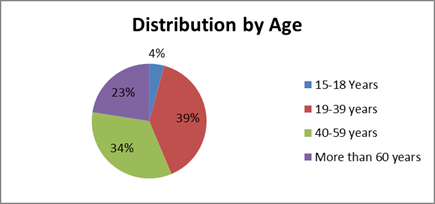
Based on the chart above and available data for 66 out of the 70 martyrs after October 7, the age distribution is as follows:
- Minors (ages 15–18): 3 martyrs, making up 4%.
- Young adults (ages 19–39): 28 martyrs, comprising the largest group at 39%.
- Adults (ages 40–59): 24 martyrs, accounting for 34%.
- Elderly (60 years and older): 11 martyrs, representing 23%.
This distribution underscores the severity of the occupation’s crimes against detainees, particularly minors and the elderly, who together represent around 27% of the total. This notably high percentage serves as a troubling indicator of the brutality directed toward the most physically vulnerable age groups inside prisons.
Relative distribution of the martyrs based on the duration between arrest and martyrdom (after the October 7 war):
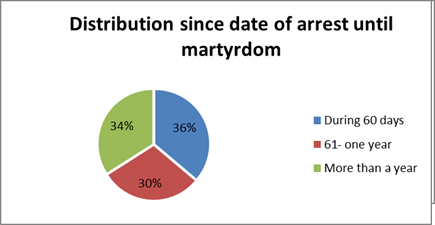
Among the 47 documented cases out of 70 martyrs following October 7, the chart above reveals that 36% (17 detainees) died within the first 60 days of their arrest. This strongly suggests that they were subjected to severe torture, inhumane treatment, and systematic abuse during interrogation, ultimately leading to their deaths.
Additionally, 30% (14 detainees) lost their lives between two months and one year after being detained. The remaining 34% (16 detainees) were martyred after spending over a year in captivity. These figures reflect the prolonged and escalating brutality faced by Palestinian detainees in Israeli prisons.
Relative distribution of the martyrs by place of detention (after the October 7 war)
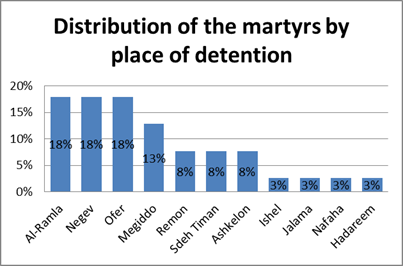
According to data available data on 39 out of the 70 martyrs who died after October 7, the most lethal detention centers were Ramla, Ofer, and Negev prisons, which alone were responsible for over half of the recorded deaths—21 martyrs, or 54%, with each facility accounting for 7 deaths (18%). This alarming concentration of deaths in specific prisons serves as a stark warning and a call to action for international human rights organizations to confront their obligations and hold the occupying authorities accountable.
Following these, Megiddo Prison recorded 5 deaths (13%), while Ramon, Sdeh Teiman, and Ashkelon prisons each witnessed 3 deaths (8%). The remaining deaths occurred across various other prisons, each contributing 1 martyr (3%). These figures expose a deeply rooted and systematic pattern of abuse and negligence within Israel’s prison system, demanding urgent international scrutiny and intervention.
Additional information:
- Of the 70 detainee martyrs who died after October 7, 2023, 17 were already suffering from injuries, chronic illnesses, or disabilities at the time of their arrest, accounting for 24% of the total. Among them were three cancer patients and one with kidney disease. These figures point to a deliberate policy of medical neglect, aimed at slow execution through systematic denial of treatment, an egregious violation of international humanitarian law.
- Included in the list of martyrs are four medical personnel, all from Gaza. This group comprises three physicians—Dr. Adnan Ahmad Atiya Al-Barsh, Dr. Iyad Ahmad Mohammad Al-Rantisi, and Dr. Ziyad Mohammad Saleh Al-Dalu—as well as a paramedic officer, Hamdan Hassan Anabah. All four were tortured to death, underscoring the brutal targeting of healthcare professionals by the occupying forces.
- Furthermore, 8 out of the 70 martyrs were held under administrative detention, imprisoned without formal charges or trial, making up 11% of the total. Their deaths highlight the deadly consequences of this unlawful and arbitrary detention policy.
- As of this report, the Israeli occupation continues to withhold the bodies of 79 martyred prisoners, including 68 of the 70 who died after October 7. This ongoing practice of body retention represents not only a violation of human dignity but also a cruel tactic of psychological warfare against the victims’ families.
We reaffirm that the findings in this report are derived from the limited information publicly available and from official statements issued by the occupation’s authorities. What remains concealed is likely far more horrific. This report does not imply that one prison is more brutal than another; rather, it exposes a cohesive system of repression—a single apparatus of violence governed by a unified policy of systematic abuse. The crime is the occupation itself.
The results presented here stand as a damning indictment of the international human rights and humanitarian community, which has failed miserably in its moral and legal obligations toward Palestinian prisoners. Since the launch of the genocidal war on October 7, 2023, not a single meaningful visit has been conducted to any Israeli prison, nor has the occupation been held accountable for its escalating crimes. International conventions that recognize prisoners of liberation movements have been willfully ignored.
In light of this utter inaction, we cannot help but question the credibility, independence, and integrity of these institutions. Their silence, neglect, and passivity raise serious concerns about their complicity—and their submission to the will of the occupying regime.
(End of Report)