
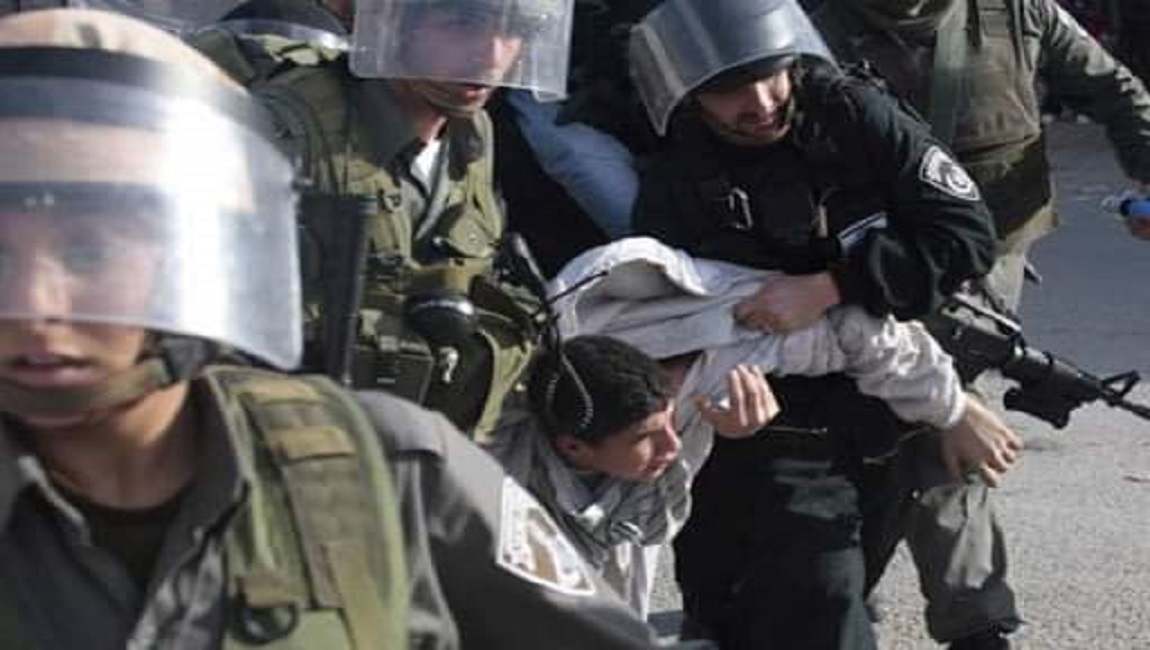
- Details
- Category: News
- Hits: 717
- Details
- Category: News
- Hits: 877
The Head of the Commission of Detainees' Affairs stated that 300 detainees have been infected since the beginning of the epidemic, where four of them got transferred to hospitals, including two that were transferred yesterday and today in serious conditions.
He also stated that 75% of detainees took the vaccine of coronavirus, and some of them refused. Regarding the sick detainees, the administration of prisons said it will study their health conditions and then decide whether to give the vaccine or not.
Abu Baker confirmed that the Commission sent a letter in many languages to the International Committee of the Red Cross and the World Health Organization urging them to intervene and save detainees' lives.
- Details
- Category: News
- Hits: 763
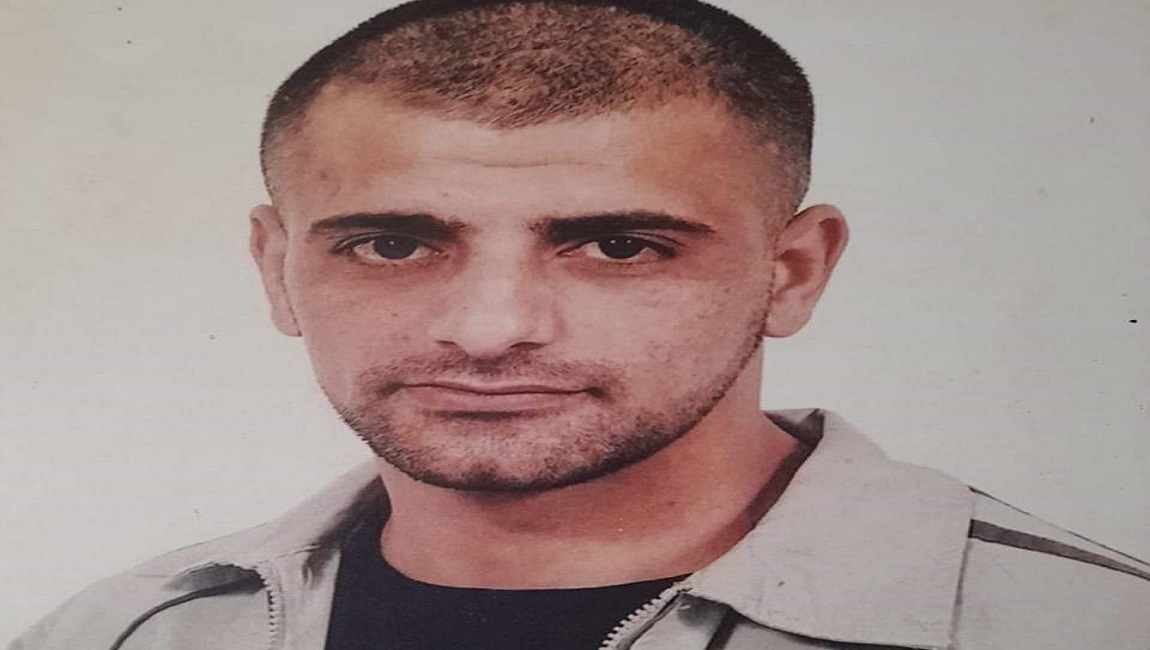
The Commission of Detainees' Affairs applied for the so-called "the committee of early release" to release the detainee Hussain Masalmeh, who suffers from cancer and currently held at Soroka Hospital.
He was suffering from severe pains in the abdomen, but the administration of prison did not care about his health condition and delayed taking him to hospital, and then he was diagnosed with leukemia. His health condition is very serious and he started chemotherapy sessions.
The Commission also pointed out that they applied for allowing his lawyer and family to visit him.
The Commission also said that the occupation holds full responsibility on the life and fate of the detainee Masalmeh, because he is one of the medical negligence victims inside the prison.
With the spread-out of Corona virus, there is a real threat on the fate of sick detainees, especially those who have weak immunity.
It is worthy to mention that the detainee Masalmeh, 39 years old, is detained since 22/11/2002, and sentenced to 20 years. He was held at Negev prison before transferring him to Soroka hospital.
- Details
- Category: News
- Hits: 867
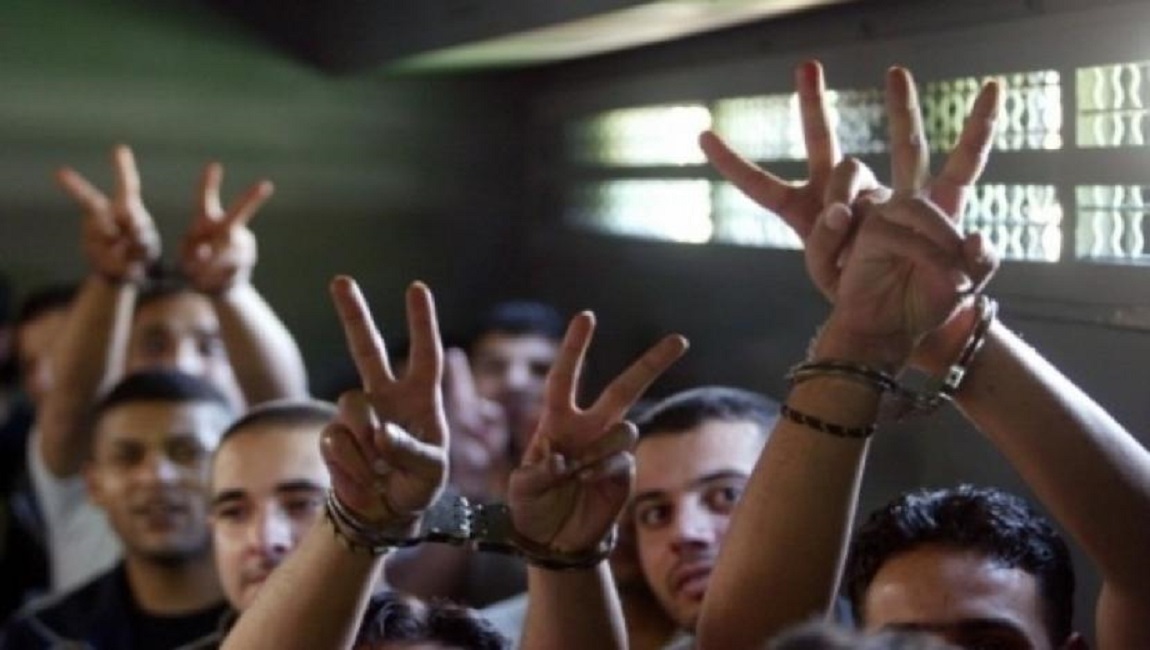
Israeli occupation authorities arrested (413) Palestinians from the occupied territories on November, including (49) minors and (7) women.
Detainees' institutions and human rights organizations (the Commission of Detainees and Ex-detainees' Affairs, the Palestinian Society Prisoner's Club, Al Dameer Association for Human Rights and Wadi Hilweh Information Center) pointed out that the occupation authorities arrested (157) citizens from Jerusalem, (40) from Ramallah, (74) from Hebron, (31) from Jenin, (33) from Bethlehem, (30) from Nablus, (18) from Tulkarem, (18) from Qalqilia, (3) from Jericho, (7) from Tubas, (2) from Salfit and (1) from Gaza strip.
(4400) detainees are currently imprisoned in Israeli jails including (41) women, (170) minors and (380) administrative detainees, while (102) new administrative detention orders have been issued.
The report includes the most prominent policies of the occupation authorities practiced against detainees during October 2020, such as collective punishment, turning the corona pandemic into a means of oppression, deliberate medical negligence and Jerusalem which faces the highest rate of arrests.
The policy of collective punishment, Kobar village as a case in point
Occupation authorities continue using the policy of collective punishment against Palestinians through incursions and arrests. They practiced mass violations against Palestinian villages and camps through implementing incursions, arrests and intimidation acts.
During last November, Kobar village was subjected to a campaign of arrests and night incursions against "Zebar" family, in an attempt to practice pressure on family member to surrender. In addition, they arrested many members of the family as hostages until the wanted person surrender. 26 persons from the village have been arrested and 6 persons from Birzeit village. 13 persons from Kobar and 4 from Birzeit were kept in prison and most of them are under interrogation.
Continuous incursions to the village and destroying house belongings
Zebar family faced repeated targeting of daily arrests and incursions in the late dawn hours, where occupation forces stormed the houses in a barbaric way to horrify the family. They bombed the doors, destroyed its belongings, opened fire inside the houses and used dogs to attacks family members.
The occupation forces arrested the wife of the wanted person, his son and his nieces as hostages, and they were attacked with beating. They were released at the same day, except for his elder son who still at Al-Maskoubya interrogation center.
Other families from the village were attacked, where Al Dameer Association for Human Rights documented many cases in which people confirmed that many houses were inspected in the same way, even empty ones, and that many people were arrested and interrogated for several hours being released.
The occupation forces are still arresting the human rights activist Muhannad Al-Ezzah as part of their arrests in the village of Kobar, where they stormed his house and destroyed part of the home's possessions.
It is worthy to mention that the village of Kober has lived through continuous arrests and daily incursions since 2017, in addition to installing checkpoints at the entrance of the village, and storming the village with hundreds of soldiers and police dogs. This is also the case with Dheisheh camp, Deir Abu Mishaal and other Palestinian villages, cities and camps.
The policy of collective punishment is one of the systematic revengeful policies which violates articles (33) and (34) of the Forth Geneva Convention.
Detainees' of Jelboa prison confronting Coronavirus Pandemic
The institutions followed up with great concern the continuous cases of corona virus among detainees in Jelboa prison during November, where more than 100 cases have been recorded, especially at section (3) Which threatened the fate of (360) detainees in "Jelboa" prison, including the sick detainees and the elderly.
Institutions confirmed that the risks to the fate of the detainee are escalating, where the administration of prison does not allow the existence of a neutral medical committee to supervise the samples of detainees and their health conditions.
With the spread out of corona virus pandemic at Jelboa prison, detainees suffered from the policies of the administration of prison, which turned the pandemic into a means of suppression. It procrastinated in taking the samples from detainees at the beginning of the symptoms on detainees in section (3), which led to the infection of the entire section and detainees from other sections. It also procrastinated in providing food and medical care.
One of the testimonies of detainees affirmed that the administration of prison allowed to give one lemon for each room, and reduced some kinds of food. It also tended to transfer many infected detainees to Al-Ramla isolation, which is considered the worst prison, turned section (3) to a quarantine and transferred many detainees to other prisons in which sections were allocated to isolate infected detainees.
Detainees' institutions noticed many acts by the occupation authorities since the beginning of the pandemic, such as the continuation of arrest campaigns against Palestinian citizens which included all categories of society: elderly, sick and injured detainees without taking into consideration the possibility of spreading the virus.
It also tended to hold captives collectively in interrogation centers in miserable and hard conditions pretending that it is the best place as quarantine. Moreover, it continued in transferring detainees between prisons which contributed to increase the concern on the possibility of transmitting the virus to all detainees in prisons.
In addition, the occupation authorities continued its campaigns of incursions and inspections which increase the interaction with jailors.
Despite all the demands by detainees' institutions, regarding the epidemic, which included releasing sick, elderly detainees, women and minors, the occupation authorities replied with more detention campaigns.
Medical negligence in the Israeli prisons is a deliberate and systematic policy
The administration of prisons uses the policy of medical negligence as part of its plans that target the fate of detainees and their lives. During the past few years, tens of detainees' testimonies have been recorded, affirming that this policy starts from diagnosing the disease and continues with negligence in following up the appropriate health care. The administration of prisons deliberately implements a series of systematic procedures to kill detainees, such as; procrastinating in providing medication, preventing surgical operations, and the lack of specialized doctors, supervisors and psychotherapists inside prisons, as well as the lack of isolation rooms for patients with infectious diseases.
It also transfers sick detainees by the "Bosta" car instead of the ambulance, which forms a journey of torture to them. Moreover, injured detainees are held in difficult conditions that lack of the necessary health conditions, which lead to the deterioration of their health conditions, and having serious and chronic diseases.
According to detainees' institutions, (700) detainees have diseases, including (300) who have chronic diseases and tens who have cancer.
Al Ramla clinic is evidence on the crime of medical negligence, which lacks the minimum elements of a clinic, where most of the detainees martyred there. There are (16) detainees reside in it permanently, including 7 detainees who move using a wheelchair, such as; Mansour Mowqadeh, Khaled Shawish, Nahed Aqraa, Mu'tasem Raddad and Saleh Saleh.
About the martyr Kamal Abu Waaer, the last martyr of the Captive movement
The detainee kamal Abu Waaer was sentenced 6 life sentence term and 50 years. He has gone through a journey of suffering with difficult detention conditions that led to his injury with cancer in the throat last year. He suffered from the policy of medical negligence where they procrastinated in providing the appropriate treatment for him. After many calls by organizations to release them or proving him with medical care, he underwent radiation sessions at the Israeli "Rambam" hospital, and during his transfer, he was tied to a bed, and surrounded by soldiers.
The administration of prisons announced his infection with coronavirus on July, after transferring him from Jelboa prison. He underwent a surgery and then got moved to Al Ramla clinic, despite his need to stay at the hospital. Again, he had a tumor in the throat and passed away in 10/11/2020. The Israeli occupation is still retaining his body, to be the 226 martyr since 1967 in the occupation prisons.
It is worthy to mention that 4 detainees have been martyred since the beginning of the year; Noor Aldeen Barghouthi, Saad Gharabli, Dawood Khateeb and Kamal Abu Waaer. The occupation is still holding 3 bodies of them; Saad Gharabli, Dawood Khateeb and Kamal Abu Waaer, in addition to other five detainees who martyred in the past years such as; Anis Dolah, Aziz Ewaisat Nassar Taqatqa, Fares Baroud and Bassam Sayeh.
Jerusalem: systematic detention campaigns and chasing after release
The occupation authorities continued the systematic operations of abuse and oppression against people from Jerusalem through systematic detentions, where (157) persons from Jerusalem have been arrested, including (30) minors and (2) women. Detention cases were focused at Al Essawyeh town, where (51) arrest cases have been recorded. The intelligence device summoned the minister of Jerusalem Fafi Hedmi and threatened him to restrict his movement inside Jerusalem and the West Bank. He has been arrested four times since 2019.
The former minister of Jerusalem khalid Abu Arafa also was summoned for interrogation and he got sentenced to administrative detention for four months. He has been exiled from Jerusalem since 2014, by a resolution that allows to withdraw the residency from the Legislative Council; Mohammad Abu Tair, Ahmad Attoun, Mohammad Toutah and Khalid Abu Arafa.
In the context of collective punishment policy, the Israeli occupation forces arrested family members of the martyr Noor Shqair from Silwan town. His brother has been arrested when he just arrived at the place of his martyrdom. The Israeli forces also summoned his father and brother for interrogation at Almakoubya interrogation center.
Chasing and threatening released detainees and their families
Israeli authorities continued to chase and threaten families from Jerusalem, such as the family of the former detainee Ahmad Ghazaleh. They stormed their house repeatedly and arrested his wife under the pretext of illegal residency, because she has a Palestinian ID.
They arrested his wife on August with her new born baby, and she got released after few hours under the condition of being exiled to the West Bank, and they took her to Qalandia military checkpoint.
The Family has been separated for months, where Ahmad lived with two of his sons in Jerusalem and his wife lived with the two other sons in Ramallah.
Another case in point is the former detainee Anwar Sami
He got arrested many times and sentenced to house arrest and exile from Jerusalem. Then he has been arrested with three persons under the pretext that he breached the house arrest.
Also the former detainee Adel Silwadi from Silwan was exiled from Jerusalem for 5 days after releasing him from Israeli prisons, noting that he served two years under the administrative detention and five years in general.
Detainees' institutions affirmed that the Israeli authorities continued with using a series of abusive and oppressive against detainees and also arrested elderly, sick persons and minors, violating the rules of the International Humanitarian Law and the Geneva Convention.
Detainees' Institutions recalls the demands of obliging Israel to stop its violations and ending the state of silence which allowed the occupation to carry out more violations.

- Details
- Category: News
- Hits: 501
Israeli occupation authorities arrested (446) Palestinians from the occupied territories on October, including (63) minors and (16) women.
Detainees' institutions and human rights organizations (the Commission of Detainees and Ex-detainees' Affairs, the Palestinian Society Prisoner's Club, Al Dameer Association for Human Rights and Wadi Hilweh Information Center) pointed out that the occupation authorities arrested (200) citizens from Jerusalem, (34) from Ramallah, (70) from Hebron, (34) from Jenin, (37) from Bethlehem, (27) from Nablus, (10) from Tulkarem, (17) from Qalqilia, (2) from Jericho, (8) from Tubas, (2) from Salfit and (5) from Gaza strip.
(4500) detainees are currently imprisoned in Israeli jails including (40) women, (170) minors and (370) administrative detainees, while (68) new administrative detention orders have been issued.
The report includes the most prominent policies of the occupation authorities practiced against detainees during October 2020, such as: solitary confinement, continuous systematic arrests especially in Jerusalem and depriving tens of detainees of family visits.
Solitary confinement policy
Occupation authorities continued with its suppressive system and forces to cause physical and psychological hurt against detainees inside jails, starting with holding nearly (4500) detainees in its jails, using the policy of solitary confinement, depriving them of contacting other detainees and depriving them of family visits.
The administration of prisons used solitary confinement as a means of humiliation and punishment against detainees under the pretext of "breaching prison security or state security", where they are isolated for a long time, in an attempt to break their determination. However, when detainees started a hunger strike in 2012, which lasted for 28 days, it ended with the isolation of 19 detainees under "security reasons", in which the detainees remained for 22-23 hours.
The decision of isolation is issued by a civilian court, without any legal representation of the detainee, at the request of the Israeli Intelligence Device, under the pretext of the existence of a "confidential file".
The law allows occupation courts to issue a decision to place the detainee in isolation for 6 months in a single cell and 12 months in shared cells.
The detainee Wael Jaghoub
The detainee Wael Jaghoub narrated the details of his isolation at Magiddo prison to a lawyer from Al Dameer Association for Human Rights, where he lives 22 hours in a cell containing toilet and television, and he is deprived of family visits and using the telephone.
He is 41 years old, sentenced to a life imprisonment and detained since 2001. On June 28, 2020 he was moved from Jelboa prison to the isolation of Megiddo prison for 20 days in difficult situations, and then he was moved to Jalamah interrogation center for 24 days, and then he returned to the isolation last August.
The detainee Imad Batran
He has been isolated since March 3, 2020 at Megiddo prison. He is an administrative detainee who was arrested on January 1, 2020. He is a former detainee who spent nearly 10 and a half in prison, including 9 and a half in administrative detention. He entered a hunger strike in 2013 for 105 days and another one in 2016 which lasted for 35 days, protesting against his administrative detention.
He suffers from many health problems since 5 months, but the administration of prison procrastinates in making medical checkups for him until today.
At the time of the epidemic, solitary confinement gets worse due to the irregularity of lawyers' visits, which is the only way detainees can communicate with their families.
In 2011, Juan Méndez, the United Nations special rapporteur on torture and other cruel, inhuman and degrading treatment, called on all countries to prohibit solitary confinement, except in extremely exceptional circumstances and for the shortest possible period [1].
The way used by the state of occupation in solitary confinement against Palestinian detainees vioaltes the rights guaranteed by the Forth Geneva Convention and the United Nations Standard Minimum Rules for the Treatment of Prisoners.
It should be noted that the Human Rights Committee Comment No. 7 on Article 7 of the International Covenant on Civil and Political Rights affirms that solitary confinement, especially when the detainee is completely isolated, is one of the inhumane and degrading methods of treatment banned by the same article.
However, the occupation authorities are still holding 12 detainees in solitary confinement.
Jerusalem confronts the systematic campaigns of arrests and humiliation
The occupation authorities increased the arrest campaigns in Jerusalem during October 2020, where 200 cases have been recorded in Jerusalem, including 45 minors and 15 women, and the arrests focused on Alezarya town with 90 cases.
Israeli forces tended to put face masks on the eyes of detainees inside the police cars and during being in interrogation centers, and continued to chase former detainees. For example, they arrested the former detainee Areen Za'aneen immediately after releasing him from Nafha prison, after serving 5 months in prison. He has been released under the condition of exile from Jerusalem for 10 days. Another case in point, they arrested the former detainee Odai Ebaid from Essaweya town on the same day of releasing him, after serving 15 months in prison.
Al Bashiety family as an example
Al Bashiety family lives near Al-Majles gate, one of Al-Aqsa gates, which suffer on a daily basis from the occupation's policies, such as storming their house, destroying its belongings, arresting their three children and imposing fines or house arrest against them.
Occupation forces arrested their eldest son 'Hisham' from Essaweya town and beat him, where he directly moved to prison, and also arrested the other sons Hatem and Abdulrahman and released them under the condition of exile from Jerusalem and house arrest.
Al Bashiety said that storming campaigns to their house never stop, where in any event in the town occupation forces storm their house, arrest their sons and release them at the same day with paying financial guarantees.
Hatem said that the repeated arrests made him lose his school year, while Abdulrahman said that he suffers from diabetes and that he was arrested many times for holding the diabetes screening machine with him. He told them that it is necessary but they deprived him from eating and taking his medicine during interrogation and detention.
Occupation authorities continued to chase children from Jerusalem and prosecute them
The judge of magistrate court issued in October a sentence of actual imprisonment for two years and a fine against the child Ashraf Hasan Edwan (13-year-old), under the charge of trying to stab a soldier near Al-Aqsa gates in 26/9/2019.
The judge decided during the session of 28/10/2020 to keep Ashraf in "Yarka internal institution", so he will be sentenced to 3 years "from the date of his arrest" and he has to pay a fine of 5000 NIS.
He was arrested one year ago from Al Aqsa mosque, and after interrogation he was held at Yarka institution. His mother was able to visit him one time, since she is from the West Bank and needs a permit to enter Jerusalem.
Wafa' Abu Jum'a,, an example of chasing women and sick persons
"Serving the public" is free work for 8 hours daily in Israeli organizations. This sentence is imposed against women, elderly people and minors under the supervision of an Israeli officer.
Wafa' Abu Jum'a (52-year-old) has been sentenced to "serving the public" for 8 months, and then she has been sentenced to actual imprisonment for 6 months and a half, after rejecting her by the organization due to her difficult health condition.
She stated "this sentence is not easy, since I can't work even in my house and I have diabetes, and this sentence hurts me a lot"
It is pointed out that chasing Abu Jum'a started in 2015, where she has been arrested three times under various charges such as" incitement on social media and threatening settlers and attacking them.
"Corona" is a punitive measure that increases the pain of deprivation of family visits for Gaza detainees
Detainees' families visits are legal rights guaranteed according to international covenants and agreements. In case it is stopped due to coronavirus, there should be an alternate way of communication between detainees and their families, especially detainees who are deprived from family visits long years ago.
There are 255 detainees from Gaza who suffer due to the continuation of visits prevention and interrupting communication between them since the beginning of coronavirus pandemic.
It has been discovered that the administration of prisons misused this pandemic as a means of punishment and deprive detainees from contacting their families through visits or phone calls.
The detainee Basil Iraif as a case in point
The case of the detainee Basil, from Gaza Strip and sentenced to a life imprisonment, is one of the most difficult cases for those who are deprived of family visits, since he has not seen his father since 20 years, under the pretext of "security prevention". The Israeli authorities use this pandemic to prevent him from making any phone call with his family.
We call on the International Committee of the Red Cross and all humanitarian organizations to immediately intervene and practice pressure against Israel to find a mechanism for communication especially for detainees from Gaza.
Detainees' institutions renew their calls for international human rights organizations to release elderly and sick detainees, and allow an international committee to follow up detainees' health conditions, and practice pressure against Israel to stop daily detention, in addition to the systematic torture policies carried out against detainees in Israeli prisons.

- Details
- Category: News
- Hits: 478
Israeli occupation authorities arrested (341) Palestinians from the occupied territories in July, including (32) minors and (3) women.
Detainees' institutions and human rights organizations (the Commission of Detainees and Ex-detainees' Affairs, the Palestinian Society Prisoner's Club, Al Dameer Association for Human Rights and Wadi Hilweh Information Center) pointed out that the occupation authorities arrested (117) citizens from Jerusalem, (25) from Ramallah, (80) from Hebron, (28) from Jenin, (30) from Bethlehem, (9) from Nablus, (13) from Tulkarem, (10) from Qalqilia, (6) from Jericho, (4) from Tubas, (4) from Salfit and (15) from Gaza strip.
(4400) detainees are currently imprisoned in Israeli jails including (39) women, (155) minors and (350) administrative detainees, while (98) new administrative detention orders have been issued.
The report includes the most prominent policies of the occupation authorities practiced against detainees during September 2020.
- Psychologist expert: a new method is used by occupation authorities in chasing Palestinians
- The detainees Maher Akhras and Abdulrahman Shuebat face the policy of administrative detention
- Break-ins as a systematic torture method against detainees in prisons
- Sick detainees at Al- Ramla clinic
- Jerusalem, systematic arrest cases targeting the Jerusalemite society
Psychologist: a new method is used by occupation authorities in chasing Palestinians
Occupation devices depended on several ways to chase and track Palestinians, including psychological methods represented in using a psychologist to meet the detainee and question him on military operations implemented earlier. This interview is preceded by the breaking into detainees' homes at midnight, searching them and destroying their contents, and then arresting the person, taking him to a military checkpoint to meet the "psychological expert."
This method is used only to frighten people, and despite that they really got interrogated in a room at a military checkpoint, they got released at the same day. The occupation targets the released detainees, their friends, or people who share a friendship with persons who have been tried on charges related to military operations.
The psychiatrist deludes the detainee that he will not be released if he does not answer his questions, and the detainee is threatened to be arrested if he was lying, and released if he was honest.
The detainees Maher Akhras and Abdulrahman Shuebat face the policy of administrative detention
Administrative detainees have not stopped facing the policy of administrative detention through open hunger strike, which is the most prominent way of detainees to confront the occupation policies in the prison system. Maher Akhras and Abdulrahman Shuebat were among the detainees who started a hunger strike.
According to detainees' institutions that followed up the strike, the administration of prisons used systematic torture methods to break the strike.
- The detainee Maher Akras, 49, from Jenin continued his strike till issuing this report since 80 days, where he is detained at Kabalan Hospital in dangerous health conditions.
He has been arrested on June 27, 2020, and he announced his strike from the first day of detention, refusing his administrative detention. A week later, the Israeli intelligence decided to issue the administrative detention against him for four months. During his strike, the administration of prisons moved him many times. He was first detained at Huwara and then moved to Ofer prison, and then to Al-Ramla prison clinic. He was moved to Kabalan hospital since the beginning of September.
Detainees' institutions confirm that the occupation courts have essentially contributed to exacerbating the suffering of the detainee Akhras, through their decisions in collusion with the occupation intelligence. Part of these decisions is what the Occupation Supreme Court calls "freeze the administrative detention", which constitutes one of the basic deceptions methods that have contributed to the reinforcement of the administrative detention policy over the past few years.
It is worthy to mention that the detainee Al- Akhras is a released detainee who spent 4 years in the occupation's prisons, and he's married and have 6 children.
- The detainee Abdulrahman Shuebat, 30, from Beit Sahour entered a hunger strike for 34 days, in refuse of his administrative detention. He has been arrested on June 2020 and sentenced to administrative detention for four months. During his strike he got moved many times to isolation cells at Naqab and Ishel prisons, and then to Al-Ramla clinic.
He was subjected to difficult conditions in the solitary confinement, represented in forcing him to sleep on an iron bed without a mattress. He was detained at Naqab isolation for 14 days, where his health condition deteriorated. However, the occupation authorities renewed his administrative detention for four months. He got moved to Ishel prison where his health condition got worse, and he began to complain of severe pains in his stomach, joints and bones, high temperature, and he was unable to move, but the administration refused to provide him with cold water because he was on strike. At "Ramla Clinic", the detainee Shuaibat escalated his hunger strike by stopping drinking water, in protest against the administration's prevention on meeting his lawyer, and then he suspended his water strike after the administration promised him to meet his lawyer.
After 34 days, he suspended his strike after having an agreement with the occupation authorities to set a limit of his detention.
It is worthy to mention that he spent 4 years in prions and was subjected to hard and continuous interrogation for more than 60 day at Betah Tekva and Jalamah interrogation centers in 2008.
It is indicated that the occupation authorities issued (772) administrative detention orders from the beginning of this year until September 2020.
Break-ins as a systematic torture method against detainees in prisons
The administration of prisons uses incursions and searches as a systematic policy, to impose more violence, abuse and control over detainees, by Special Forces "Metsada, Drour and Alyamaz". Since the beginning of last year, 2019, the occupation prisons administration has escalated the incursions, and the most violent of them were recorded in the prisons of "Ofer" and "Naqab", which resulted in dozens of injuries, some of which were described as serious, and used new types of weapons. During the current year, they continued to carry out incursions, and the most violent one was in Ofer prison on September, after the death of the detainee Dawood Al-Khatib.
The risk of those incursions rises in the light of the spread out of corona virus. In "Ofer" prison in particular, which was subjected to incursions, the highest percentage of injuries was recorded among the detainees, specifically in the sections of the so-called "al-Maabar", which are designated for the newly arrested detainees.
Thus, detainees' institutions consider incursions to be one of the most dangerous methods which affect the fate of detainees inside prisons, and pose a direct threat to their lives.
Sick detainees at Al-Ramla, the clinic of death
Documentation reports showed that 13 sick detainees at AL-Ramla clinic are face very difficult health conditions, including detainees who have cancer such as Kamal Abu Waaer, and disabled detainees such as Mansour Mwuqadeh and Nahed Aqraa, and detainees who got injured during their arrest such as Haitham Bilal, Jihad Beairat and Mahmoud Mubarak.
Detainees' institutions stated that Al-Ramla clinic is constituted of four rooms; each room has three or for detainees separated by a narrow passage, assisted by three detainees.
Lawyers' reports showed that detainees are not provided with the proper medical treatment and only given painkillers.
Detainees' institution confirmed that there is no special hospital for treating detainees since 1967, where prisons' administration transfers serious cases to Al-Ramla clinic, which resembles the prison in suffering and pain.
Jerusalem: systematic arrest cases targeting the Jerusalemite society
Occupation authorities continued its arrests in the city of Jerusalem and focused on Al-Essawyeh district, then the old city and Al-Aqsa mosque. Wadi Hilweh Center monitored 117 arrest cases including 19 minors and 3 women. On September 2020, the occupation authorities issued many decisions including three military decisions against the Governor of Jerusalem Adnan Ghaith:
- Preventing the Governor Ghaith from contacting 51 Palestinian persons including the President Mahmoud Abbas, the prime minister and other leaders for six months. (by the head of the internal front in the Israeli army)
- Imposing house arrest in Silwan district, and giving him a map showing the allowed paths. (by the head of the internal front in the Israeli army)
- The third decision is signed by the Minister of Internal Security, states on preventing the Governor from establishing any activity sponsored by the Palestinian Authority in Jerusalem, it includes collecting or distributing money, except for activities of persons in need, holding meetings and symposiums.
In the same context, the Israeli court confirmed the administrative detention against the detainee representative from Jerusalem Ahmad Attoun for four months. He has been arrested in 26/8/2020, noting that he served 15 years in the Israeli prisons.
Occupation authorities tend to chase detainees after releasing them. A case in point, the former detainee Salah Hammouri, where the Israeli intelligence handed the former detainee Salah Al-Hammouri a decision by " the Minister of Interior in the occupation government to withdraw the residency in Jerusalem" identity "from him, under the pretext that he is" dangerous to the security of the occupation state, disloyalty to it, and his activity in the Popular Front. "
Hammouri was first detained in 2001 for 5 months, and then in 2004 for 4 months under administrative detention, in 2005 for 7 years, in 2017 for 13 months. In 2016, the occupation authority exiled his wife when she was pregnant to France, after holding her for 3 days in the airport.
Occupation forces arrested the Secretary of Fatah Movement in Jerusalem Shadi Mtour twice during September. The first time he and wife and they got released after imposing the house arrest against his wife. They withdrew her residency under the pretext of "the danger of her husband to the security of the state", and he was arrested for the second time in late September on charges of "violating the decision preventing him from communicating with Palestinian figures and leaders."

- Details
- Category: News
- Hits: 541
Israeli occupation authorities arrested (297) Palestinians from the occupied territories in July, including (12) minors and (10) women.
Detainees' institutions and human rights organizations (the Commission of Detainees and Ex-detainees' Affairs, the Palestinian Society Prisoner's Club, Al Dameer Association for Human Rights and Wadi Hilweh Information Center) pointed out that the occupation authorities arrested (103) citizens from Jerusalem, (33) from Ramallah, (42) from Hebron, (40) from Jenin, (23) from Bethlehem, (10) from Nablus, (20) from Tulkarem, (11) from Qalqilia, (8) from Jericho, (4) from Tubas, (2) from Salfit and (1) from Gaza strip.
(4500) detainees are currently imprisoned in Israeli jails including (41) women, (140) minors and (340) administrative detainees, while (73) new administrative detention orders have been issued.
The report includes the most prominent policies of the occupation authorities practiced against detainees, such as detainees on hunger strike, besides violations committed against women and children, in addition to monitoring arrest cases in Jerusalem.
The continuum of the empty bowels battle at the time of the epidemic
Detainees in Israeli jails continued their confrontation against the policy of administrative detention by entering a hunger strike, while 8 detainees entered an open hunger strike in August 2020.
Detainees' institutions focused on the detainees Maher Akhras who started his strike since (50) days and Abdulrahman Shuebat, who entered his strike since (26) days, in rejection of their administrative detention.
Detainees' institutions confirmed that those detainees are suffering from difficult and risky health conditions, besides other violations committed by the prisons' administration such as: repeated transfer between prisons, putting them in solitary confinement and obstructing lawyers' visits.
Despite the danger of their fate, the occupation authorities issued an order of administrative detention against them for four month.
The institutions consider their continued detention in these circumstances, with the escalation of the epidemic, as a double threat to their fate, especially since the occupation prisons administration claimed that they had contacted two prison guards suspected of being infected with the virus.
Moreover, the detainees' institutions hold the occupation prisons administration fully responsible for their fate, and renew their demands for the international human rights organizations to practice pressure against the occupation to release them, and to stop the policy of administrative detention.
It is said that the detainee Akhras is (49-years old) and he is from Jenin, while Shuebat is from Bethlehem and he is (30-years-old).
Women in Israeli jails confronting torture and humiliation
Occupation authorities continued to arrest Palestinian women and girls and practice all kinds of torture and mistreatment against them, and detain them in difficult and inhumane conditions. Torture against them has increased at the end of 2019, especially during interrogation under which they are subjected to violations by detectives and jailors, where they are deprived of their basic rights such as: health care, food and water and going to the toilet. Women and girls are subjected to naked inspection and isolation, in addition to physical and psychological harm, cursing, threatened to arrest their family members and killing their children and husbands.
Cases in point:
- the detainee Ruba Assi
Ruba is (20-years-old) from Bait Leqia/ west of Ramallah. She stated that she got arrested on 10/7/2020 after storming her house by many soldiers. She added: "occupation forces forced her to get in the military jeep and sit on its dirty ground, and then they moved her to a camp of occupation army. They dragged her violently while being handcuffed and she fell on the ground many times which caused a bleeding in her leg. She was threatened to remain in jail and be deprived of her education".
- The detainee Eman A'war
Eman is (43-years-old) from Silwan/ south of Jerusalem. She stated that she got arrested on 17/6/2020. She added: "occupation forces attacked her family and that she was subjected to humiliation and abuse during detention and interrogation. She got detained at Al-maskoubya detention center in very difficult conditions in a room full of insects. She was also threatened, and insulted during the interrogation, knowing that she suffers from several diseases and needs personal health care."
Arresting children during the pandemic: a psychological torture
The occupation continues to practice pressure against the Palestinians to give up their land and surrender to colonial policies, as it uses detention as a means of suppressing and terrorizing the Palestinian people.
There are (140) children currently held in Israeli prisons, distributed to Ofer, Megiddo and Damoun prisons.
They are subjected to violations and harassments during arrest and interrogation, and they got threatened of being sentenced to administrative detention.
During the current pandemic, the occupation authorities carried out unfair and continuous arrests, and despite the spread of the virus inside and outside prisons, this did not prevent them from completing this policy. However, instead of taking strict measures to protect children or release them, they proceeded to detain them in bad and difficult conditions that lack all preventive measures related to the virus.
A case in point is the detainee Mahmoud Ghalith from Jalazon refugee camp/ Ramallah.
He got infected on 6/8/2020 and was isolated for 45 days at Remon prison in a cell that lacks the basics of life elements.
Ghalith is (15-years-old), arrested on 23/7/2020. His father also was beaten by Israeli soldiers. His arrest was extended two times before announcing his infection with coronavirus. Then, he got isolated in a cell that lacks the basic cleaning stuff. He was provided with a large pajama and served his isolation with the same clothes till 3/9/2020.
The court delayed the sentence for 8 times, where he was prevented from seeing anybody. During his isolation, he underwent four tests for the Coronavirus. The first and second results were negative, while the third examination showed that he was still infected, but the last examination was negative, and as a result, he was transferred to Ofer prison.
Occupation authorities still arresting children, branching all international agreements and charters that criminalize all kinds of torture and mistreatment. In situations of armed conflict, children enjoy general protection as civilians guaranteed by the Fourth Geneva Convention (Article 27), and thus they enjoy guarantees related to humane treatment, such as respect for their lives, physical integrity and dignity and the prohibition of torture.
The Convention on rights of the child issued by the United Nations General Assembly guaranteed that child should not be subjected to torture or other cruel, inhuman or degrading treatment or punishment. This agreement defines a “child” as any person who has not reached the age of eighteen, but the Israeli military decision 132 considers a child under the age of sixteen.
Jerusalem: (103) arrest cases including (12) minors and (9) women
Wadi Hilweh center monitored (103) arrest cases in Jerusalem including (12) minors and (9) women. Arrests focused in Essawyeh town with (38) cases and (7) cases in the old city. A 16-year-old girl from Essawyeh town got arrested and released after a few hours under the condition of house arrest for two days.
She got inspected at Nablus Street, and she was attacked and beaten by a police officer and then arrested with other people under the pretext of not wearing a face mask in the bus.
In terms of administrative detention, occupation forces renewed the administrative order for a second time against the representative Mohammad Abu Tear for four months, noting that he served (36) years in jail.
They also renewed an administrative detention order for Adel Silwadi, who has been detained since 2019 at Megiddo prison.
Occupation authorities continued to use the policy of arresting detainees after releasing them immediately, where they arrested the detainee Nour Aldeen Castro (21-years-old) immediately after releasing him, knowing that he served 5 years in jail.
In this context, the detainees' institutions indicate that Jerusalem and its towns face the highest rate of arrests compared with other Palestinian cities.
Detainees' institutions reaffirm their demands to practice pressure against the Israeli occupation to release sick detainees, women and minors, and to establish a neutral international committee to check up on detainees' health situations and the results of the samples related to coronavirus. They also ask the International Committee of the Red Cross to double its efforts in the occupied Palestinian territories to cover all needs of detainees and their families.

- Details
- Category: News
- Hits: 643
Israeli occupation authorities arrested (429) Palestinians from the occupied territories in July, including (32) minors and (10) women.
Detainees' institutions and human rights organizations (the Commission of Detainees and Ex-detainees' Affairs, the Palestinian Society Prisoner's Club, Al Dameer Association for Human Rights and Wadi Hilweh Information Center) pointed out that the occupation authorities arrested (201) citizens from Jerusalem, (46) from Ramallah, (35) from Hebron, (34) from Jenin, (22) from Bethlehem, (20) from Nablus, (15) from Tulkarem, (17) from Qalqilia, (215 from Tubas, (3) from Salfit, (8) from Jericho and (13) from Gaza Strip.
(4500) detainees are currently imprisoned in Israeli jails including (41) women, (160) minors and (360) administrative detainees, while (98) new administrative detention orders have been issued.
The report includes the most prominent policies of the occupation authorities practiced against detainees, such as misusing the corona virus pandemic as a means of punishment
Detainees confronting jailors and epidemic
The administration of prisons continues to announce new corona cases among jailors and Special Forces, and they are the main source to infect detainees. They announced that the two captives Kamal Abu Waaer and Abdullah Sharakah had been infected with Corona virus.
The infection of the captive Abu Waaer was known after moving him from Jelboa prison to one of the Israeli hospitals, since he has cancer. He had a surgery and then got moved to Al-Ramlah prison clinic despite his difficult health condition.
Indeed, the administration of prisons has turned the pandemic into a punitive measure against detainees, where they isolated more detainees, which caused many problems such as preventing them from getting new clothes, and family visits deprivation.
In spite of the continuous calls made by human rights organizations, for having a neutral medical committee to follow up detainees' health conditions and the results of their samples, the prison administration ignored all calls and demands and went on in its systematic violations by psychological and physical torture.
Detainees' institutions confirmed that before the spread out of corona virus pandemic, detention conditions were very difficult and inhumane, which increased after the pandemic.
Detention Centers: "Quarantine" and unjust policies
The Israeli occupation forces are using unfair policies to harass detainees, especially with the situation imposed by the "Corona" virus. The pandemic is being used to undermine the work of lawyers and prevent them from visiting detainees, and also preventing family visits. Many detention centers were turned into a quarantine for newly arrested persons for (14) days, without interrogating them or providing tools for sterilization.
Quarantine centers are distributed to three detention centers: Huwara center, Ghosh Itzion center and Sharon center. Detainees suffer from difficult conditions in quarantine centers which lacks minimum preventive methods.
Detainees at Huwara center confirmed that they suffer from harsh situations, where every room includes 6 detainees with a small bathroom. Rooms were not sterilized or cleaned, and the detainees were not provided with face masks. Detainees in quarantine suffer from the lack of food and water, which made them to collect the jailers' waste, water bottles and soda cans (Coca-Cola) to use them.
The situation in Itzion does not differ, while detainees suffer from the barbarity of occupation forces in spite of the epidemic. Detainees are prevented from contacting their families throughout the "quarantine" period. In addition, they are provided with bad and expired food, and there are no sanitizer tools. Sick detainees suffer from medical negligence in quarantine and they were not provided with their medication, which affected their health conditions.
In Hasharon prison, women detainees who were quarantined in isolated cells, where provided with dirty covers and clothes. In addition, there is no privacy for women detainees, since the bathrooms have no doors and the rooms have surveillance cameras.
The detainees Fadwa Hamada and Jehan Hashemeh in isolation: inhumane harsh condition
The administration of prisons continue its punitive measures against detainees in Israeli jails, where at the same time the world is committed with safety and preventive measures, the two detainees are isolated at Al jalamah isolation in a room that lacks the minimum basic elements of human life for more than two months.
They got moved to Al jalamah isolation after the administration of Damoun prison claimed that they had a confrontation with a jailor. Despite of informing them of ending their punishment, they were not returned to their rooms at Damoun prison until this moment.
They suffer from many problems since their transfer, where the live in a narrow dirty cell, with surveillance cameras, two beds with dirty covers. They are also deprived of getting new clothes and prevented from taking a shower. In addition, they suffer from medical negligence, as they did not receive their medication until 21 days after isolation.
In light of the Corona pandemic and the unfair conditions of isolation against them, the cell is not sterile and dirty and they have not made any medical checkups, noting that the detainee Fadwa Hamada suffers from hypertension and needs medications.
Jerusalem: continues arrest campaigns
Occupation authorities continued in arrest campaigns in Jerusalem, where (201) arrest cases have been recorded in the city, including (6) females and (22) minors under the age of 12. The highest rate of detention was at Al Essawieh town, which is subjected to systematic arrest campaigns, where (50) arrest cases were recorded in last July, and (32) cases at Silwan town.
Re-arresting detainees at the same moment of releasing them turned to policy against detainees from Jerusalem, where the Intelligence device tend to arrest them from the gates of prisons and take them to the police station.
Cases in point:
- The detainees Sultan Abu Hummos, who was arrested immediately after being released in front of Negev prison, after serving 7 years in prison. After few hours he got released again under the condition of deportation from Jerusalem for five days.
- The detainee Muhammad Moussa, who was arrested immediately after being released in front of Negev prison, after serving 4 years in prison. He was arrested for 24 hours and then released under the condition of deportation from Jerusalem.
- The occupation forces arrested the freed prisoner, Muhammad Ali Al-Ghoul (16 years), after serving his 12-month sentence upon his arrival at his home in Ras Al-Amud in the town of Silwan. They also arrested his father and three boys from the neighborhood, and released under the condition of house arrest for five days.
- The occupation authorities deported the freed detainee Sami Obaid for four months.
Detainees' institutions reaffirm on their repeated demands to practice pressure against the Israeli authorities to release sick detainees, women and children and allow an international neutral committee to look at detainees' conditions and the results of their samples. In addition, they demand the International Committee of the Red Cross to increase their efforts in order to be able to fulfil its commitments toward detainees and their families, and to provide them with all necessities needed in light of the ongoing pandemic.
- Details
- Category: News
- Hits: 688
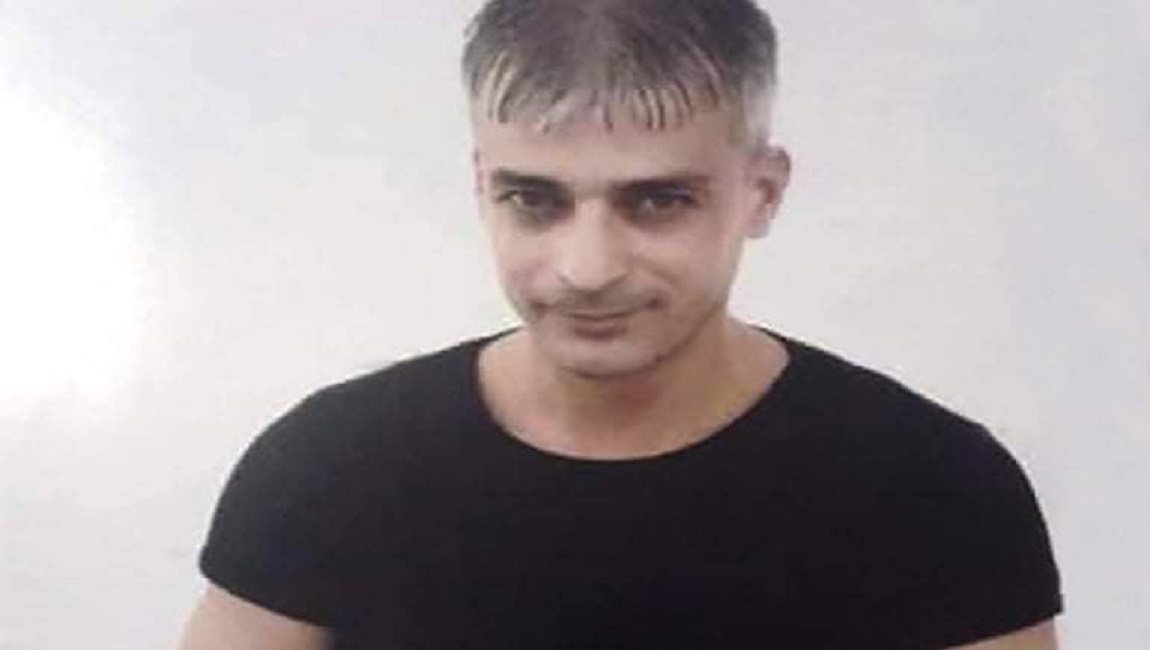
PNC called on the parliaments of the world and their unions to intervene urgently to save the life of the prisoner, Kamal Abu Wa’ar, who suffers from cancer and COVID-19 Through identical messages, PNC Speaker, Mr. Saleem Al-Za’anoun, addressed to the parliaments and unions warned that the life of the prisoner "Abu Wa’ar", who has been detained for 18 years, is in severe danger, and calls for immediate intervention to save his life. "Abu Wa’ar" suffers from a drastic deterioration of his health, and is in urgent need of proper treatment. We call on parliaments and unions, in the name of thousands of Palestinian prisoners in Israeli prisons, who are subjected to physical and psychological torture, deteriorating health conditions and outbreaks of serious and chronic diseases, to urgently intervene to release the prisoner Mr. "Kamal Abu Wa’ar" (46 years) and his fellow patients and the elderly. In its letters, PNC added that the lives of approximately (700) sick prisoners, of whom (300) are prisoners suffering from chronic diseases, and are at high risk of contracting the COVID-19, which requires quick action to save their lives and release them. PNC noted that despite the spread of the COVID-19 pandemic, the situation did not show a positive change, as the Israeli Prison Administration has not taken the necessary health measures to protect Palestinian prisoners, which raises the level of fear and anxiety for them, in the absence of communication between them and their families. The level of Israeli disregard for the lives of the Palestinian prisoners reached to the point that (12) prisoners lost their lives inside the occupation prisons during the past two years, PNC said, due to the policy of deliberate medical negligence, bringing the number of victims of this policy to (69), out of (224) prisoners who are the martyrs in prisons since the Israeli occupation in 1967. PNC affirmed that it’s the time to implement the relevant Geneva Conventions on Palestinian prisoners and detainees in occupation Israeli prisons, and that regional and international human rights and humanitarian institutions and parliaments of the world assume their legal, humanitarian and moral responsibilities towards these prisoners, and act urgently to release them to put an end to this Israeli disregard for the lives of ( 4700) Palestinian prisoners, among them (41) female prisoners, (160) children, hundreds of patients and the elderly
- Details
- Category: News
- Hits: 673
Detainees' institutions: occupation authorities arrested (2330) Palestinians on the first half of 2020
Including (1363) arrest cases since the beginning of coronavirus spread-out
Ramallah: The Israeli occupation authorities arrested (2330) Palestinians since the beginning of 2020 till June 30, including (304) minors and (70) woman, and issued (565) new administrative detention orders.
Detainees' institutions and human rights organizations (the Commission of Detainees and Ex-detainees' Affairs, the Palestinian Society Prisoner's Club, Al Dameer Association for Human Rights) pointed out that the occupation authorities is currently holding (4700) detainees, including (41) women and (160) minors.
In June 2020, the Israeli authorities arrested (469) citizens, including: (211) citizens from Jerusalem, (45) from Ramallah, (33) from Hebron, (36) from Jenin, (43) from Bethlehem, (32) from Nablus, (27) from Tulkarem, (18) from Qalqilia, (4) from Salfit, (8) from Jericho, (11)from Tubas and (1) from Gaza Strip, while (98) new administrative detention orders have been issued.
Review on the number of arrests at the first six months of 2020;
The highest rate of arrests during June 2020 was (496) cases, while the lowest rate was recorded in April 2020 with (197) cases.
The highest rate of arrests among children was in February 2020 with (95) cases, while the lowest rate was in April 2020 with (18) cases.
The highest rate of arrest cases among women was in June 2020 with (28) cases, while the lowest rate was in April with one arrest case.
Detainees' institutions confirmed that the highest rate of arrests in provinces has been recorded in Jerusalem with (1057) cases, including (57) women, (202) minors and (5) children.
Detainees in confrontation with jailors and epidemic:
At the time humanity is trying to confront the epidemic and calling on the human rights organizations to release all prisoners in the world, the Israeli occupation authorities still holding hundreds of Palestinians in its prisons including women, elderlies, children and wounded persons, without taking into consideration the risks that might affect Palestinians.
With the increase of Coronavirus cases among jailors and quarantining tens of the, fears increased among the Palestinian human rights organizations. Instead of providing the preventive measures to stop the spread out of the virus, the prisons' administration turned the epidemic into a punishment tool, and withdrew a lot of stuff form the cantina, including sanitizers and cleansers which are very necessary at this stage.
Detention cases and interrogation conditions at the time of the epidemic
The Israeli authorities did not stop arrests against Palestinians according to the Palestinian human rights organizations, where (1363) arrest cases have been recorded since the beginning of coronavirus pandemic in March 2020. The risk of spreading the virus increased among Palestinians and detainees, where the Israeli forces break into their houses without taking preventive measures like wearing face masks and gloves at least. Testimonies by Palestinians stated that many Israeli soldiers were seen spitting on the roofs and public places while they break into the houses.
The occupation devices continued to torture detainees with physical and psychological methods, in addition to the tragic conditions in detention centers, where they intended to hold detainees inside a narrow container for long hours, and imprison them in cells with no sunlight or air, high humidity and temperature, and there are no sanitizers nor cleaning stuff, and they are prevented from changing their clothes for a long time.
Risks exist also before the epidemic, where they suffer from difficult detention conditions in which the minimum international standards for detention are not provided. This facilitates the spread-out of the virus among detainees, where the globally imposed social distancing could not be attained with the high number of detainees at the same cell, which increase the possibility of catching the virus.
In this context, partner organizations called for the necessity of founding a neutral international committee to monitor detainees' circumstances and the care measures necessary to prevent the spread of the epidemic, and to intervene to release some categories of detainees such as sick one, elderlies, children and women.
The town of Ya'bad… A model of collective punishment policy
The Israeli occupation did not stop from implementing the policy of collective punishment against the Palestinian people in cities, villages and refugee camps, especially the families of detainees. This policy is represented in house demolishing and campaigns of daily arrests that include women and children.
During May 2020, people of Ya'bad town, to the south west of Jenin city, faced a large campaign of arrests and attacks against women, children and elderly people, summoning many of them, breaking into their houses, field interrogation ad attacking the families after announcing the murder of an Israeli soldier in Ya'bad, where the occupation forces arrested more than 50 people at that time.
The Abu Baker's family,, encountering detention, summon and breaking into their houses
They faced a deliberate attack for 30 days of daily arrests by occupation forces under the pretext of killing a soldier. They arrested Nathmi Abu Baker and his wife and daughter and all his siblings and their sons.
His wife and daughter have been arrested and summoned many times to question them on the incident. They were subjected to shouting, cursing and stressing them to snatch a confession on the murder of the soldier.
Moreover, they imposed a siege on the town and prevented the people's movement and had many clashes in which sound bombs and tear gas were used.
(30) persons from the town is currently held in prisons, including Nathmi Abu Baker who is accused of killing the soldier.
Detainees' institutions consider the policy of collective punishment is one of the most prominent revengeful policies against the families of detainees, which is a flagrant violation to the international humanitarian laws.
Targeting citizens from Jerusalem
The occupation authorities continued its wide campaigns against people from Jerusalem by attacking and torturing them, in an attempt to prevent any development of its society, in the light of the continuous policies of Judaization.
According to the information center of Wadi-Hilweh in Silwan, reports showed that (1057) arrest cases have been recorded in Jerusalem since the beginning of 2020, including (75) women, (202) minors and (5) children under the age of 12.
Arrests focused especially at Essawyeh town with (450) cases, (330) cases from the old city of Jerusalem and (200) cases from Silwan town.
Occupation authorities also targeted leaders of Fatah Movement in Jerusalem, by arresting them and breaking into their houses and confiscating their belongings .
Arresting women in Jerusalem
The Israeli authorities arrested Eman A'war,45, in 17/6/2020 after breaking into her house. She had many surgeries to remove tumors, and she is suffering from liver disease and broken pelvis. Her husband has been in detention since the end of last May and is under investigation.
Ibtisam Awad Sumren was arrested in 23/6/2020 after breaking into her house in Silwan. She suffers from hypertension and kidney failure and needs periodic checkups and special medications.
Targeting Essawyeh town
The Israeli forces kept breaking into Essawyeh town and installing checkpoints inside the neighborhoods and streets, inspecting people and cars and daily break in the houses and shops.
The house arrest and deportation were imposed against tens of people in Essawyeh town, in addition to imposing monetary bonds to release them.
Jerusalem at the time of the epidemic
The occupation authorities chased the youth preventive initiatives against the Corona virus, on the pretext of "violating Israeli sovereignty over the city of Jerusalem." On March, three sterilization teams were arrested in the city of Jerusalem, in Silwan, Al-Suwana and Old Jerusalem, and they seized sterilization tools and materials. They arrested four persons while distributing and hanging awareness posters about the Corona virus, and prevented the distibution of food boxes at Sour Baher district, in light of the crises due to the restriction of movement and suspending businesses.
Moreover, the Israeli authorities summoned activists from Silwan under the pretext of the existence in a public hall to check corona samples in under the supervision of the Palestinian Ministry of Health, and made tens of monetary tickets for those who prayed in front of the Al-Aqsa gates. They also made tickets for 30 persons from Al-Nasara district after celebrating religious event with 5000 NIS. In addition, the imposed tickets against 8 persons from the same family with 22.000 NIS.
Read in Military Order No. (1827) issued by the occupation
Since the beginning of the occupation, the military judiciary device and its military orders are used as a means of suppression and having control over the Palestinian people, and whoever struggle against the occupation and its arbitrary policies. This judiciary device is sample showing the racism that serve the occupying state over the interests and rights of the Palestinian people.
In the first half of 2020, many amendments carried out on some military orders, such as the amendment No.67 of the military order No.1651, named "order on security conditions", " Standard formula" and " Judea and Samaria" (2009) , which holds No.1827. This amendment was done to add on the basic military order about the trail procedures and identifying crimes, that is stated in the law of terrorism of 2016, especially with regard to the definition of “harmful substance”, “fire weapons”, and “biological and radiological chemical weapon” and others.
According to the reading submitted by the Palestinian Human Rights Organizations Council last May on the amendments, the Council stressed on the definition of property in general, property related to the implementation of a violation and property of terrorism, where these definitions included movable and immovable property, all rights to this property and the profits from these properties. As for the definition of “property of terrorism”, it includes the widest range of possibilities. It is primarily the property of any “illegal” organization, the broad definition used by the British emergency regulations of 1945, especially Article (84).
As for the second part of the definition of "property of terrorism", it applies to every tool that was related to the commission of a violation under Article (251) of the Military Order (1651), with regard to incitement or support of a hostile organization, or any of the violations mentioned in the first addition to the military order (1651).
Order (1827) adds new articles related to the punishments that will be imposed on whoever uses properties to commit a breach, and the sentence will be 10 years of imprisonment and a fine, and 7 years of imprisonment against who used the properties unintentionally to commit a breach, but he was knowing that there is a possibility of committing it. A sentence of 5 years of imprisonment is add against anyone who facilitate implementing a breach with 10 years sentence.
What is currently worrying is the letter addressed to the banks operating in the occupied territory on the accounts of detainees and martyrs, considering that there is an authority to confiscate money in these accounts under the clause that it is given as a prize on committing a breach. The most worrying is the possession of the property of "illegal organizations", based on the broad definitions and the British emergency system which is already cancelled.it is worthy to mention that the Palestinian Liberation Organization and most faction announced earlier as illegal organization in accordance with the Israeli military orders.
Over the years, the occupation breached all standard and conditions stipulated in the humanitarian international law, and enacted more than (1800) military orders regarding all life aspects of Palestinians. It also criminalized all forms of political and trade union work, and all that may be considered opponent to the occupation and its policies. Moreover, it gave the courts a geographic authority outside the occupied territory, so whoever commit any action affects the security of the occupation army in the occupied territory or the occupying Power, even if his activity is in another continent, he shall be tried before the military courts.
It also kept the validity of these courts in the areas under the control of the Palestinian Authority - what are known as "A" areas - according to the Oslo agreement, and this reflects the intentions of the occupying state that it has never dealt with the occupation as a temporary situation.
- Details
- Category: News
- Hits: 714
The Israeli occupation authorities continue to arrest Palestinian people, and in accordance with monitoring reports, the occupation authorities arrested (197) Palestinians on April 2020, including (18) minors and one woman.
Detainees' institutions and human rights organizations (the Commission of Detainees and Ex-detainees' Affairs, the Palestinian Society Prisoner's Club, Al Dameer Association for Human Rights) pointed out that the occupation authorities arrested (92) citizens from Jerusalem, (10) from Ramallah, (28) from Hebron, (22) from Jenin, (11) from Bethlehem, (5) from Nablus, (11) from Tulkarem, (7) from Qalqilia, (8) from Gaza Strip, (1) from Salfit, (1) from Jericho and none from Tubas. (4700) detainees are currently imprisoned in Israeli jails including (39) women, (180) minors and (400) administrative detainees, while (62) new administrative detention orders have been issued.
On April 2020, the administration of prisons continued its abusive measures against detainees such as solitary confinement, and depriving 3 women detainees from contacting their families at Ramadan.
The policy of solitary confinement
The occupation authorities isolated a group of detainees on April 2020, including the detainee Muhammad Fahmi Khurwat, Hatem Qawasmi, Ayman Sharabati and Walid Daqqah.
The detainees Hkurwat and Qawasmi are isolated since two months, where Hkurwat is imprisoned at Mejiddo prison and Qawasmi at Jelboa prison, and both of them are sentenced to life term. The detainee Sharabati is isolated due to his protest against the procrastinate of prisons' administration to apply the preventive measures to stop the spread-out of coronavirus inside prisons' sections. In addition, the detainee Daqqah is targeted by a series of abusive measures including solitary confinement, where his isolation ended after pressure by detainees and then he got transferred to general sections at Jelboa prison, knowing that he is one of the long term detainees who were imprisoned before the Oslo Accord.
Detainees' institutions confirmed that the continuation of the solitary confinement against detainees constitutes a violation that increase the suffering of the isolated detainee, especially that the prisons' administration continue its procedures related to the state of emergency. These procedures are implemented since the beginning of March 2020. It includes preventing lawyers visits, preventing family visits and constrain the work of courts.
The prisons' administration deprive the isolated detainee from family visits and lawyer visits. The last procedures of prisons' administration contributed in disrupting the contact between detainees and human rights organizations.
Despite the claim of prisons' administration that it allowed the phone calls for detainees, detainees at Hdareem prison were preventing from calling their families, where children were allowed to contact their families only once. In this context, we shed light on the issue of the three women detainees who were deprived of calling their families.
During April 2020, the Israeli occupation authorities allowed some female detainees to make phone calls with their families on a non-continuous basis. However, the Israeli intelligence issued a decision to prevent them from contacting their families. The detainees are; Inas Asafreh from Hebron, who was arrested since August 2019, the detainne Mais Abu Ghosh from Qalandia camp, who was arrested since August 2019 and the detainee Khalida Jarrar from Ramallah, who was arrested on October 2019.
It is worthy to mention that since the spread-out of coronavirus pandemic, the Israeli authorities announced a number of military orders against Palestinian detainees, included preventing the visitors and lawyers from entering the places of detention. The detainees were allowed to contact their lawyers through phone calls only. However, the prisons' administration prevented the detainee Khalida Jarrar from making a phone call with her lawyer.
Phone calls is the only way of communication between detainees and their families and lawyers. However, preventing three detainees from calling their families is an arbitrary decision which aims at taking revenge of them, after they were deprived of their basic rights of family visits which is guaranteed by international humanitarian laws, especially the Fourth Geneva Convention and the Minimum Standard Rules for the Treatment of Prisoners.
Detainees are facing duplicated suffering in Ramadan
The suffering of detainees in Israeli prisons increase in Ramadan, with continuing the abusive and punitive measures against them by the administration of prisons.
Administration of prisons impose many procedures that deprive detainees from practicing their religious rituals, which violates Geneva Convention. Detainees are forced to recook the meals because the prisons' administration provide the meals very early before Maghreb Prayer, which also make the detainees buy their own food stuff from the cantina at a high price.
The prisons' administration intends to play with the hours of break (in the prison's yard), where detainees are allowed to go out to the yard in hot weather, which make many detainees refuse to go out and stay at their rooms, especially at Negev Desert prison.
- Details
- Category: News
- Hits: 1043
Occupation authorities arrested more than (1300) Palestinian people since the beginning of 2020
On the occasion of the Palestinian Prisoner's Day: Fact sheet issued by: the Commission of Detainees' Affairs, the Palestinian Society Prisoner's Club, Al-Dameer Association for Human Rights and Hurreyat Center for Defending Human and Civilian Rights.
The 17th of April marks the national and international day for supporting Palestinian detainees in the Israeli prisons. It was approved by the Palestinian National Council in 1974, being the supreme authority of the Palestine Liberation Organization. This day represents faithfulness for the souls of the martyrs of Captive Movement and for detainees in Israeli prisons.
The Palestinian Prisoner's Day comes this year with the anniversary of the martyrdom OF Khalil Al-Wazeer, and the 19th memorial of arresting the leader Marwan Barghouthi, and with difficult circumstances for detainees, due to the fear of Coronavirus pandemic. It is accompanied by a carelessness of the prisons' administration and the lack of necessary preventive measures for stopping the spread-out of Coronavirus.
With this real danger that threatens the lives of detainees and the concerns of their families, our leadership and its organizations and political powers took serious attitude which holds the Israeli government responsible for detainees' lives, and called on the International Community to fulfill its legal and moral obligations towards detainees, and intervene and practice pressure against the government of the occupation to release all detainees especially sick ones, elderly, females, minors and administrative detainees.
However, the occupation authorities practice a systematic policy for targeting detainees and keep ignoring all its obligations as an occupying power. It also challenges the rules of International Humanitarian Law, refuses to release any detainee and arrest Palestinian people on a daily basis.
- Detainees' institutions confirmed that the Israeli authorities arrested (1324) Palestinians since the beginning of 2020, including (210) minors and (31) females, and issued (295) new administrative detention orders.
- The Israeli authorities arrested (357) Palestinians since the spread-out of Coronavirus pandemic, including (48) minors and (4) women.
Data on detainees in Israeli prisons
- (5000) detainees are currently held in Israeli prisons.
- (41) Females imprisoned at Damoun prison.
- (180) minors distributed to (Ofer, Megiddo, Damoun prisons).
- (26) Detainees are imprisoned before the Oslo Accord such as; Kareem Younis and Maher Younis who are detained since 1983.
- The detainee Nael Barghuothi spent the total of 40 years in jail; he was released in a bargain in 2011, bet he was rearrested in 2014.
- (51) Detainees spent more than 20 years in prison.
- (541) detainees are sentenced to life imprisonment.
- (222) martyrs from the Captive Movement since 1967.
- (67) Detainees have been killed due to the policy of medical negligence by the occupation authorities, which is part of the systematic torture policies.
- (5) Detainees have been killed due to medical negligence and torture in 2019; Fares Baroud, Omar Younis, Nassar Taqatqa, Bassam Sayeh and Sami Abu Dyak.
- (5) detainees whose bodies are retained by the Israeli occupation authorities; Anees Dolah who martyred at Ashkelon prison in 1980, Azeez Ewaisat, Fares Baroud, Nassar Taqatqa and Bassam Sayeh.
- (430) administrative detainees
- (13) Journalist detainees.
- (700) sick detainees, including (300) cases with chronic diseases, and there are tens of detainees who have cancer including the detainee Fuad Shobaki.
Systematic Policies practiced against detainees
Detainees are encountering the Coronavirus pandemic and the Israeli racist policies
Fear and concern increase on the conditions of detainees in Israeli prisons in light of the spread-out of Coronavirus pandemic, due to the policy of medical negligence, where 5 detainees have been martyred in 2019 due to this policy practiced by the prisons' administration.
In the light of Coronavirus pandemic the Israeli racist practices increased against the Palestinian people in general and detainees in particular. Despite of all International conventions, the Israeli authorities deal with Palestinians inhumanely and neglect the possibility of spreading the coronavirus inside prisons. It also neglects all national and international demands to take serious measure to protect detainees.
Instead of protecting detainees and take preventive measures, the Israeli authorities issued racist decisions such as; withdrawing 140 materials from the cantina including cleaning materials and sanitizers.
This decision comes at the same time of issuing decision on the favor Israeli criminal prisoners, where (500) criminal prisoners have been released, but the Israeli authorities refused all the international and national requests for releasing Palestinian detainees, especially sick ones and elderly who are at greater risk of catching the virus, in addition to females and minors, detainees whose sentence is about to end and the administrative detainees who are not charged yet.
One of the racist practices against detainees is preventing them from calling their families, unless in exceptional cases like the death of parents, while criminal prisoners have public land lines in all sections.
Despite the difficult conditions, Israeli authorities allowed minors and females to phone call their families, under inhumane conditions such as the jailor's right to hear the conversation between the detainee and his family and the right to end the call whenever he wants.
In 31/3/2020, the detainee Nour Al-Deen Sarsour has been released and the medical examinations confirmed his infection with coronavirus, which created a state of fear and concern among detainees at Ofer prison. Detainees asked for many demands to protect themselves, such as making checkups for all detainees in all sections, especially section (14) where the detainee Sarsour was held, in addition to section (13) where many detainees contacted with Sarsour.
The prisons' administration isolated detainees in section (14) without taking samples, and the only taken procedure was to measure their temperature. Later on, (9) detainees have been moved to other prisons and (2) minors got quarantined without taking samples from them.
The policy of physical and psychological torture
The Israel occupation authorities continued to practice physical and psychological torture against Palestinian detainees.
Interrogation is used by the occupation authorities against detainees to take revenge of detainees and steal their humanity. Moreover, it is used to get information from detainees, where 95% of them were subjected to torture since the first moment of arrest, during interrogation and after detaining them.
Torture takes many forms, such as; depriving detainees of sleep, due to the long sessions of interrogation, handcuffing them during interrogation sessions, beating, and humiliation and degrading treatment, in addition to threatening them to arrest family members or sexual harassment, demolishing their houses and preventing them from using restroom.
There are other procedures practiced against detainees under the so-called "military investigation" such as hanging them for long hours, under the pretext of "the need of defense".
Moreover, detainees got isolated in narrow cells, without windows and very cold. They are also deprived of sleep and deprived of the right to have the basic cleaning materials. These kinds of torture have killed (73) detainees since 1967.
It is worthy to mention that the cruel and illegal practices against detainees in interrogation cells breach the rules of International Law, including article 2 (1) of the Anti-torture United Nations Convention, which is signed by Israel in October 3, 1991, that prevents any state party from using torture and related practices.
The policy of deliberate medical negligence
Detainees are facing the most dangerous risk in the light of coronavirus spread-out, however the prisons' administration did not stop its medical negligence toward detainees nor responded to the calls for releasing sick detainees.
The policy of medical negligence affected all detainees, and took advantage from the sick detainees' need for medical care to take revenge from them. All over the years, detainees' institutions monitored hundreds of cases for detainees, whose medical files have been closed under the pretext of "no available treatment". In many cases, many detainees die.
Medical negligence took many forms, such as; depriving detainees of having medical check-ups, and putting them on the waiting list that may take long months and years.
The sick detainees Muwafaq Erouq and Kamal Abu Waar who have cancer
Muwafaq Erouq:
Detainee Muwafaq Nayef Hasan Erouq, 75, from Yafa-Nasrah. He was arrested in 7/1/2003 with the charge of transporting persons who committed martyrdom operation in 2002. He is sentenced to 30 years and spent 17 years of the sentence.
Health condition: he has Anemia since 2014, he was diagnosed with iron deficiency anemia without making sure of his case. In June 2019, he suffered from many side effects, and then he was diagnosed with cancer. He had many treatment sessions and then doctors confirmed that he had finished his chemotherapy. He had many symptoms such as nose bleeding, vomiting and weight loss. Later on, doctors decided to conduct surgical operation to him in the stomach and intestines.
Kamal Abu Waar:
Detainee Kamal Najeeb Ameen Abu Waaris 46 years old and he is from Qabatya\Jenin. He was arrested in 15/1/2003 and sentenced to 5 life sentences.
Health condition: He suffers from throat cancer and vocal cords, swelling in the left vocal cords and hoarseness voice. He needs a laryngologist consult.
The policy of women detention
More than 16.000 Palestinian women have been arrested since 1967
Documentation and monitoring studies showed that the Israeli authorities have arrested more than 16.000 Palestinian women since 1967. The first woman to be arrested is the detainee Fatima Bernawi from Jerusalem. She was arrested in 1967 and sentenced to a life sentence, and then she was released in 1977.
(41) women are currently held at Israeli prisons including, (26) with high sentences, such as the detainees Shuruoq Dwayat and Shatella Abu Ayyad who are sentenced to 16 years of imprisonment. There are (18) mothers in prison including Wafa Mahdawi, the mother of the martyr Ashraf Na'alweh.
There are (3) women detainees under the administrative detention and (7) wounded.
The two uprisings in 1987 and 2000 witnessed the high rate of women detention. In 2015, the rate increased unprecedentedly with Al-Aqsa popular uprising, where (200) women were arrested in 2015, (164) in 2016, (156) in 2018 and (128) in 2019.
They are subjected to all kinds of torture, starting from arresting them from their houses, moving them to detention and interrogation centers and detaining them in prisons.
The Israeli authorities get back to torture women in 2019 and 2020, such as torturing the detainees Mays Abu Ghosh, Samah Jaradat and Halemah Khandakji.
Torture against women is represented in shooting them during arrest, naked inspection, holding them in cells not suitable for human beings, interrogates them for long hours, hanging them for long hours, depriving them of sleep, isolation, threatening, beating and many other abusive treatments.
After putting them in prison, the prisons' administration implements a series of abusive policies and measures such as: medical negligence and depriving them of family visits. The Palestinian Society Prisoner's Club confirmed that women detainees are suffering from difficult life conditions at Damoun prison such as: installing surveillance cameras at the prison's yard, high moist in cells, no doors for restrooms. The prisons' administration intends to cut the power off; in addition, they procrastinate in providing the appropriate health care for them, especially the wounded ones.
The policy of children detention
(180) children are currently held at Israeli prisons, where (210) minors have been arrested since the beginning of 2020. The Israeli authorities try to steal their childhood and destroy their future. Children got tortured in the same way as adult detainees, where this abusive measure is taken since the first moment of arrest.
The Israeli authorities commit flagrant violations against Palestinian children, which contradict many agreements related to child protection. These violations are represented in storming their houses late at night, keeping them without water or food for long hours, threatening them, forcing them to sign papers written in Hebrew without providing translation in Arabic, depriving them of the right to have a lawyer and prevent their parents to attend interrogation sessions and many other violations.
Since the beginning of this year, the cause of children detainees witnessed dangerous changes imposed by prisons' administration, such as moving them from Ofer prison to Damoun prison without being accompanied by adult detainee representatives. Children were subjected to attacks by Israeli forces, where they got beaten, isolated and held in cells inappropriate for human life and deprived of family visits.
The Israeli occupation passed many racist laws that allow high sentences against children, which reached to ten years and life sentence.
Military law is applied against children in the West Bank, while the Israeli civil law is applied on children from Jerusalem. This procedure is followed to divide the Palestinian society.
The highest rate of children detention occurs at Jerusalem, where children got arrested at a daily basis. Some children were unable to resume their education due to detention and house arrest.
Children are distributed to three prisons: Ofer, Megiddo and Damoun. Since 2015, (67000) children detention cases were recorded, and the highest rate was in the last three months of 2015 which witnessed the popular uprising.
The policy of administrative detention
The Israeli authorities use the policy of administrative detention against our people since 1967, where (295) administrative detention orders have been issued in 2020.
This detention is used to arrest civil Palestinians without charge and without trial. There are (430) administrative detainees in Israeli prisons including, (3) children and (3) women.
The Israeli occupation forces implement administrative detention through issuing orders by the military commander which ranges from one month to six months. These orders are issued based on confidential information, which could not be known to the detainee or his lawyer. It is also used when there is no evidence on the charges. This is considered a violation to the detainee's right to know his charge.
The administrative detainees before the second uprising was (12) detainees, but increased in 2003 to become (1000), which confirm that the Israeli occupation uses this detention as a collective punishment against resisting the occupation which is guaranteed for Palestinian people according to international standards.
The administrative detention as used by the Israeli authorities is illegal and arbitrary, and according to International Law "administrative detention should not be used unless there is a real risk threatens the national peace of the state".
Solitary confinement policies
Solitary confinement is one of torture methods used by occupation authorities against Palestinian detainees to isolate them from the outside world. It is used under the pretext that those detainees "threatens the security of the state" and the existence of "a confidential file". The isolation process is dome through keeping the detainee in cell all over the day except for one hour to go out to the prison's yard, and he is not allowed to contact anyone except for the jailor, and he is also deprived of family visits.
About the cell of isolation, it is a small cell with no sunlight. It has a toilet inside and one opening in the iron door to get the food in. there are many testimonies by detainees that insects spread in the cell. The cell also is very cold in winter and hot in summer. It is used for detainees who entered hunger strikes as a punitive measure.
The policy of solitary confinement increased after 2000, and constituted one of the most causes that detainees entered a hunger strike against it. The number of isolated detainees decreased in 2012, after the hunger strike which has been conducted to end this policy.
The policy of collective punishment
The Israeli authorities used the policy of collective punishment against the families of detainees. It is represented in summoning family members to practice pressure against the detainee. It included arresting fathers and mothers of detainees, storming their houses and demolishing their houses as part of revengeful procedures against their families.
Since the beginning of this year, the Israeli forces demolished three houses for detainees inside prisons: the detainee Ahmad Qunbo' from Jenin and Waleed Hanatsheh and Yazan Maghames from Ramallah. The family of the detainee Qassam Barghouthi is waiting the order of demolishing, after giving them an extension period.
Detainees encountering the policies of prisons' administration
The repressive policies and procedures practiced by the Israeli forces against Palestinian detainees pushed the detainees to encounter the administration of prisons with protesting steps such as hunger strike and closing sections.
Protests also were against withdrawing tens of material from the cantina including sanitizers and cleaning materials which are very important to stay safe from coronavirus.
Detainees' institutions demands:
- Oblige Israel to release all detainees, especially sick ones, elderly, women, children and administrative detainees to save their lives.
- Sending an international medical committee to supervise the health conditions of detainees inside the prisons to save them from coronavirus and provide them with all protection and safety requirements.

- Details
- Category: News
- Hits: 893
The Head of the Commission of Detainees' Affairs, Qadri Abu Baker, stated that the Israeli authorities is holding nearly 200 minors distributed at Ofer, Megiddo and Damoun prisons, which lack the minimum elements of human life. They are subjected to torture and degrading treatment which contradict the international principles of human rights.
Abu Baker stated that the violations against children in Israeli prisons never happened in the history of the United nations, which is a shame on this organization and all human rights organizations, that were unable to protect those children.
He pointed out that the Israeli forces have arrested more than 17.000 Palestinian minors since 2000, and many cases of detention have been recorded to children under the age of 10. The majority of them were subjected to physical and psychological torture.
Abu Baker said that the rate of detaining children from Jerusalem is the higher rate, where tens of them got arrested on a daily basis and held illegally. In addition, Israeli authorities impose the policy of house custody against them, displace from Jerusalem and impose high fines on them.
Abu Baker stated that targeting children from Jerusalem is part of the policy of isolating the city of Jerusalem from the other cities.
However, Abu Baker called on the Secretary-General of the United Nations, the Human Rights Council and other international organizations, especially the UNICEF and Amnesty International to move and take serious measures to practice pressure against the Israeli government to release all detainees, especially children.

- Details
- Category: News
- Hits: 862
The Commission of Detainees' Affairs, the Palestinian Society prisoner's Club and the Supreme Commission of following Detainees' Affairs held a press conference in Ramallah, regarding the coronavirus case of the released detainee Nour Aldein Sarsour. The head of the Commission, Qadri Abu Baker, stated that in spite of the confirmation of the Palestinian Health Ministry of Sarsour's case, the Israeli authorities did not take any precautionary or preventive measures to sort detainees who dealt with Nour Aldein, and did not take any sample from those who are held in section 14 at Ofer prison. However, the Israeli authorities issued a denial to the examinations of the Palestinian Health Ministry. Abu Baker added "we communicated the Red Cross and the World Health Organization to hold Israel accountable for the deliberate ignorance in protecting detainees". On his part, the Head of the Palestinian Society prisoner's Club, Qaddura Fares, stated that the administration of occupation prisons is procrastinating and despising the fate of detainees". Despite the protesting of detainees in the same section, the administration deals with the case in carelessness. Fares pointed out that the detainees refused to communicate with the administration, and protested against its denial to take samples from detainees who dealt with the released detainee Sarsour. The Head of the Supreme Commission of following Detainees' Affairs, Amin Shouman, called on the necessity of forming a neutral international committee to examine detainees and make sure of their safety, and called the Red Cross for a more effective role to be played at this stage.

- Details
- Category: News
- Hits: 537
Commission of Detainees: 3 jailors have confirmed Coronavirus cases, with bad preventive measures for detainees in Israeli jails 30/3/2020 The Commission of Detainees' Affairs stated that the Israeli occupation authorities announced 3 Israeli jailors having confirmed Coronavirus cases; two officers at Ofer prison and one at Nitzan Ramlah prison. The Commission stated that the existence of such cases is a real catastrophe for detainees held in Israeli prisons, who are distributed to 23 prisons and detention centers, whose number exceeded 5000 detainees including 180 minors, 700 sick, 41 females and tens of elderly. The Commission pointed out "in light of the spread-out of Coronavirus Pandemic on a global level and in high numbers in Israel, we warn of spreading this virus inside the Israeli prisons, where the administration of Israeli prisons did not take real actions to protect detainees, such as preventing overcrowding, sanitizing prisons rooms and section and providing sanitizers and cleaning materials for detainees. The Commission stated that the administration of Israeli prisons must hold full responsibility for detainees' lives, and called on the international organizations and the Committee of the Red Cross to oblige the Israeli authorities to provide all health requirements and conditions for prisoners, conducting regular medical examinations and releasing the most vulnerable detainees who have weak health immunity, such as sick prisoners, the elderly, children and female prisoners.

- Details
- Category: News
- Hits: 1005
The Head of the Commission of Detainees' Affairs, Qadri Abu Baker, called on the Secretary-General of the United Nations, Antonio Guterres, to increase pressure on the occupation authorities to release the Palestinian detainees, to avoid a possible tragedy in prisons in light of the spread of the Corona pandemic. Abu baker stated in a declaration issued today that many countries around the world which are at risk of Coronavirus intended to release a large number of its prisoners to avoid the spread of Coronavirus in prisons. He added "the Israeli government announced its intention to release more than 500 Israeli criminal prisoners to decrease the crowd in prisons, in an attempt to avoid the spread of Coronavirus, while it ignored the Palestinian detainees imprisoned in crowded prisons, including 700 sick detainees, 200 minors and many women and elderly. However, the international community and its organizations are silent in terms of the suffering of the Palestinian detainees after the spread of coronavirus cases in Israel including soldiers and detectives. Abu Baker clarified that the United Nations know very well that the Israeli prisons where Palestinian detainees are held are the most crowded prisons in the world, and lack the minimum requirements of health and safety. He also stated "we call on the organizations that describe themselves of being protective of human rights, especially the United Nations, to release the Palestinian detainees imprisoned in Israeli jails, especially sick detainees and elderly who spent more than ten years in prison, to avoid a real humanitarian tragedy against them.

- Details
- Category: News
- Hits: 599
The 18th of March comes every year loaded of pain and suffering for Palestinian women. While women all over the world celebrate this day, the occupation authorities continue targeting the Palestinian women and arresting tens of them in bad conditions, violating the simplest human rights.
The Commission of Detainees' Affairs stated, in a report issued on the occasion of the International Women's Day that the Israeli forces intended to arrest Palestinian women since 1948, where 16.000 women have been arrested.
The Commission also stated that 27 of the total women Detainees are serving different sentences, where 12 of them are currently held without a sentence and 4 under the administrative detention.
The detainee Amal Taqatqa from Bait Fajjar/ Bethlehem is detained since 1/12/2014 and sentenced to 7 years of imprisonment.
The Head of the Commission of Detainees' Affairs, Qadri Abu Baker, stated that the occupation authorities practice the cruelest methods of torture and medical negligence against women detainees. They are subjected to brutal attacks, physical torture, continues threatening, deprivation of family visits, high fines and deprivation of education.
He also stated that institutions of women's rights are not doing their job effectively in terms of protecting Palestinian women detainees, in the light of the Israeli stubbornness and breaching all international rules which guarantee women detainees' rights.
Abu Baker confirmed that the world celebrates women on the 8th of March every year, in appreciation of them and honoring them on their roles in different aspects of life, but ignores the Palestinian women and their suffering, especially female detainees whose rights are violated and subjected to repression and abuse.

- Details
- Category: News
- Hits: 1271
The Commission of Detainees' Affairs stated that a crime is
being committed at the medical level against the detainee
Muwafaq Erouq, 77, who has cancer and going on a difficult
health condition after removing a large part of his stomach and
intestines.
The Commission also stated that the detainee is suffering from
severe pains and high temperature and that he lost weight and
could not eat or drink. He is being fed through a tube inserted in
his abdomen.
The Commission warned of the repeated transfer of the detainee
between Berzilai Hospital and Al-Ramlah clinic, which increase
his pain and worsen his health condition.
Doctors diagnosed him with cancer in the liver and stomach last
July, but the administration of prison procrastinated in his
chemotherapy which worsened his health condition.
It is worth mentioning that the detainee Muwafaq, from Yafa-
Nasrah, is imprisoned since 2003 and sentenced to 30 years of
imprisonment.

- Details
- Category: News
- Hits: 534
Israeli occupation authorities arrested (496) Palestinians from the occupied territories in January, including (67) minors and (16) women.
Detainees' institutions and human rights organizations (the Commission of Detainees and Ex-detainees' Affairs, the Palestinian Society Prisoner's Club, Al Dameer Association for Human Rights) pointed out that occupation authorities arrested (245) citizens from Jerusalem, (30) from Ramallah, (70) from Hebron, (43) from Jenin, (32) from Bethlehem, (14) from Nablus, (10) from Tulkarem, (21) from Qalqilia, (10) from Tubas, (1) from Salfit, (11) from Jericho and (9) from Gaza Strip.
5000 detainees are currently imprisoned in Israeli jails including (42) women, (200) minors and (450) administrative detainees, while (96) new administrative detention orders have been issued.
Torture at Al-Maskoubya interrogation center
Detainees who have been recently moved to Al-Maskoubya interrogation center were subjected to physical and psychological torture such as: solitary confinement, long hours of interrogation, intensive beating, deprivation of sleep and sexual harassment, in addition to threatening them by detaining their relatives as a means of pressure against the detainee. They were threatened of being raped, tortured and ending their stay in Jerusalem.
Torture against detainees led to many dangerous injuries such as: fractures, loss of consciousness, vomiting, bleeding in various parts of the body such as (nose, mouth, hands, legs, and genital area).
Case of the detainee Jamil Dar'awi
The detainee Jamil Dar'awi, 40, has been subjected to torture where the occupation forces attacked his wife and children, and he got interrogated in the field before moving him to Al-Maskoubya interrogation center. He remained 45 days at the interrogation center, where he has been subjected to physical torture.
He underwent a military interrogation for 8 days, and was beaten severely by 10 interrogators and had continuous punches on the face causing loss of feeling. While beating, interrogators poured cold water on his body and pressed tightly on his neck and shoulders. He also had a blow on the head which caused fainting and then he lost the ability to speak. He also said that interrogators have extinguished cigarettes on his hand.
Case of the detainee Qassam Barghouthi
The detainee Qassam Barghouthi was arrested from his house in 26/8/2019, after breaking into his house by Special Forces. He was beaten and attacked by dogs. He got interrogated in his house before arresting him, and then he was transferred to Hadassah Hospital. Then, he was transferred to Al-Maskoubya interrogation center, where he was subjected to many kinds of physical and psychological torture for 80 days. Occupation forces arrested his mother and brother and summoned his father for interrogation. He got beaten all over his body, hanged for long hours and deprived of using the toilet.
Occupation's policy in targeting minors
In 13/1/2020, the administration of prisons transferred (34) minors from Ofer prison to Damoun prison, without being accompanied by their representatives of adult detainees. They were transferred to a section that is not suitable for human life, full of insects and mice and lacks covers and blankets.
The administration of Damoun prison resorted to abuse and attack minors since the first day of transfer. Detainees announced the protest against the difficult conditions of the prison, which forced the administration of the prison to summon Special Forces to isolate detainees, cut off the power and water and confiscate their clothes and stuff. In addition, they tend to break into minors' rooms every hour, beat and assault them and deprive them from taking a shower. (7) Detainees were transferred to solitary confinement, and after announcing the hunger strike the administration brought (3) detainees from Ofer prison and Mejiddo prison as representatives on the behalf of minors.
A committee is formed to take care of minor detainees, organize the requirements of their daily lives, direct their behavior, defend their rights before the occupation prisons administration and develop an educational program for all levels.
Detainees' institutions confirms that the occupation authorities continue to violate the rules of international law and Geneva Convention to fight the Palestinian society using systematic policies backed by the judiciary device.
Detainees' institutions call on the international, local and regional parties to take effective procedural steps to ensure the protection of the Palestinian presence, and the protection of humanity, especially in light of the escalating policy of systematic torture.

- Details
- Category: News
- Hits: 969
The Commission of Detainees' Affairs, in cooperation with the Defense for Children International Movement, the YMCA and Wadi Hilweh Information Center/ Silwan, arranged a workshop at its headquarter in Ramallah on house arrest against children from Jerusalem: the occupation's policy of converting family into jailors. Participants presented papers that explain in details the issue of house arrest and its social and psychological impacts on children, in addition to live testimonies for many children who were subjected to this type of detention.
The Head of the Commission of Detainees' Affairs, Qadri Abu Baker, talked about difficult conditions and the fierce attack imposed on the Captive Movement, especially against children who have been transferred to Damoun prison, and the tragic situation they live in without their representatives of adult detainees.
Abu Baker discussed the issue of children detention in general, and talked in particular about the children from Jerusalem who are suffering from house arrest. He pointed out that there are 25 children under house arrest in Jerusalem. He added, in case the families of those children break the rules of house arrest, the Israeli courts would impose high fines against them.
Abu Baker called on the necessity of exposing the Israeli practices against detainees, especially children, sick and women detainees. He also called on increasing the efforts on the international level to protect our people.
His Excellency Abdulqader Al-Khatib, Deputy-Head of the Commission, welcomed the guests and appreciated the efforts of the participating institutions in this workshop. He stressed on the seriousness and the importance of the issue of minor detainees, and the gravity of house arrest due to its social and psychological impacts on children, his family and society.
The general director of the International Relations Unit, Raed Abu-Hommus, stressed on the importance of warning the parents of the seriousness of house arrest, and determining the legal and psychological methods to help and save them.
The released detainee Durgham A'raj talked shared his experience for more than two years in prison, as a representative on minor detainees from Jerusalem. He stated that minors from Jerusalem are isolated from other sections, and force them to accept the orders of house arrest by the Israeli Ministry of Justice, Intelligence, and the Ministry of Internal Security. He said that the option of resorting to house arrest as a substitute for actual imprisonment destroys the child’s future and is reflected on his psychological condition and family situation. Thus, it is important to warn the parents of the seriousness of this procedure which cause depression to children.
The lawyer of the commission Hiba Masalha discussed the issue of house arrest in the Israeli law, and explained that the period of house arrest is not included in the real sentence against the child, and it may be extended many times. In some cases, child got imprisoned after ending the house arrest. She also stated that the Israeli courts resort to apply other alternatives against those minors, such as holding them at Ovic prison, a prison for criminals, or holding them in housing centers. However, Israeli courts usually resort to house arrest in order to preserve themselves in front of the international community, and to destroy the child morally, psychologically and socially.
The head of the Defense for Children International Movement, Khalid Quzmar, stated that arresting children according to the International Law should be on legal basis and for the shortest period possible, but the Israeli military courts target Palestinian children by arresting and humiliating them. They seek to destroy Palestinian children by applying alternatives of actual imprisonment, such as holding them under house arrest to end their childhood.
The representative of Wadi Hilweh Information Center, Fida' Rwaidy, provided statistical and documental information on the issue of house arrest, and revealed the number of house arrest cases by a filmed report.
Moreover, the representative of YMCA, Candy Jarayseh, stressed on the importance of holding rehabilitation sessions for the minor detainee and his family.
At the end of the workshop,the minor detainee Haitham Khwais from Jerusalem shared his experience and talked about house arrest and its tragic effects.
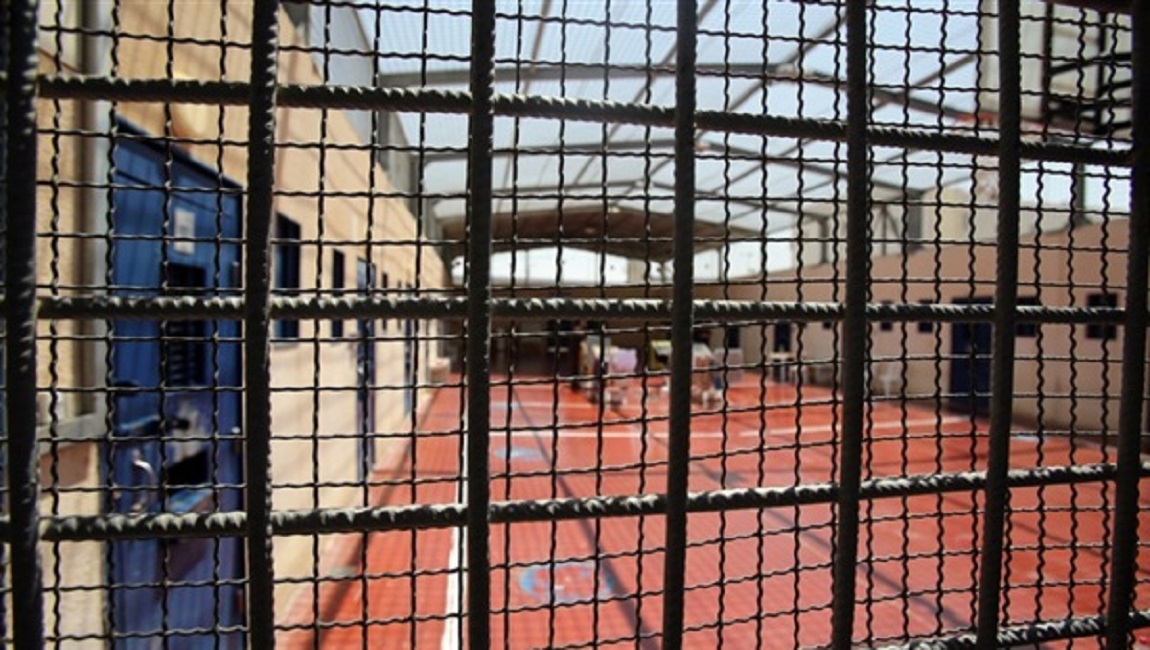
- Details
- Category: News
- Hits: 975
The Commission of Detainees' Affairs stated that the administration of prisons prevents the detainee Suhair Sulaimyeh from family visits since her detention in 30th October 2019.
The Commission pointed out that Sulaimyeh is suffering from severe pains as a result of being shot during her arrest process by the Israeli occupation forces. A bullet is settled in her shoulder in addition to many fragments in the place of injury, which caused difficulty in moving her hand and severe pain in her stomach. She has been subjected to medical negligence, where she was transferred from hospital to the clinic of Al-Ramlah prison before getting well. Her health conditions deteriorated and she was only given painkillers.
The Commission stated that the Israeli occupation authorities prevents Sulaimyeh from contacting her husband and kids and all family members, and the contact is limited to lawyers visits only.
It is worthy to mention that the occupation army arrested Sulaimyeh from the spaces of Al-Ibrahimi Mosque in Hebron/ south of the West Bank, and prevented the ambulance staff and the mosque guards from helping her before being transferred to Shaare Zedek Hospital.
- Details
- Category: News
- Hits: 799
The Commission of Detainees' Affairs cited the testimony of two minors within (34) minors that have been transferred from Ofer prison to Damoun prison, in preparation for implementing the policy of secluding minor detainees from the administrative committees.
The lawyer of the commission cited the testimony of the minors Ahmad Anati, 15 years old, from Fawwar Camp/Hebron, and Fadi Ashraf Kesbeh, 17 years old, from Qalandia camp/Jerusalem, during a visist to Damoun prison.
She stated that the administration of Ofer prison started to transfer (34) minors in January 13, 2020 and allowed them to take their clothes, covers and a pillow in addition to stuff from the cantina. They did not allow minors to take their necessary stuff from the cells such as electric supplies, preventing them from being accompanied by their representatives.
The two minors confirmed that they arrived at section (1) at Damoun prison, which is deserted many years ago, full of insects, inappropriate for living and there is neither sunshine nor ventilation. It is consisted of five narrow cells, including three without windows and two with very small windows and low ceiling. The walls are moist and toilets are located outside the cells. Minor detainees are not allowed to go out to the prison's yard except in case of beating. Besides, the section has a stinky smell, with torn mattress and bad quantity and quality of food is served, which minors refuse to eat the most of the time.
The two detainees pointed out that the minors began protesting by knocking on the doors and screaming, in protest against the prevention of the representatives from accompanying them.
The also stated that the administration of the prison summoned Special Forces to suppress minors since the first day of transfer. Forces tend to break into the cells, cut off the power and water and attack them. Each time, they choose two or three detainees, take them out of the section and beat them severely. The most cruel break in was in the fourth day of transfer, where (4) special units broke into minors' section, attacked them, handcuffed them for four hours, prevented them from using the toilet and beat them if they moved.
They also stated that minors declared entering a hunger strike in the second day of transfer, but the Special Forces tend to break in the section every one hour, beat the detainees, drag them while being asleep, use tear gas and confiscate their clothes and mattresses. Minors were forced to sleep on thin mattresses provided by the administration of the prison, where four detainees have been moved to solitary confinement at Jalamah detention center; Khalil Jabareen, Mahmoud Ewais, Reyad Al-'emor and Yehya Sbeiah.
They also affirmed that the administration of the prison tried to negotiate each minor separately, to force them accept the existing conditions in exchange of providing facilities and privileges. However, they all refused and insisted on having their representatives of adult detainees.
Moreover, they pointed out that the administration of the prison allowed three adult detainees to enter minors' section on January 16, 2020, who asked the administration to untie the handcuffs and return the confiscated clothes and covers.
However, the administration of the prison made a promise to end the crisis and put actors on minor detainees, but it did not keep the promise and returned the adults to their prisons. It also announced the prevention of administrative committees to enter the minors' sections in all prisons, and tried to gather all minors in one prison.
The Commission of Detainees' Affairs pointed out that the administration of the prison has informed detainees of its decision to impose punishments against them such as depriving them of family visits and imposing fines.
The Commission of Detainees' Affairs called on the international organizations concerned with children's rights, the International Committee of the Red Cross and the Amnesty International to intervene urgently to pursue the complaints of minors who live in bad conditions.
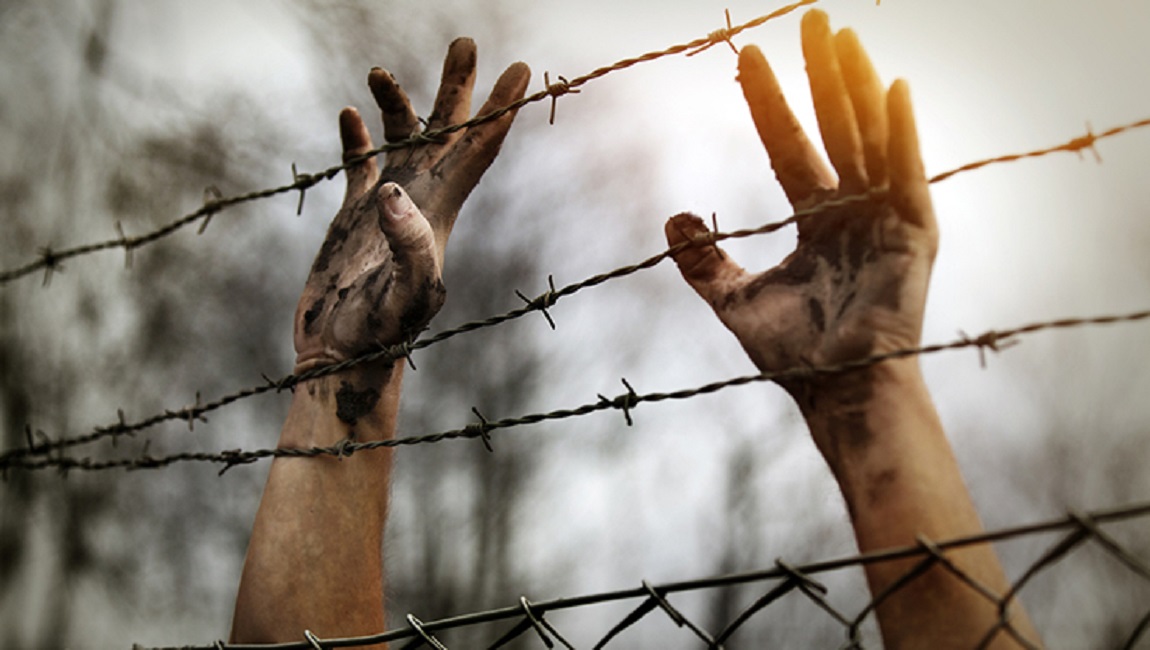
- Details
- Category: News
- Hits: 709
The Commission of Detainees' Affairs stated that occupation authorities still holding 5000 Palestinians in Israeli jails including 200 minors and 38 women.
This came in a statement in the occasion of the International Human Rights Day, where the commission confirmed that the Israeli occupation authorities violate the provisions of protection guaranteed by international law for prisoners through arresting tens of Palestinians on a daily basis, accompanied by abusive measures using excessive force and extrajudicial execution.
In addition, Israeli authorities continue to arrest former members of Legislative Council, defenders of human rights and journalists on charges of posting on Facebook, where women and minors are not excluded.
The commission also stated that the prisons' administration have implemented suppressive policies aiming at destroying Palestinian detainees and degrading their dignity. This was implemented through interrogation in which detainees are subjected to many forms of physical and psychological torture.
Prisons' administration practices abusive and suppressive measures against detainees after transferring them to prison, these practices are represented in isolation, imposing fines, intensive beating, destroying detainees' belongings, depriving them of family visits, depriving them of medical care and treatment using the policy of medical negligence and transporting them in military vehicles made of iron in which they do not feel comfortable, especially sick detainees.
The commission confirmed the existence of flagrant violations of International Law provisions practiced by Israeli authorities against Palestinian detainees, ignoring the guarantees of fair trial provided by International Humanitarian Law and Human Rights Law, especially the Standard Minimum Rules for the Treatment of Prisoners 1955, and other declarations and international agreements that guarantee the rights of detainees.
The Commission of Detainees' Affairs called on the International Community to intervene and fulfill its legal and ethical commitments towards Palestinians, and to take actual procedures to hold the occupation authorities accountable for the daily crimes committed against our people. It also called on activating solidarity campaigns to support Palestinians and their cause.
- Details
- Category: News
- Hits: 547
Israeli occupation authorities arrested 417 Palestinians from the occupied territories in November including 66 minors and 6 women.
Detainees' institutions and human rights organizations the Commission of Detainees and Ex-detainees' Affairs, the Palestinian Society Prisoner's Club, Al Dameer Association for Human Rights) pointed out that occupation authorities arrested 137 citizens from Jerusalem, 42 from Ramallah, 70 from Hebron, 22 from Jenin, 43 from Bethlehem, 12 from Nablus, 15 from Tulkarem, 7 from Qalqilia, 5 from Tubas, 2 from Salfit, 8 from Jericho and 11 from Gaza Strip.
5000 detainees are currently imprisoned in Israeli jails including 38 women, 200 minors and 450 administrative detainees, while 90 new administrative detention orders have been issued.
The martyrdom of detainee Sami Abu Dyak
The detainee Abu Dyak was assassinated in November 26, 2019 by the Israeli occupation forces, which used the policy of deliberate medical negligence that is classified as systematic torture tools.
He was not suffering from any disease before detention, but in September 2015 he was transferred to Soroka Hospital, where he had severe pain in his intestines. He was diagnosed of intestinal obstruction due to cancerous tumor.
He underwent a surgery in 6/9/2015 to treat the intestinal obstruction and then he got moved prison again. His health condition deteriorated after few days and then he was transferred to Assaf HaRofeh Hospital, and he was diagnosed with poisoning due to the lack of cleanliness of the prison. Then, he underwent many surgeries but to no avail due to the renal failure.
Sami Abu Dyak, 38 years old, is from Seilet Al-Daher village near Jenin. He has been arrested in 17/7/2002 and sentenced to 3 life terms in addition to 30 years. He has a brother who is also detained and sentenced to a life term.
However, lawyers of the commission submitted another request to early-release Abu Dyak in 4/8/2019, but the Israeli authorities refused and did not care about his serious condition and kept him held in Al-Ramlah prison clinic.
His last letter from prison: "I appeal every conscientious to work for releasing me from the Israeli jails. I call on you to let me spend my last hours and days with my mother and family, I don’t want to die handcuffed in a mean cell by a jailor who prefers death to us".
The number of Captive movement martyrs since 1967 became 222 with the martyrdom of the detainee Sami Abu Dyak, including 67 detainees who were killed by medical negligence, 5 of them killed in 2019: Fares Baroud, Omar Younes, Nassar Taqatqa, Bassam Sayeh and Sami Abu Dyak.
Detainees' institutions state that the occupation authorities hold full responsibility on killing Abu Dyak by systematic torture methods such as: depriving detainees from medical treatment and late diagnosis of the disease. There are tens of detainees who have been waiting for years to have surgeries, and some of them reached to stage in which treatment is difficult to be attained.
The battle of administrative detention is continuous
3 detainees continued their open hunger strike in November protesting against the policy of administrative detention, which is practiced by the Israeli authorities against 450 Palestinian detainees.
The detainee Ahmad Zahran is on hunger strike since 77 days, the detainee Mus'ab Hindi started his strike since 75 days and the detainee Ismail Ali who entered a strike for 112 days and ended it after having an agreement to determine the period of his detention of six months.
Zahran and Hindi are suffering from bad health conditions, where Zahran suffers from dizziness, continues headache and severe pain in all joints. He is not able to stand up or move, and he has pain in the eyes and weak vision, and he lost 27 kegs of his weight.
Hindi suffers from dizziness, continues headache, weak vision, shortness of breath, joints pain and he lost 25 kegs of his weight.
Detainees' institutions warns of the bad health conditions of Zahran and Hindi, and call on the international community and the member states that signed the Fourth Geneva Convention to practice pressure on the occupation authorities to stop violations against detainees and end the policy of administrative detention.
No exceptions in detention… tens of aged detainees in Israeli jails
Israeli occupation authorities intend to arrest old men, where they are subjected to many forms of torture, which starts from the first moment of arrest. Prisons administration isolated many of them in solitary confinement, deprived them of family visits and practiced medical negligence against them.
Occupation authorities did not exclude old women of detention and humiliation, where tens of old women have been arrested and some of them were sentenced to house arrest.
Detainees' institutions pointed out that the Israeli authorities hold tens of Palestinian elders above 60 years in harsh conditions.
A case in point is the detainee Fuad Shobaki, the eldest detainee, 81 years, and he needs a special medical care where he suffers from many chronic diseases including cancer. He is detained since 2006 and sentenced to 17 years of imprisonment.
Another case in point is the detainees Kareem Younis, 64 years old who is detained since 1983, and the detainee Youssef Abu Alkhair 73 years old, Nael Barghouthi 62 years old and Badran Jaber 74 years old.