

- Details
- Written by: Noor
- Category: statistical reports
- Hits: 870
The Israeli occupation authorities arrested (445) Palestinians in September 2022, including (35) minors and (19) women, where the highest rate of arrests goes to the city of Jerusalem with (181) arrest cases, including (31) minors and (16) women, followed by Jenin with (59) cases, then Hebron with (55) cases.
(245) administrative detention orders have been issued on September, including (102) new orders and (143) extending orders.
September witnessed an increase in violations and crimes committed by the occupation authorities, such as field executions, the policy of collective punishment and conducting organized arrests which have been accompanied by flagrant violations against detainees and their families.
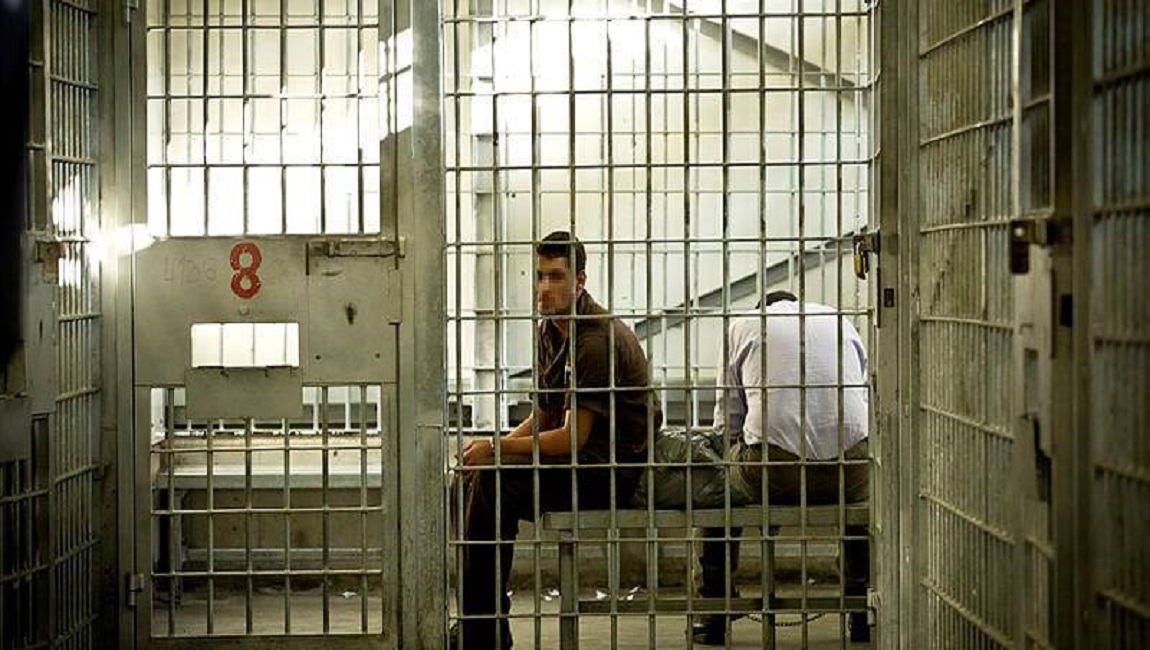
Detainees' institutions and human rights organizations ( the Commission of Detainees' Affairs, the Palestinian Society Prisoner's Club, Addameer Association and Wadi Hilweh Information Centre) pointed out that there are currently (4700) Palestinian detainees in Israeli prisons, including (30) women, (190) minors and (800) administrative detainees of whom two females and six children.
The detainee Khalil Awawdey pays the price for challenging the jailer and resisting the administrative detention
Awawdeh was born in November 1981 in Ethna town / Hebron. He is married and a father of four daughters (Tulin, Lauren, Marya and Mariam). He was arrested many times under the administrative detention and other rules and he spent 10 years in prison, the last of which was in December 2021 and he has been sentenced to 6 months of administrative detention, his sentence was also extended many times.
Thus, the administrative detention is an undetermined period of detention, which forced the detainee Awawdeh to start a hunger strike on March 3, 2022 in a protest against his administrative detention. He conducted the strike for 111 days, and then he had an agreement with the administration of prisons, but the last broke the promise and extended his arrest for 4 months. He restarted another hunger strike despite his difficult health conditions, in challenge with this arbitrary detention. In this way, he scored an important victory through which he was able to end his arbitrary administrative detention, shed light on the crime of "administrative detention" and proved the efficacy of the hunger strike weapon as a means of struggle.
In the face of this challenge and the great insistence scored by the detainee "Khalil Awawdeh", the Israeli authorities tried to break his will and take revenge of him and his family and delayed his release.
He is currently held at the so-called Al-Ramla prison. He suffers from severe pains all over his body and unable to walk and uses a wheelchair. He is waiting for his freedom and having the appropriate treatment in the Palestinian hospitals.
Administrative detainees confronting the crime of administrative detention
30 detainees from the Popular Front decided to enter an open hunger strike in 25/9/2022, in a protest against the policy of administrative detention perused by the Israeli authorities as a punitive measure against Palestinian people. Detainees are deprived of their freedom and held inside prisons without a trial or charges.
Once the detainees announced their strike, the administration of prisons started to impose different punishments against them, represented in isolating them in cells, financial penalties and depriving them of family visits.
Cases in point:
-The detainee Nidal Abu Aker, who spent around 18 years in prison, have been rearrested in 1/8/2022 and sentenced to 6 months of administrative detention, after one month of being released.
-The detainee Thaer Taha, (43 years old) from Ramallah, got arrested for the first time in 1999 before two weeks of his wedding. He was sentenced to three years and a half, and got married after setting him free. However, he was rearrested against and spent around 13 years in prison.
Deprivation of visits,, revenge and collective punishment
The administration of prisons seeks to take revenge from our detainees, aiming to undermine the will and determination of detainees.
The administration of prisons resorted lately to deprive detainees of family visits aiming at taking revenge from detainees and their families, without any justification. Cancellation of visits does not depend on specific events, rather, any small incident can cancel visits in all prisons.thus, practices such that create more stress among detainees and their families.

- Details
- Written by: Noor
- Category: statistical reports
- Hits: 749
The Israeli occupation authorities have arrested (375) Palestinians on July 2022, including (28) minors and (2) women, in addition to (191) administrative detention including (61) new orders and (126) extending orders.
Arrest cases were accompanied by flagrant violations against detainees and their families, where the Israeli authorities intended to use excessive force, attack, destroying their belongings and field interrogation with captives in front of their families. Moreover, they implemented the policy of collective punishment against Palestinian cities and villages represented in collective arrests and using live ammunition to intimidate people.
This information came within the joint monthly report issued by detainees' institutions and human rights organizations (the Commission of Detainees and Ex-detainees' Affairs, the Palestinian Society Prisoner's Club, Al Dameer Association for Human Rights and Wadi Hilweh Information Center). The report showed that there are currently (4550) detainees in held in Israeli prisons, including (27) women, (175) minors and (670) administrative detainees.
Violations committed by the Israeli occupation authorities against detainees during arrests
The policy of collective punishment and collective arrests in Palestinian cities:
The occupation authorities tend to use collective punishment as affirm policy against Palestinian cities and villages, where they intend to break through the cities with high number of troops, conducting inspection campaigns with vandalism actions as a means of revenge against detainees' families.
A case in point is Silwad town, where the occupation authorities broke through the town on July 2022 and implemented a vast campaign of arrests with 30 captives.
Ihsan Hamed (21 years) from Silwad, was subjected to field interrogation and attack during his arrest. His mother stated "they broke through the house at 5:30 am, accompanied by intelligence officers and entered Ihsan's room and started to interrogate him. They isolated us in different places, and the interrogation lasted for 3 hours. They destroyed the house belongings, broke the beds and tore up the furniture"
Another case in point is the detainee Taher Hamed (24 years), who got arrested in 29/6/2022. His mother stated "a high number of soldiers broke through our house in a brutal way and attacked my son while being asleep at the living room, handcuffed him and started to beat him on the head and legs. His sister tried to film this violation but the soldiers confiscated her phone and beat her on the legs.
The detainee Saadeya Faraj-Allah and the details of health deterioration and martyrdom, according to testimonies of Damoun detainees:
The detainees Saadeya Faraj-Allah (68 years) has been arrested last January. She's currently held at Damoun prison, and suffers from many health problems such as diabetes and high blood pressure. Her health conditions deteriorated and started to use a wheelchair.
Female detainees stated "the health condition of the detainee Saadeya Faraj-Allah deteriorated last June, where we noticed swelling in her left arm and we asked help from the officer to move her to the clinic. She has been transferred to a hospital in Israel and underwent many medical checkups and claimed all is well. Last July she felt tiredness and transferred to the clinic of the prison and underwent many checkups and then they announced her death.
The "Me'bar" sections in Israeli prisons
The prisons administration does not stop abusing detainees in arbitrary ways and measures, aiming at disturbing and oppressing them. These measures are represented in detaining them in sections designated to hold the detainee for a certain period before he is transferred to the courts, other prisons, or one of the hospitals.
Recently, many complaints were monitored by detainees who suffered from tragic conditions of detention and life inside those sections, especially the Me'bar section in Ramlah prison. A case in point is the detainee Fahmi Mashahreh who has been moved to from Beersheba prison to another prison for interrogation and then was held at the Me'bar section in Ramlah prison.
According to his testimony "the Me'bar section in Ramlah prison is a narrow cage, which can only accommodate eight people, but the prison administration deliberately holds more than 20 prisoners in that limited space, without taking into account the sick and elderly prisoners. In addition, the toilet in that section is very dirty, and there is no clean place to pray". It is worthy to mention that the detainee Mashahreh is from Jerusalem, he's detained since 2002 and ruled to 20 life sentences.

- Details
- Written by: Noor
- Category: statistical reports
- Hits: 975
Flagrant violations have been committed against detainees by the occupation authorities
Critical escalation of suppression and attacks has been implemented against the Palestinians by the Israeli occupation forces on May 2021, especially with the incidents of Al-Amoud Gate in Jerusalem in 13/4/2021. Occupation authorities started to prevent Palestinians from being existent in that area, in coincidence with the forcible displacement and ethnic cleansing of Palestinians in Shiekh Jarrah neighborhood.
The confrontation escalated and many attacks and suppression acts have been monitored, including a huge campaign of arrests which increased with the aggression on Gaza Strip that lasted for 11 days. These incidents pushed the Palestinians everywhere to protest and confront the policies of the occupation and its flagrant violations.
This is not the first time for the Palestinians to face such an escalation, attacks and systematic arrest cases, which were of the tools used to suppress and attempt of Palestinians to attain freedom and self-determination.
The years of 2015 constituted a turning point in detainees' cause, especially in the increasing number of detention cases. This phase witnessed many violations that were documented by many organizations, in addition to arresting journalists, activists and citizens who contributed in revealing these violations.
According to detainees' Institutions and Human Rights Organizations (the Commission of Detainees and Ex-detainees' Affairs, the Palestinian Society Prisoner's Club, Al Dameer Association for Human Rights and Wadi Hilweh Information Center) pointed out that the Israeli authorities have arrested 3100 Palestinians on May 2021 from different cities, the highest of which was the occupied lands of 48 with (2000) detention cases, including (291) children.
Detention cases were accompanied by flagrant violations against detainees and their families, where (170) indictments have been filed against detainees, and the charge was participating in demonstrations that refuse the policies of the occupation.
Occupation's devices and Israeli settlers contributed in the intimidation of Palestinians, through storming their houses, destroying their belongings, shooting them with live ammunition and rubber bullets, in addition to the physical attack against them.
As a result of the incidents in the occupied lands of 48, a huge campaign of arrests was implemented in all cities, villages and camps in the West Bank. The institutions recorded (1100) arrest cases in the West Bank, including (180) minors, and (42) women, and the highest rate of arrest cases was in Jerusalem with (677) cases.
Moreover, the violations expanded to include candidates for the Legislative Council Elections, where (6) candidates have been arrested, in addition to two former representatives of the Legislative Council.
(200) orders of administrative detention have been issued, including (116) new orders.
There are (5300) Palestinian detainees who are currently held in Israeli prisons, including (40) women, (250) minors and (81) of them are from the occupied lands of 48, in addition to (520) administrative detainees.
The report reviews many central issues and violations which were implemented by the occupation authorities during the current confrontations, such as:
The occupied lands of 1948: forging facts and fabricating charges
The Israeli police arrested the journalist Raafat Abu Ayesh (27 years) from Negev, while doing his job in covering a stand for Palestinian students at Beersheba University, who were protesting against the attacks in Jerusalem. They were attacked by extremist Jews, who threatened to kill them. Ayesh said that they called the police to protect them, but the police arrested two of the Palestinian students.
He also said that he was attacked, beaten and arrested, and then they took him to Ashkelon interrogation center, where he remained for 3 days.
He was accused of attacking a settler and burning his car, in addition to joining a "terrorist faction". They released him after three days of investigations and reviewing the cameras.
Ayesh was subjected to many violations such as: fabricating charges against him, tying him to the chair, long hours of interrogation, meeting his lawyer on Zoom App, extending his arrest to five days and threatening him to destroy his life.
Chasing elections' candidates: undermining the role of politicians and activists
The occupation authorities have arrested the candidate of the Legislative Council elections, the former detainee Yousef Qazaz, after two months of releasing him in 21/3/2021. They stormed his house in Dura/ Hebron in 20/5/2021 and destroyed the door and the belongings of his house.
It is worthy to mention that he is a former detainee, who served 5 years in prison, including 18 months and other 24 months under the administrative detention. He suffers from several diseases and needs medication, but the occupation authorities did not allow him to take any medication.
Torturing children: 13-year-old children are under arrest
The Israeli forces arrested (180) minors from the West Bank on May 2020, where torture acts against children were documented by field researchers.
The Israeli forces arrested the child G. A while he was in a garden in Ramallah, near Beit Eil settlement, where a soldier attacked and beat him with his rifle on the head five times. Another soldier hit him on the pelvic area which caused a severe pain. In addition, they sprayed pepper gas in his right eye.
During his detention process, the Israeli forces tortured him and ordered him to lie on the ground and handcuffed him with plastic ties. They took him to Beit Eil militant camp and blindfolded his eyes, and then took him to Benjamin police station for 3 hours for interrogation.
They threw him out of the car and hit him on his neck and head, and then he found out that he is at Hezma/Jerusalem.
Maskoubya prison: a witness on torture crimes
The name of Maskouya prison became a witness, after the escalation acts implemented by the Israeli authorities, on tens of detainees who were subjected to physical and psychological torture.
Case in point: the detainee Jalal Jabareen (36 years) from Saer/ Hebron
Jabareen was arrested from his house in 14/5/2021, after forcing him to take off his clothes and search his house. They took him in a militant vehicle to Keryat Arba Settlement, and he was beaten all the way. They transferred him to an area near Itzion militant camp and continued the attack against him. He was then transferred to Itzion interrogation center and forced him to sign a paper that acquits the soldiers from attacking him, but he refused.
He said that he got transferred at the same day to Maskoubya interrogation center, where he was subjected to torture for ten days. They put him under interrogation for (38) hours continuously, and prevented him from sleep and eating proper food. He also was deprived of meeting his lawyer.
Mariam Afifi: detention and torture, and released without conditions
The occupation forces have arrested Mariam (26 years) in 8/5/2021 at 10:30 pm while she was at Sheikh Jarrah neighborhood. She saw the soldiers attacking a girl and she went to help her, and when the soldiers saw this they attacked and push her and tried to pull her hijab. Many soldiers attacked her and started to beat and kick her all over her body, and then they handcuffed and dragged her on the ground and transferred her to a police station, where she remained for the next day.
They transferred her again to Makoubya and put her in a cold cell, and when she asked to turn off the Ac they did not respond. Mariam said that she appeared before the court twice, and the prosecution asked to extend her detention, but the judge decided to release her after watching the video.
Jerusalem: duplicated confrontation
The occupation authorities continued the daily detention campaigns in Jerusalem on May 2021, in addition to storming houses in the city. (677) detention cases have been documented in Jerusalem, including (124) minors and (32) women. Field detention cases distributed to (117) cases from Al Aqsa Mosque and its gates, (79) cases from Sheikh Jarrah neighborhood and hundreds of cases in other towns.
(845) detention cases have been recorded in Jerusalem since April 2021, where some of the were released under the condition of exile, house arrest and paying guarantees, while others have been accused and still in prison.
Excessive force was used during detention process and transfer to police stations, where many detainees got injured by fractures in the hands, nose and chest. Tens of them were transferred to hospitals and others remained under arrest.
The detainees were accused with many charges such as: participation in confrontations, throw stones, raising the Palestinian flag, smashing surveillance cameras and attacking police officers and settlers.
The Israeli authorities issued a lot of deportation orders, where (270) orders have been issued to deport people from Al-Aqsa/ Jerusalem/ the old town, ranging from one week to six months.
Ahmad Abu Snaineh: lost his eye and arrested from the hospital
Ahmad Abu Snaineh (28 years) was injured with a rubber bullet in Al-Aqsa Mosque during the month of Ramdan, where he was transferred to hospital, and after two weeks the Israeli forces arrested him from inside the hospital.
Abu Snaineh said: "my eye dropped in front of me and I lost my conciseness, and then I was taken to hospital in serious health condition due to fractures in the skull and then I had many surgeries in the eye, head and abdomen".
"In 27/5/2021, a nurse informed me that I will be discharged from hospital, and then the Intelligence forces stormed the room and arrested me".
Abu Snaineh explained that he was transferred to a detention center and remained for 6 hours despite his fatigue, and then he has been released and turned to house arrest for 4 days, under the condition of getting back to the interrogation. He went in 30/5/2021 to the interrogation and remained long hours under the sun and hot weather, and then he has been released and sentenced to house arrest for one day.
Cancellation of health insurance
The Israeli authorities have cancelled 19 health insurances for detainees and their families from Jerusalem as a means of collective punishment without informing them and without any warning or legal cause. This procedure targeted former detainees who were deported from Jerusalem, Aqsa mosque and the west bank, and restricted their bank accounts. They claimed that they cancelled the insurance because of "residency outside Jerusalem".
Collective punishments: the villages of Turmosayya and Aqraba
The villages of Turmosayya and Aqraba witnessed many attacks on May 2021 after an operation of shooting Israeli soldiers at Zatara checkpoint/ Nablus. (9) Citizens from Aqraba and (5) from Turmosayya have been arrested.
The wife of the detainee Lafi Shalabi said that an Israeli Special Forces stormed the village of Turmoayya at 3:00 am and broke into their house and arrested her husband in 5/5/2021, where they broke the door and attacked their 16-year-old child. Then, they took her husband to another room and interrogated him and prevented her from taking her medication, as she suffers from hypertension and she was infected with Covid19.
Another case in point is the village of Aqraba, where the Israeli army and Special Forces stormed the village and prevented its people from moving and closed the area with military checkpoints. They also stormed many houses and destroyed their belongings.
Tens of injured persons
The Israeli forces used all kinds of weapons and torture methods against detainees, such as: beating, dragging, using wastewater, using sound bombs, and shooting them with live ammunition and rubber bullets.
A case in point is the injured detainee Fadi Daraghmeh (18 years) from Tubas. He was shot in his knee at the checkpoint of Tayaseer, and then three soldiers started to beat him in a barbaric way and dragged him and took him to Affoula Hospital.
Serious data on the policy of administrative detention
The case of administrative detention witnessed a dangerous transformation, through the increase in the number of administrative detainees, where (200) orders of administrative detention have been issued on May 2021, including (11) orders against detainees from Jerusalem.
This data is a serious indicator which confirms that the Israeli authorities are widely resorting to this policy in a way that violates all restrictions imposed by international laws on using this kind of arbitrary detention.
The Israeli authorities aim at preventing any confrontation or change to attain self-determination by using the policy of administrative detention. The number of administrative detainees increased after the uprising in 1987 and 2000, while they issued (1248) orders of administrative detention since the popular uprising of 2015.
Over the past decades, the Israeli military courts were the main support for this policy, by implementing the orders of the Israeli Intelligence device.
Many detainees have entered a hunger strike in a protest against the administrative detention, where 4 detainees are still on hunger strike such as: Ghadanfar Abu Atwan (28 years) from Hebron, who is on hunger strike since 37 days, khader Adnan (43 years) from Jenin with (12) days of hunger strike, and the two detainees Omar Shami and Yousef Amer with (11) days of hunger strike.

- Details
- Written by: Noor
- Category: statistical reports
- Hits: 642
The Israeli occupation forces have arrested (204) Palestinians in April 2021, including (61) child, (7) women and (100) administration detention orders.
According to the human rights organizations specialized in detainees' affairs, the Israeli authorities continue the systematic abusive policies at different levels and escalated the operations of violation and suppression against detainees in Israeli prisons.
(198) arrest cases have been recorded in Jerusalem, which is the highest rate compared to the few past months, where the Israeli occupation authorities have escalated suppression and violation operations against people of Jerusalem, especially at Al-Amoud Gate, Al-Aqsa Mosque and Shiekh Jarrah district.
March 2020, including (48) minors and (4) women.
Detainees' institutions and human rights organizations (the Commission of Detainees and Ex-detainees' Affairs, the Palestinian Society Prisoner's Club, Al Dameer Association for Human Rights and Wadi Hilweh Information Center- Jerusalem) pointed out that the total number of detainees in Israeli prisons until April 2021 is nearly (4400) detainees, including (39) women, (60) child and (430) administrative detainees.
The report exposes many policies implemented by the Israeli authorities, such as the increasing arrest campaigns in Jerusalem and the abusive actions which accompany these arrests, the issue of hunger strike that increased in April/ the case of the detainee Sawarkeh, the violation of journalists freedom and detaining them/the case of the detainee Alaa Rimawi, in addition to the issue of the detainee Muhammad Halabi, who is facing the longest trial in the history of the Captive Movement, since he appeared before 159 trials since 2016.
Jerusalem: increase in torture and arrest cases
The Israeli authorities escalated the attacks against the people of Jerusalem in April, especially with the beginning of Ramadan, where Al-Amoud Gate headed the clashes in the city after installing iron barriers on its stairs to prevent Palestinians from setting there during Ramadan. The yard of Al-Amoud Gate turned into a clashing point and extended to the adjacent streets, neighborhoods and towns of Jerusalem.
The occupation forces carried out tens of arrest cases and attacks during the protests at Al-Amoud Gate, and turned into a military outpost by spreading the Israeli Special Forces, army, police officers horsemen teams, intelligence device and wastewater vehicles.
The clashes increased in April 22 , after the extremist right wing Lehava Organization called the settlers to make marches to "defend the Jewish honor". The people of Jerusalem defended the city and prevented settlers from getting to Al-Amoud Gate. Meanwhile, settlers chanted racist slogans against Arabs, raised Israeli flags, and carried out attacks with stones and sticks against Jerusalemites. Racism was obvious in the Israeli police’s dealings with both parties, as they used force and violence against Palestinian guys, while avoiding any contact with settlers.
(198) arrest cases have been recorded, including (106) arrested from Al-Amuod gate, Al-Sahera Gate, Sultan Suleman street, Salah Al-Deen street and Al-Mesrarah. The detained people included 3 females, and 42 minors ranging between 12-15 years old.
Arresting a father and his two sons
3 of Salah's family " Khaldoun Salah and his sons Yousef and Ali", have been attacked while setting near Al-Amoud gate. Special Forces pushed them and attacked them with beat, and then arrested them.
Salah said "I told the soldiers many times that my son Ali (22 years) is totally blind, but they did not care about that and did not stop beating him. They used their rifles, hand and legs and pepper gas while attacking us and then they handcuffed us".
Then, they got moved to Salah Al-Deen police station, and the father was moved to hospital due to the hypertension and was released the next day.
Palestinian journalists facing the systematic arrest operations/ the case of the detainee Alaa Rimawi
The Israeli occupation forces arrested journalist Alaa al-Rimawi from Ramallah on April 21, 2021, due to his work as a journalist, and at the beginning of his arrest and before the issuance of an administrative detention order against him, he was accused of being "an influencer", and he announced his hunger strike from the first day of his arrest, protesting against his arbitrary arrest.
The occupation authorities detained Rimawi in the "Etzion" detention center in difficult and harsh conditions, as this center is the most prominent abuse tool used by the occupation authorities against detainees, where it is considered the worst detention center besides to the "Huwara" center. The harsh conditions of detention caused the deterioration of his health conditions and he was moved to one of the central clinics of the prisons' administration. He then got moved to Ofer prison, and then to solitary confinement, and then sentenced to 3 months of administrative detention.
Many trial sessions were held for the detainee Rimawi, and in his last session, on the 16th day of his open hunger strike, the court decided to shorten the period of his administrative detention order, to a month and a half, so that his administrative detention would not be extended. Later, he suspended his hunger strike.
The policy of hunger strike comes to confront the policy of administrative detention, which the occupation pursues to keep Palestinians in prison under the pretext of the existence of a "confidential file" that the detainee or his lawyer cannot access.
In an attempt to restrict the work of journalists on social media, the occupation started to convict them under the pretext of incitement on Facebook since 2014.
However, people around the world celebrate the International Press Freedom Day every year in the third of May, which was approved after the General Assembly of the United Nations announced in 1991 under a recommendation by the UNESCO.
The Israeli authorities tend to suppress journalists an prevent them from exposing the violations they commit against Palestinians, and also shoot them and arrest them in many occasions.
16 journalists are currently held in Israeli prisons, including 4 under the administrative detention.
The detainees' institutions consider that attacking journalists, being defenders of human rights, contradicts all international agreements and conventions, and violates article 23 of the Universal Declaration of Human Rights, which stipulates the right of freedom of expression and opinion.
Where the occupation authorities prevent journalists from practicing their profession freely, by criminalizing their work as journalists, and targeting them in an attempt to dissuade them from exposing the crimes and violations of the occupation, which violates article 19 of the International Covenant on Political and Civil Rights, and articles 1 and 2 which affirm the freedom of every human being Hold opinions without harassment, and the right to access, receive and impart information and ideas to others, whether in written or printed form or any other means.
Hunger strike is the continuous confrontation method/ the case of the detainee Imad Sawarke
The detainee Imad Sawarke (37 years) from Jericho continues his hunger strike since (55) days, protesting against his administrative detention. He suffers from difficult health conditions after losing (20 kgs) at Al-Ramla clinic.
In return for the continuation in his hunger strike, the occupation authorities continue their refusal in responding to his demands to end his administrative detention, despite the deterioration in his health conditions. there are still no serious solutions regarding his case, and the occupation authorities aim, through the procrastination process, to bring the detainee to a dangerous health stage.
His hunger strike is an important stage in confronting the administrative detention, in light of the increasing issuance of administrative detention orders, where 100 orders have been issued since the beginning of this year.
Sawarke is married and has five children, and he faced many arrest cases which reached to ten years.
Many detainee entered a hunger strike besides Sawarke, including Saed Abu Obaid, Musaab Alhour, Muhannad Azzeh and the journalist Alaa Rimawi.
The intelligence device of the occupation issued (400) administrative detention orders since the beginning of 2021.
Since 2011 and 2012 till this day, tens of detainees entered hunger strike to protest against the administrative detention, including the collective strike in 2014 which lasted for (62) days.
Moot Courts/ the case of the detainee Muhammad Halabi and the longest trial in the history of the Captive Movement
The detainee Muhammad Halabi (43 years) from Gaza still facing the longest trial till the issuance of this report, where he appeared before 159 trials in front of the Israeli Judiciary.
What happened with him shows the crimes of the trials carried out by the Israeli Judiciary against thousands of Palestinian detainees, which is far away from the standards of fair trial. It also confirms the racism of the judiciary system in Israeli.
Halabi has been arrested in June 2016, and was moved to Ashkelon interrogation center for (52) days, in which he was subjected to physical and psychological torture,a nd he was prevented from meeting his lawyer, in an attempt to practice pressure on him to confess guilt.
Halabi suffers from 50% hearing loss and other problems, and despite the international and human rights organizations'' calls for releasing him, the Israeli occupation authorities still continue its crime and detaining and torturing him.
Detainees' institutions confirm that the continuous crimes of the occupation need an assertive stance by the international community and serious measures that force the Israeli authorities to stop its systematic crimes.

- Details
- Written by: المشرف العام
- Category: statistical reports
- Hits: 764
Israeli occupation authorities arrested (429) Palestinians from the occupied territories in July, including (32) minors and (10) women.
Detainees' institutions and human rights organizations (the Commission of Detainees and Ex-detainees' Affairs, the Palestinian Society Prisoner's Club, Al Dameer Association for Human Rights and Wadi Hilweh Information Center) pointed out that the occupation authorities arrested (201) citizens from Jerusalem, (46) from Ramallah, (35) from Hebron, (34) from Jenin, (22) from Bethlehem, (20) from Nablus, (15) from Tulkarem, (17) from Qalqilia, (215 from Tubas, (3) from Salfit, (8) from Jericho and (13) from Gaza Strip.
(4500) detainees are currently imprisoned in Israeli jails including (41) women, (160) minors and (360) administrative detainees, while (98) new administrative detention orders have been issued.
The report includes the most prominent policies of the occupation authorities practiced against detainees, such as misusing the corona virus pandemic as a means of punishment
Detainees confronting jailors and epidemic
The administration of prisons continues to announce new corona cases among jailors and Special Forces, and they are the main source to infect detainees. They announced that the two captives Kamal Abu Waaer and Abdullah Sharakah had been infected with Corona virus.
The infection of the captive Abu Waaer was known after moving him from Jelboa prison to one of the Israeli hospitals, since he has cancer. He had a surgery and then got moved to Al-Ramlah prison clinic despite his difficult health condition.
Indeed, the administration of prisons has turned the pandemic into a punitive measure against detainees, where they isolated more detainees, which caused many problems such as preventing them from getting new clothes, and family visits deprivation.
In spite of the continuous calls made by human rights organizations, for having a neutral medical committee to follow up detainees' health conditions and the results of their samples, the prison administration ignored all calls and demands and went on in its systematic violations by psychological and physical torture.
Detainees' institutions confirmed that before the spread out of corona virus pandemic, detention conditions were very difficult and inhumane, which increased after the pandemic.
Detention Centers: "Quarantine" and unjust policies
The Israeli occupation forces are using unfair policies to harass detainees, especially with the situation imposed by the "Corona" virus. The pandemic is being used to undermine the work of lawyers and prevent them from visiting detainees, and also preventing family visits. Many detention centers were turned into a quarantine for newly arrested persons for (14) days, without interrogating them or providing tools for sterilization.
Quarantine centers are distributed to three detention centers: Huwara center, Ghosh Itzion center and Sharon center. Detainees suffer from difficult conditions in quarantine centers which lacks minimum preventive methods.
Detainees at Huwara center confirmed that they suffer from harsh situations, where every room includes 6 detainees with a small bathroom. Rooms were not sterilized or cleaned, and the detainees were not provided with face masks. Detainees in quarantine suffer from the lack of food and water, which made them to collect the jailers' waste, water bottles and soda cans (Coca-Cola) to use them.
The situation in Itzion does not differ, while detainees suffer from the barbarity of occupation forces in spite of the epidemic. Detainees are prevented from contacting their families throughout the "quarantine" period. In addition, they are provided with bad and expired food, and there are no sanitizer tools. Sick detainees suffer from medical negligence in quarantine and they were not provided with their medication, which affected their health conditions.
In Hasharon prison, women detainees who were quarantined in isolated cells, where provided with dirty covers and clothes. In addition, there is no privacy for women detainees, since the bathrooms have no doors and the rooms have surveillance cameras.
The detainees Fadwa Hamada and Jehan Hashemeh in isolation: inhumane harsh condition
The administration of prisons continue its punitive measures against detainees in Israeli jails, where at the same time the world is committed with safety and preventive measures, the two detainees are isolated at Al jalamah isolation in a room that lacks the minimum basic elements of human life for more than two months.
They got moved to Al jalamah isolation after the administration of Damoun prison claimed that they had a confrontation with a jailor. Despite of informing them of ending their punishment, they were not returned to their rooms at Damoun prison until this moment.
They suffer from many problems since their transfer, where the live in a narrow dirty cell, with surveillance cameras, two beds with dirty covers. They are also deprived of getting new clothes and prevented from taking a shower. In addition, they suffer from medical negligence, as they did not receive their medication until 21 days after isolation.
In light of the Corona pandemic and the unfair conditions of isolation against them, the cell is not sterile and dirty and they have not made any medical checkups, noting that the detainee Fadwa Hamada suffers from hypertension and needs medications.
Jerusalem: continues arrest campaigns
Occupation authorities continued in arrest campaigns in Jerusalem, where (201) arrest cases have been recorded in the city, including (6) females and (22) minors under the age of 12. The highest rate of detention was at Al Essawieh town, which is subjected to systematic arrest campaigns, where (50) arrest cases were recorded in last July, and (32) cases at Silwan town.
Re-arresting detainees at the same moment of releasing them turned to policy against detainees from Jerusalem, where the Intelligence device tend to arrest them from the gates of prisons and take them to the police station.
Cases in point:
- The detainees Sultan Abu Hummos, who was arrested immediately after being released in front of Negev prison, after serving 7 years in prison. After few hours he got released again under the condition of deportation from Jerusalem for five days.
- The detainee Muhammad Moussa, who was arrested immediately after being released in front of Negev prison, after serving 4 years in prison. He was arrested for 24 hours and then released under the condition of deportation from Jerusalem.
- The occupation forces arrested the freed prisoner, Muhammad Ali Al-Ghoul (16 years), after serving his 12-month sentence upon his arrival at his home in Ras Al-Amud in the town of Silwan. They also arrested his father and three boys from the neighborhood, and released under the condition of house arrest for five days.
- The occupation authorities deported the freed detainee Sami Obaid for four months.
Detainees' institutions reaffirm on their repeated demands to practice pressure against the Israeli authorities to release sick detainees, women and children and allow an international neutral committee to look at detainees' conditions and the results of their samples. In addition, they demand the International Committee of the Red Cross to increase their efforts in order to be able to fulfil its commitments toward detainees and their families, and to provide them with all necessities needed in light of the ongoing pandemic.
- Details
- Written by: المشرف العام
- Category: statistical reports
- Hits: 754
Detainees' institutions: occupation authorities arrested (2330) Palestinians on the first half of 2020
Including (1363) arrest cases since the beginning of coronavirus spread-out
Ramallah: The Israeli occupation authorities arrested (2330) Palestinians since the beginning of 2020 till June 30, including (304) minors and (70) woman, and issued (565) new administrative detention orders.
Detainees' institutions and human rights organizations (the Commission of Detainees and Ex-detainees' Affairs, the Palestinian Society Prisoner's Club, Al Dameer Association for Human Rights) pointed out that the occupation authorities is currently holding (4700) detainees, including (41) women and (160) minors.
In June 2020, the Israeli authorities arrested (469) citizens, including: (211) citizens from Jerusalem, (45) from Ramallah, (33) from Hebron, (36) from Jenin, (43) from Bethlehem, (32) from Nablus, (27) from Tulkarem, (18) from Qalqilia, (4) from Salfit, (8) from Jericho, (11)from Tubas and (1) from Gaza Strip, while (98) new administrative detention orders have been issued.
Review on the number of arrests at the first six months of 2020;
The highest rate of arrests during June 2020 was (496) cases, while the lowest rate was recorded in April 2020 with (197) cases.
The highest rate of arrests among children was in February 2020 with (95) cases, while the lowest rate was in April 2020 with (18) cases.
The highest rate of arrest cases among women was in June 2020 with (28) cases, while the lowest rate was in April with one arrest case.
Detainees' institutions confirmed that the highest rate of arrests in provinces has been recorded in Jerusalem with (1057) cases, including (57) women, (202) minors and (5) children.
Detainees in confrontation with jailors and epidemic:
At the time humanity is trying to confront the epidemic and calling on the human rights organizations to release all prisoners in the world, the Israeli occupation authorities still holding hundreds of Palestinians in its prisons including women, elderlies, children and wounded persons, without taking into consideration the risks that might affect Palestinians.
With the increase of Coronavirus cases among jailors and quarantining tens of the, fears increased among the Palestinian human rights organizations. Instead of providing the preventive measures to stop the spread out of the virus, the prisons' administration turned the epidemic into a punishment tool, and withdrew a lot of stuff form the cantina, including sanitizers and cleansers which are very necessary at this stage.
Detention cases and interrogation conditions at the time of the epidemic
The Israeli authorities did not stop arrests against Palestinians according to the Palestinian human rights organizations, where (1363) arrest cases have been recorded since the beginning of coronavirus pandemic in March 2020. The risk of spreading the virus increased among Palestinians and detainees, where the Israeli forces break into their houses without taking preventive measures like wearing face masks and gloves at least. Testimonies by Palestinians stated that many Israeli soldiers were seen spitting on the roofs and public places while they break into the houses.
The occupation devices continued to torture detainees with physical and psychological methods, in addition to the tragic conditions in detention centers, where they intended to hold detainees inside a narrow container for long hours, and imprison them in cells with no sunlight or air, high humidity and temperature, and there are no sanitizers nor cleaning stuff, and they are prevented from changing their clothes for a long time.
Risks exist also before the epidemic, where they suffer from difficult detention conditions in which the minimum international standards for detention are not provided. This facilitates the spread-out of the virus among detainees, where the globally imposed social distancing could not be attained with the high number of detainees at the same cell, which increase the possibility of catching the virus.
In this context, partner organizations called for the necessity of founding a neutral international committee to monitor detainees' circumstances and the care measures necessary to prevent the spread of the epidemic, and to intervene to release some categories of detainees such as sick one, elderlies, children and women.
The town of Ya'bad… A model of collective punishment policy
The Israeli occupation did not stop from implementing the policy of collective punishment against the Palestinian people in cities, villages and refugee camps, especially the families of detainees. This policy is represented in house demolishing and campaigns of daily arrests that include women and children.
During May 2020, people of Ya'bad town, to the south west of Jenin city, faced a large campaign of arrests and attacks against women, children and elderly people, summoning many of them, breaking into their houses, field interrogation ad attacking the families after announcing the murder of an Israeli soldier in Ya'bad, where the occupation forces arrested more than 50 people at that time.
The Abu Baker's family,, encountering detention, summon and breaking into their houses
They faced a deliberate attack for 30 days of daily arrests by occupation forces under the pretext of killing a soldier. They arrested Nathmi Abu Baker and his wife and daughter and all his siblings and their sons.
His wife and daughter have been arrested and summoned many times to question them on the incident. They were subjected to shouting, cursing and stressing them to snatch a confession on the murder of the soldier.
Moreover, they imposed a siege on the town and prevented the people's movement and had many clashes in which sound bombs and tear gas were used.
(30) persons from the town is currently held in prisons, including Nathmi Abu Baker who is accused of killing the soldier.
Detainees' institutions consider the policy of collective punishment is one of the most prominent revengeful policies against the families of detainees, which is a flagrant violation to the international humanitarian laws.
Targeting citizens from Jerusalem
The occupation authorities continued its wide campaigns against people from Jerusalem by attacking and torturing them, in an attempt to prevent any development of its society, in the light of the continuous policies of Judaization.
According to the information center of Wadi-Hilweh in Silwan, reports showed that (1057) arrest cases have been recorded in Jerusalem since the beginning of 2020, including (75) women, (202) minors and (5) children under the age of 12.
Arrests focused especially at Essawyeh town with (450) cases, (330) cases from the old city of Jerusalem and (200) cases from Silwan town.
Occupation authorities also targeted leaders of Fatah Movement in Jerusalem, by arresting them and breaking into their houses and confiscating their belongings .
Arresting women in Jerusalem
The Israeli authorities arrested Eman A'war,45, in 17/6/2020 after breaking into her house. She had many surgeries to remove tumors, and she is suffering from liver disease and broken pelvis. Her husband has been in detention since the end of last May and is under investigation.
Ibtisam Awad Sumren was arrested in 23/6/2020 after breaking into her house in Silwan. She suffers from hypertension and kidney failure and needs periodic checkups and special medications.
Targeting Essawyeh town
The Israeli forces kept breaking into Essawyeh town and installing checkpoints inside the neighborhoods and streets, inspecting people and cars and daily break in the houses and shops.
The house arrest and deportation were imposed against tens of people in Essawyeh town, in addition to imposing monetary bonds to release them.
Jerusalem at the time of the epidemic
The occupation authorities chased the youth preventive initiatives against the Corona virus, on the pretext of "violating Israeli sovereignty over the city of Jerusalem." On March, three sterilization teams were arrested in the city of Jerusalem, in Silwan, Al-Suwana and Old Jerusalem, and they seized sterilization tools and materials. They arrested four persons while distributing and hanging awareness posters about the Corona virus, and prevented the distibution of food boxes at Sour Baher district, in light of the crises due to the restriction of movement and suspending businesses.
Moreover, the Israeli authorities summoned activists from Silwan under the pretext of the existence in a public hall to check corona samples in under the supervision of the Palestinian Ministry of Health, and made tens of monetary tickets for those who prayed in front of the Al-Aqsa gates. They also made tickets for 30 persons from Al-Nasara district after celebrating religious event with 5000 NIS. In addition, the imposed tickets against 8 persons from the same family with 22.000 NIS.
Read in Military Order No. (1827) issued by the occupation
Since the beginning of the occupation, the military judiciary device and its military orders are used as a means of suppression and having control over the Palestinian people, and whoever struggle against the occupation and its arbitrary policies. This judiciary device is sample showing the racism that serve the occupying state over the interests and rights of the Palestinian people.
In the first half of 2020, many amendments carried out on some military orders, such as the amendment No.67 of the military order No.1651, named "order on security conditions", " Standard formula" and " Judea and Samaria" (2009) , which holds No.1827. This amendment was done to add on the basic military order about the trail procedures and identifying crimes, that is stated in the law of terrorism of 2016, especially with regard to the definition of “harmful substance”, “fire weapons”, and “biological and radiological chemical weapon” and others.
According to the reading submitted by the Palestinian Human Rights Organizations Council last May on the amendments, the Council stressed on the definition of property in general, property related to the implementation of a violation and property of terrorism, where these definitions included movable and immovable property, all rights to this property and the profits from these properties. As for the definition of “property of terrorism”, it includes the widest range of possibilities. It is primarily the property of any “illegal” organization, the broad definition used by the British emergency regulations of 1945, especially Article (84).
As for the second part of the definition of "property of terrorism", it applies to every tool that was related to the commission of a violation under Article (251) of the Military Order (1651), with regard to incitement or support of a hostile organization, or any of the violations mentioned in the first addition to the military order (1651).
Order (1827) adds new articles related to the punishments that will be imposed on whoever uses properties to commit a breach, and the sentence will be 10 years of imprisonment and a fine, and 7 years of imprisonment against who used the properties unintentionally to commit a breach, but he was knowing that there is a possibility of committing it. A sentence of 5 years of imprisonment is add against anyone who facilitate implementing a breach with 10 years sentence.
What is currently worrying is the letter addressed to the banks operating in the occupied territory on the accounts of detainees and martyrs, considering that there is an authority to confiscate money in these accounts under the clause that it is given as a prize on committing a breach. The most worrying is the possession of the property of "illegal organizations", based on the broad definitions and the British emergency system which is already cancelled.it is worthy to mention that the Palestinian Liberation Organization and most faction announced earlier as illegal organization in accordance with the Israeli military orders.
Over the years, the occupation breached all standard and conditions stipulated in the humanitarian international law, and enacted more than (1800) military orders regarding all life aspects of Palestinians. It also criminalized all forms of political and trade union work, and all that may be considered opponent to the occupation and its policies. Moreover, it gave the courts a geographic authority outside the occupied territory, so whoever commit any action affects the security of the occupation army in the occupied territory or the occupying Power, even if his activity is in another continent, he shall be tried before the military courts.
It also kept the validity of these courts in the areas under the control of the Palestinian Authority - what are known as "A" areas - according to the Oslo agreement, and this reflects the intentions of the occupying state that it has never dealt with the occupation as a temporary situation.