

- Details
- Written by: المشرف العام
- Category: statistical reports
- Hits: 726
The Israeli occupation authorities arrested (471) Palestinians from the occupied territories on May, including (25) minors and (10) women.
Detainees' institutions and human rights organizations (the Commission of Detainees and Ex-detainees' Affairs, the Palestinian Society Prisoner's Club, Al Dameer Association for Human Rights) pointed out that occupation authorities arrested (162) citizens from Jerusalem, (17) from Ramallah, (41) from Hebron, (64) from Jenin, (23) from Bethlehem, (5) from Nablus, (15) from Tulkarem, (10) from Qalqilia, and (3) from Gaza Strip.
In the same context, detainees' institutions stated that the rate of arrest cases increased on May compared to April, confirming that this escalation coincides with the continuous spread of Corona virus, which may affect Palestinians during detention.
(4600) detainees are currently imprisoned in Israeli jails including (41) women, (170) minors and (380) administrative detainees, while (110) new administrative detention orders have been issued, including (44) new orders and (66) extending terms.
This report reviews the central issues happened in May 2020, such as the policy of collective punishment against the people of Ya'bad town, in addition to the military order (1827) issued by the occupation authorities.
Ya'bad town is facing the policy of collective punishment
The people of Ya'bad town faced in May 2020 the policy of collective punishment which is represented in detention, summons and field interrogation. This incident came after announcing that one of the soldiers has been murdered in the town on May 12, 2020.
Arrest cases increased since that date, where (55) Palestinians have been arrested including women, children, elderlies and released detainees.
Detention cases centered on the twelfth and thirteenth of May 2020, where (35) cases have been recorded in three days, including Mrs. Suhaila Abu Baker and her daughter who were arrested many times and subjected to brutal interrogation. Nearly (20) persons from Ya'bad town are still held in Israeli prisons.
Detainees' institutions considered the policy of collective punishment is one of the most cruel punitive measures which is represented in house demolishing, frequent arrest, abuse and threatening. Besides, it is a flagrant violation of the international humanitarian laws.
Jerusalem… detentions and organizations' closure
The occupation forces continued their repressive policies in Jerusalem on May, where (162) arrest cases have been recorded, including (6) women and (12) minors, in addition to national and community leaderships in Jerusalem. The Israeli forces escalated the arrest and repression against Palestinians in Jerusalem, aiming at targeting the Palestinian presence and its social, political and national components. Arrests come under the charge of "violating Israeli sovereignty and incitement".
In 5/5/2020, occupation forces arrested many of national and community leaderships, such as the Major General Bilal Natsheh. In 31/5/2020, they arrested the governorate of Jerusalem, Adnan Ghaith, and the head of the prisoner's club, Naser Qaws. In 14/5/2020, the occupation forces arrested the siblings Aya Muhaisen and Ali Muhaisen after attacking them under the pretext of not wearing a face mask as a preventive measure against Corona virus. Journalists also were included in these arrests, since they arrested the journalist Anan Najeeb after breaking into his house in 10/5/2020.
In addition to daily arrests against Palestinians, social institutions are also included in this attack. In 18/5/2020, the Israeli Security Minister issued an order to close the Hope Voluntary Society for six months. It is not the first time to break into this society, where its head, Silvia Abu Laban, has been arrested many times and the society's belongings were confiscated. She was arrested under the charge of violating the Israeli sovereignty and incitement.
The military order No. (1827)… war against detainees and their families
Order (1827) constituted a new way of the occupation's control over the Palestinian people, an obvious targeting of the legal, administrative and national system in Palestine and a war against detainees and their families.
According to an analytical paper by the human rights organizations in Palestine, order No.1827 adds new articles related to penalties that will be imposed against whoever uses properties to carry out a breach, with ten-year prison sentence and a fine. This order also imposes a seven-year prison sentence for those who did not intend to use the property for the purpose of carrying out a breach, but he was aware that there was a possibility that a breach might be carried out.
The most important this the letter addressed to banks in the occupied territories on the accounts of detainees and martyrs, considering that they are authorized to withdraw the money in those accounts, under the pretext that it is given to them as an award for committing a breach against the state of occupation.
The human rights organizations in Palestine confirmed that there is a series of risks imposed by this military order, especially the threats against banks operated in Palestine if it continues to open accounts for detainees and their families.
Partner institutions confirmed that the occupation sought over the past years to describe the Palestinian struggle with terrorism by several ways, part of which is the enactment of laws, legislation and military orders.
- Details
- Written by: المشرف العام
- Category: statistical reports
- Hits: 785
Israeli occupation authorities arrested 417 Palestinians from the occupied territories in November including 66 minors and 6 women.
Detainees' institutions and human rights organizations the Commission of Detainees and Ex-detainees' Affairs, the Palestinian Society Prisoner's Club, Al Dameer Association for Human Rights) pointed out that occupation authorities arrested 137 citizens from Jerusalem, 42 from Ramallah, 70 from Hebron, 22 from Jenin, 43 from Bethlehem, 12 from Nablus, 15 from Tulkarem, 7 from Qalqilia, 5 from Tubas, 2 from Salfit, 8 from Jericho and 11 from Gaza Strip.
5000 detainees are currently imprisoned in Israeli jails including 38 women, 200 minors and 450 administrative detainees, while 90 new administrative detention orders have been issued.
The martyrdom of detainee Sami Abu Dyak
The detainee Abu Dyak was assassinated in November 26, 2019 by the Israeli occupation forces, which used the policy of deliberate medical negligence that is classified as systematic torture tools.
He was not suffering from any disease before detention, but in September 2015 he was transferred to Soroka Hospital, where he had severe pain in his intestines. He was diagnosed of intestinal obstruction due to cancerous tumor.
He underwent a surgery in 6/9/2015 to treat the intestinal obstruction and then he got moved prison again. His health condition deteriorated after few days and then he was transferred to Assaf HaRofeh Hospital, and he was diagnosed with poisoning due to the lack of cleanliness of the prison. Then, he underwent many surgeries but to no avail due to the renal failure.
Sami Abu Dyak, 38 years old, is from Seilet Al-Daher village near Jenin. He has been arrested in 17/7/2002 and sentenced to 3 life terms in addition to 30 years. He has a brother who is also detained and sentenced to a life term.
However, lawyers of the commission submitted another request to early-release Abu Dyak in 4/8/2019, but the Israeli authorities refused and did not care about his serious condition and kept him held in Al-Ramlah prison clinic.
His last letter from prison: "I appeal every conscientious to work for releasing me from the Israeli jails. I call on you to let me spend my last hours and days with my mother and family, I don’t want to die handcuffed in a mean cell by a jailor who prefers death to us".
The number of Captive movement martyrs since 1967 became 222 with the martyrdom of the detainee Sami Abu Dyak, including 67 detainees who were killed by medical negligence, 5 of them killed in 2019: Fares Baroud, Omar Younes, Nassar Taqatqa, Bassam Sayeh and Sami Abu Dyak.
Detainees' institutions state that the occupation authorities hold full responsibility on killing Abu Dyak by systematic torture methods such as: depriving detainees from medical treatment and late diagnosis of the disease. There are tens of detainees who have been waiting for years to have surgeries, and some of them reached to stage in which treatment is difficult to be attained.
The battle of administrative detention is continuous
3 detainees continued their open hunger strike in November protesting against the policy of administrative detention, which is practiced by the Israeli authorities against 450 Palestinian detainees.
The detainee Ahmad Zahran is on hunger strike since 77 days, the detainee Mus'ab Hindi started his strike since 75 days and the detainee Ismail Ali who entered a strike for 112 days and ended it after having an agreement to determine the period of his detention of six months.
Zahran and Hindi are suffering from bad health conditions, where Zahran suffers from dizziness, continues headache and severe pain in all joints. He is not able to stand up or move, and he has pain in the eyes and weak vision, and he lost 27 kegs of his weight.
Hindi suffers from dizziness, continues headache, weak vision, shortness of breath, joints pain and he lost 25 kegs of his weight.
Detainees' institutions warns of the bad health conditions of Zahran and Hindi, and call on the international community and the member states that signed the Fourth Geneva Convention to practice pressure on the occupation authorities to stop violations against detainees and end the policy of administrative detention.
No exceptions in detention… tens of aged detainees in Israeli jails
Israeli occupation authorities intend to arrest old men, where they are subjected to many forms of torture, which starts from the first moment of arrest. Prisons administration isolated many of them in solitary confinement, deprived them of family visits and practiced medical negligence against them.
Occupation authorities did not exclude old women of detention and humiliation, where tens of old women have been arrested and some of them were sentenced to house arrest.
Detainees' institutions pointed out that the Israeli authorities hold tens of Palestinian elders above 60 years in harsh conditions.
A case in point is the detainee Fuad Shobaki, the eldest detainee, 81 years, and he needs a special medical care where he suffers from many chronic diseases including cancer. He is detained since 2006 and sentenced to 17 years of imprisonment.
Another case in point is the detainees Kareem Younis, 64 years old who is detained since 1983, and the detainee Youssef Abu Alkhair 73 years old, Nael Barghouthi 62 years old and Badran Jaber 74 years old.
- Details
- Written by: المشرف العام
- Category: statistical reports
- Hits: 818
There are 39 women detainees in the Israeli jails, held at Damoun prison except for the detainee Hiba Al-Labadi, who entered a hunger strike since 41 days and held at Al-Ramlah prison clinic, and the wounded detainee Suhair Islamya who is held at Shaare Tzedek Hospital, the commission of Detainees' Affairs stated.
The commission pointed out that 28 women detainees are sentenced to maximum 16 years, 8 detainees are under custody and 3 detainees under the administrative detention such as Hiba Al-labadi, Alaa' Basheer and Shuruq Al-badan.
The commission also stated that some detainees are suffering from bad health conditions. A case in point is the detainee Israa' Jaabees, Hiba Al-Labadai, Shuruq Dwayat, Marah Bakeer and Amal Taqatqa who do not receive any medical care.
The commission revealed that the occupation authorities issued insane sentences against women detainees with high fines and long years. Cases in point: the detainee Shuruq Dwayat who is sentenced to 16 years and a fine of NIS 80.000, Shatella Abu Ayyad sentenced to 16 years, Aysha Afghani and Maysoun Jabali 15 years, Nourhan Awwad sentenced to 13 years, Israa Jaabees sentenced to 11 years, Fadwa Hamada, Amani Hasheem and Malak Suliman are sentenced to 10 years.
- Details
- Written by: Mohammed Dwekat
- Category: statistical reports
- Hits: 784
Ramallah: the occupation authorities arrested 514 Palestinian citizens from the occupied territories in September 2019 including 81 minors and 10 women.
Detainees' institutions and Human Rights Organizations (the Commission of Detainees and Ex-detainees' Affairs, the Palestinian Society Prisoner's Club, Al Dameer Association for Human Rights) pointed out that the occupation authorities arrested 175 citizens from Jerusalem, 54 from Ramallah, 100 from Hebron, 36 from Jenin, 25 from Bethlehem, 45 from Nablus, 21 from Tulkarem, 8 from Salfit, 10 from Jericho and 11 from Gaza Strip.
The total number of Palestinian detainees in Israeli jails until September 2019 reached up to 5000, including 43 women, 200 minors and 450 administrative detainees, while 101 administrative detention orders were issued.
Samer Arbeed… from Interrogation cells to Hadassah Hospital in critical condition
Occupation forces arrested Samer Arbeed in September 25, 2019 from his workplace. He got beaten by Special Forces since the first moment of detention. He has been kidnapped and transferred to Al-Maskoubya interrogation center and deprived of lawyer visits.
He was subjected to exceptional measures of torture at Al-Maskoubya interrogation center. Although he told the judge that he has pain in the chest and keep vomiting, the court paid no attention. Then, he has been transferred to hospital on Friday September 27, after he lost consciousness.
Occupation forces did not inform his family and lawyer about his health condition until Saturday September 28, where his lawyer received a phone call from occupation forces telling him that Samer is in the hospital. They did not allow the lawyer to visit him until Sunday, September 29 for ten minutes during which Samer was unable to communicate.
Occupation authorities refused to give his family and lawyer the medical reports, but they knew that has had fractures in the chest, bruises all over his body and kidney failure.
In spite of announcing the serious condition of Samer, occupation forces extended his detention for 5 days and prevented his lawyer again from visiting him until next Monday.
Despite the international criticism and reports issued by committees and bodies of the United Nations, Israeli forces still practicing torture against Palestinian detainees, without taking into consideration the international laws, especially the Anti-Torture convention.
Occupation authorities still hold 43 women including 16 mothers and other 3 under administrative detention in difficult conditions
The Israeli occupation authorities still hold 43 Palestinian women at Damoun prison, practicing violations against them since the first moment of detention. Moreover, they do not pay attention to the health conditions of those women, impose high fines and detain them in cruel and difficult living conditions.
Detainees' institutions stated that 16 women of those who are held at Damoun prison are mothers, and other 3 are held under the administrative detention; Shorouq Al-Badan from Bethlehem, Alaa' Fahmi Basheer from Qalqilya and Hiba Al-Labadi.
Hiba has been sentenced to 5 months of administrative detention; she started a hunger strike since 17 days protesting against torture she's subjected to during interrogation.
Reports showed that 11 women are under arrest, where 29 women are sentenced. The longest sentence goes for Shorouq Dwayat and Shatella Ayyad who are sentenced to 16 years of imprisonment, Aysha Afghani and Maysun Jabalai who are sentenced to 15 years in prison.
Many of women detainees suffer from bad health conditions such as: Israa Ja'abees at Damoun prison. She suffers from burns and needs more surgeries to get better.
Administrative detainees continue their battle against detention
9 detainees in the Israeli jails continue their hunger strike against administrative detention during September 2019. Three of them had agreement to define their period of detention; Sultan Khalaf, Naser Jadaa' and Thaer Hamdan.
6 of them still under the hunger strike such as: Ahmad Ghannam since 89 days, Ismail Ali since 79 days and Tareq Qa'dan since 72 days. Hiba Al-labadi, Ahmad Zahran and Mus'ab Hindi started a hunger strike in September.
Hiba started the hunger strike in September 24, 2019, after she was exposed to physical and psychological torture for more than one month during interrogation, where she has been transferred to Damoun prison and then to Jalamah interrogation center.
Ahmad Zahran and Mus'ab Hindi started the hunger strike after the denial of their demands to end their administrative detention.
The administration of prisons and the judiciary system of the occupation still implementing abusive policies against detainees on hunger strike such as: holding them in cells unfit for human life, depriving them of their basic rights, preventing family visits and lawyers' visits.
Detainees' institutions pointed out that the hunger strike is the only way to confront the administrative detention imposed on them by the Israeli occupation, which increased after 2015.
a
- Details
- Written by: Mohammed Dwekat
- Category: statistical reports
- Hits: 997
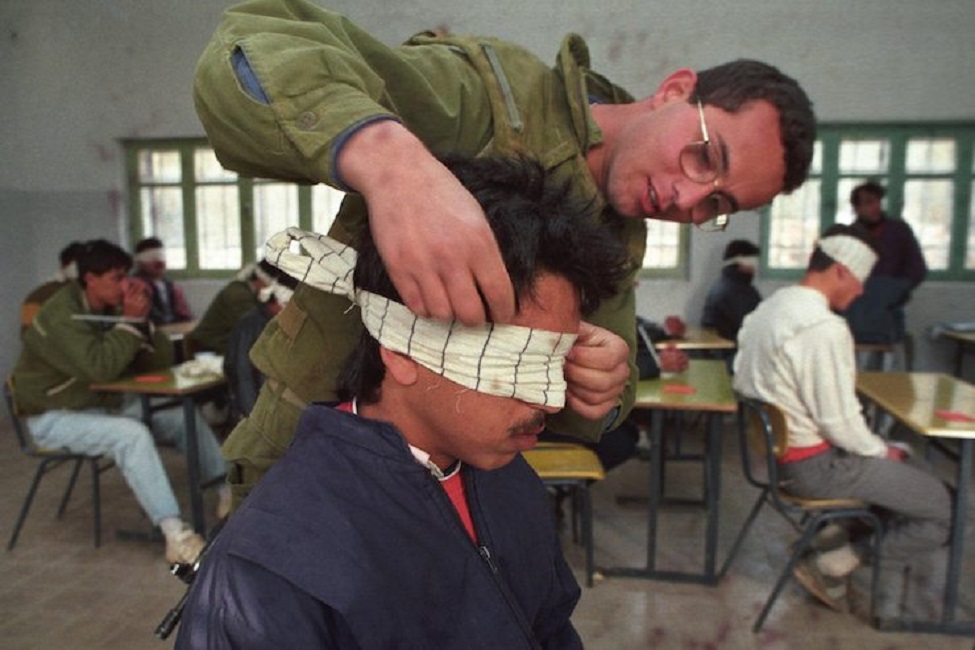
From approving brutal interrogation techniques to writing false medical reports, doctors in Israel have taken an active role in the torture of Palestinian prisoners.
By Ruchama Marton
If the Shin Bet runs a school for its agents and interrogators, the curriculum most certainly includes a class on how to tell a lie. The texts taught, it seems, do not change with the years. In 1993, responding to accusations that the Shin Bet brutally tortured Palestinian detainee Hassan Zubeidi, then Commander of the IDF Northern Command Yossi Peled told Israeli journalist Gabi Nitzan that “there is no torture in Israel. I served for 30 years in the IDF and I know what I am talking about.”
Twenty-six years later, Deputy Chief of the Shin Bet and former Shin Bet interrogator, Yitzhak Ilan repeated the same line to news presenter Ya’akov Eilon on national television while speaking about Samer Arbeed, a 44-year-old Palestinian who was hospitalized in critical condition after he had been reportedly tortured by the Shin Bet. Arbeed is suspected of organizing a deadly bombing that killed a teenage Israeli girl and wounded her father and brother at a spring in the West Bank in August. Ilan bristled at the notion that the Shin Bet was somehow responsible for Arbeed’s condition.
Putting aside these absurd forms of denial, as a doctor and founder of Physicians for Human Rights – Israel, I have always been troubled by how Israeli doctors cooperate with and enable Israel’s torture industry.
In June 1993, I organized an international conference in Tel Aviv on behalf of PHR against torture in Israel. At the conference, I presented a Shin Bet medical document that had been discovered by chance by Israeli journalist Michal Sela. In the document, the Shin Bet doctor was asked whether the prisoner in question had any medical restrictions when it came to keeping them in isolation, whether they could be tied, whether their face could be covered, or whether they could be made to stand for prolonged periods of time.
The Shin Bet denied such a document ever existed. “There is no document. It was simply an experimental paper that is not in use,” the agency claimed. Four years later, a second document, suspiciously similar to the first, came to light. That document asked doctors to sign off on torture in accordance with several previously agreed-upon clauses.
The first document, along with other findings, were published in the book titled “Torture: Human Rights, Medical Ethics and the Case of Israel.” The book cannot be found in Israel; Steimatzky, Israel’s oldest and largest bookstore chain, has banned its sale. Perhaps this is further proof that there is no torture in Israel.
After the document was uncovered, PHR turned to the Israel Medical Association and asked it to join the struggle against torture. The IMA requested that PHR hand over the names of the Shin Bet doctors who signed off on the document so that they could be dealt with internally.
I refused to hand over the names and told the IMA attorney that I was not interested in going after rank-and-file doctors — I wanted to change the entire system. That meant doing away with legitimacy granted to confessions exacted under torture, educating IMA members about non-cooperation with torturers, and particularly providing active help to those doctors who do report on suspicion of torture or brutal interrogations.
Back then, the IMA was satisfied with putting our statements while doing nothing to prevent the Shin Bet’s doctors from cooperating with torture. Furthermore, the organization failed to fulfill its obligation to establish a forum for doctors to report on suspected torture.
An ethical, moral, and practical failure
But it is not only doctors in the Shin Bet and the Israel Prison Service that collaborate with torture. Doctors in emergency rooms across Israel write false medical opinions in accordance with the demands of the Shin Bet. Take, for example, the case of Nader Qumsieh from the West Bank city of Beit Sahour. He was arrested in his home on May 4, 1993 and was brought to Soroka Medical Center in Be’er Sheva five days later. There a urologist diagnosed him a hemorrhage and a torn scrotum.
Qumsieh testified that he was beaten during his interrogation and kicked in his testicles.
Ten days later, Qumsieh was brought before the same urologist for a medical examination, after the latter had received a phone call from the Israeli military. The urologist wrote a retroactive letter (as if it had been written two days earlier), without actually conducting an additional examination of the patient, in which he said that “according to the patient, he fell down the stairs two days before he arrived in the emergency room.” This time, the diagnosis was “superficial hematoma in the scrotal area, which corresponds to local bruises sustained between two and five days prior to the examination.” The urologist’s original letter, written after the first examination, disappeared from Qumsieh’s medical file.
History teaches us that doctors everywhere easily and effectively internalize the regime’s values, and many of them become loyal servants of the regime. That was the case in Nazi Germany, in the United States, and in various countries in Latin America. The same goes for Israel. Qumsieh’s case, along with countless others, reflects the ethical, moral, and practical failure of the medical establishment in Israel vis-à-vis torture.
Already back in the 18th century, jurists — rather than doctors — published legal opinions accompanied by proof that there is no connection between causing pain and getting to the truth. Thus, both torture and confessions exacted through pain were legally disqualified. One can only assume that the heads of the Shin Bet, the army, and the police know this bit of history.
And yet, torture — which includes both mental and physical cruelty — continues to take place on a large scale. Why? Because the real goal of torture and humiliation is to break the spirit and body of the prisoner. To eliminate his or her personality.
The legal understanding for forbidding torture is based on the utilitarian idea that one cannot arrive at the truth through inflicting pain . But doctors are committed — first and foremost — to the idea that anything that causes physical or mental harm to a patient is prohibited.
The Shin Bet medical eligibility document allows for sleep prevention, it allows interrogators to expose prisoners to extreme temperatures, to beat them, to tie them for long hours in painful positions, to force them to stand for hours until the vessels in their feet burst, to cover their heads for prolonged periods of time, to sexually humiliate them, to break their spirits by severing their ties to family and lawyers, to keep them in isolation until they lose their sanity.
The Shin Bet’s medical eligibility form is not the same as the one used to check eligibility to join the air force or even to drive a car. This kind of “eligibility” leads the prisoner directly into the torture chamber — and the doctor knows this. The doctor knows to what kind of systematic process of pain and humiliation he or she is lending their consent and approval. It is doctors who oversee the torture, examine the tortured prisoner, and write the medical opinion or the pathology report.
- Details
- Written by: Mohammed Dwekat
- Category: statistical reports
- Hits: 889
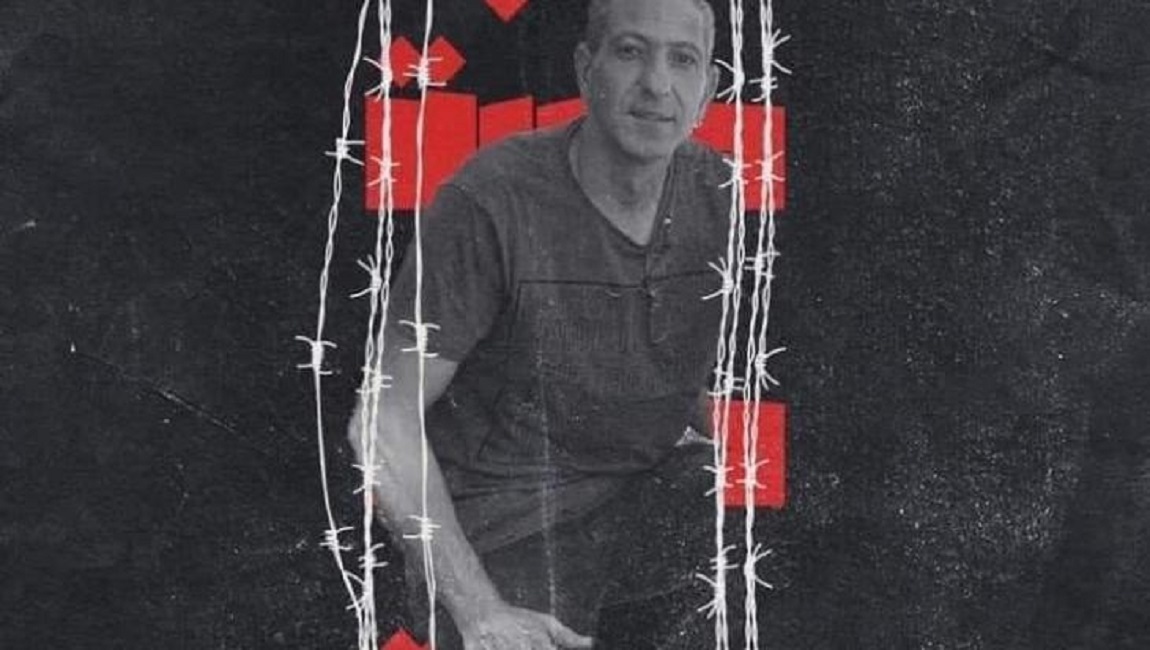
Samer Al-Arbeed, 44 Years old, He was arrested by the Israeli army on Wednesday 25 September 2019 in front of his workplace in Ramallah. He was beaten by Special Forces who arrested him according to his wife, who was with him at the time of his arrest. Then he was transferred to the Al- Maskoubia interrogation center – Jerusalem and prevented from seeing his lawyer.
Al-Arbeed was taken to Hadassah Hospital on Friday 27. September 2019 for treatment in critical condition due to the torture he suffered during interrogation. Al- Arbeed lost consciousness and suffered fractures in the rib cage, as a result of torture, bruises and beating throughout his body and severe kidney failure, and was taken to the hospital without telling his lawyer or family.
It turned out that the prisoner Samer Al-Arbeed told the military judge at the court hearing that he felt pain in his chest, and could not swallow and continue to vomit, and that he is suffering from severe health malaise. He was tortured in order to obtain security confessions under torture and that there were bruises on his body, neck, chest and feet, however his detention was extended by the military judge for 8 days on 26 September 2019 and was not transferred to hospital.
On Saturday 28 September 2019, the detainee officer told his lawyer that Samer was taken due to a serious health condition to Hadassah / Al-Issawiya Hospital. When the lawyer went to him, he was not allowed to visit and told that he was in a coma and could not talk. He was put on artificial respirators and suffered fractures in several areas of his body.
His lawyer applied for release because of his serious health condition, but was refused because he faces serious security charges and receives the necessary treatment.
The Yedioth Ahronoth newspaper quoted the Israeli security official as saying that Al- Arbeed had been subjected to an "emergency investigation," allowing torture to be carried out, on the grounds that Al-Arbeed was a "time bomb" and that torture was used to prevent security operations.
Second of October 2019, Nour Al-Arbeed, the wife of the prisoner Samer Al-Arbeed, said, there is no new information about his health condition. The occupation also refuses to give the family medical reports about his health. In addition, the family contacted Hadassah Hospital in particular and refused to give information about the health condition of Al-Arbeed. According to Al-Arbeed’s wife, they are getting information from the Hebrew media
Second of October 2019. His lawyer, Mahmoud Hassan, also explained that the military court rejected the request for the release of Al- Arbeed and his detention will be extended until Thursday. 10. October. 2019
Reports from lawyers on 8th October, said that Israeli authority still not allowed his family and his lawyer to visit him and to meet him at the hospital although he is in a critical health condition, and they extend his arrest until 15th October 2019.
In 1991, Israel signed the Convention against Torture ( Article 2), which obliges States parties to prohibit the use of torture and other unlawful or violent practices against detainees in interrogation rooms. Also torture prohibited in all its forms, according to International Covenant on Civil and Political Rights (Article 7).
Israel permits torture by using the pretext of the so-called security necessities as an exceptional circumstance. Israel violates international law and all international conventions by using torture against Palestinian detainees, which in many cases led to the death of many of them, such as the martyr Arafat Jaradat, Aziz Oweisat and the last martyr Nassar Taqatqa.
According to Article VII and VIII of the Rome Statute of the International Criminal Court, torture is classified as a crime against humanity and a war crime.
What is happening these days to Samer Arbeed confirm that Israeli authority is using torture in a systematic way and a policy towards Palestinian political prisoners.
The Commission of Detainees Affairs calls all the international human rights organizations to immediately investigate in the circumstances of the torture of Samer Al-Arbeed, and calls the United Nations and international institutions to stand up to their responsibilities and hold Israel accountable for its ongoing crimes against Palestinian prisoners.