
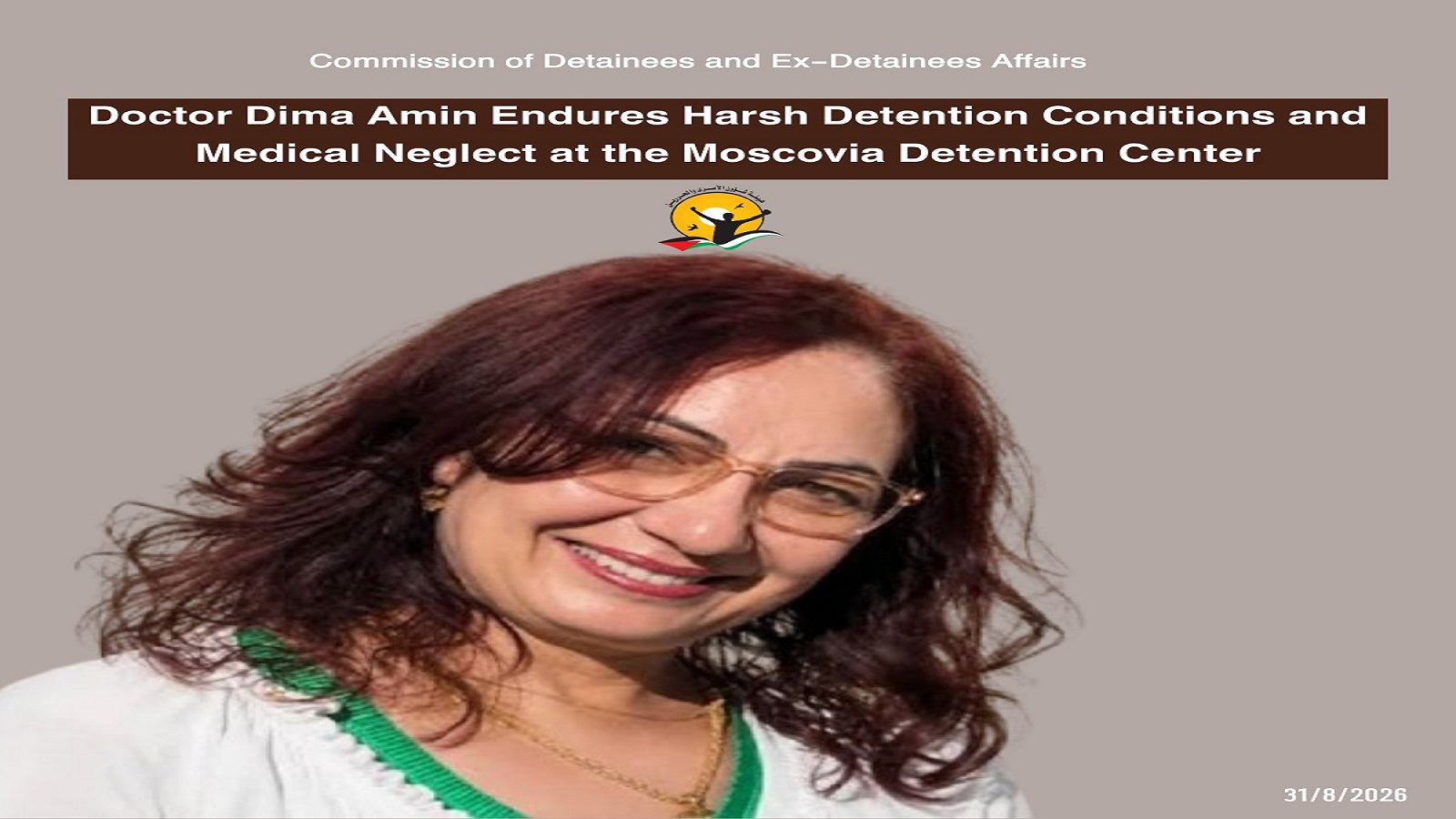
Doctor Dima Amin endures harsh detention conditions and medical neglect at the Moscovia Detention Center
August 31, 2026
The Commission of Detainees Affairs reported today, Monday, that Palestinian detainee and physician Dima Mohammed Amin, 54, is experiencing a deterioration in her health following her arrest on August 18.
In a report issued following a visit by the Commission’s lawyer to Amin at the Moscovia Interrogation Center, the Commission explained that Amin developed symptoms of a heart attack following her arrest and subsequently underwent a cardiac catheterization procedure. She continues to suffer from low blood sugar levels, blood pressure fluctuations, high cholesterol, and dizziness.
Amin, a gynecologist working in Ramallah, spoke during the visit about the harsh detention conditions she is facing, pointing to the lack of even the minimum necessities of life inside the cell and the severe psychological pressure accompanying these conditions.
She said that being held alone in the cell for prolonged periods, coupled with the detention conditions, causes significant psychological and mental distress. She also pointed to the lack of clothing, explaining that she has only the clothes she was wearing at the time of her arrest, forcing her to wash them and wear them again while still wet.
The detainee added that the cell offers no privacy and lacks adequate space for changing clothes, while the amount of food provided to the detainees remains insufficient.
Amin further noted that prison guards deliberately engage in continuous shouting, banging on cell doors, searches, and repeated insults, further exacerbating the harshness of the detention conditions.
Regarding the period of outdoor exercise, known as the “fawra,” the detainee said: “We are forcibly taken out in order to drag and humiliate us, and are made to stand in a corner for some time without being allowed to move.”
The Commission affirmed that the detainee’s account reflects the harsh conditions she is facing inside the interrogation center, particularly given her health condition, which requires continuous medical monitoring and care amid what the Commission described as deliberate medical neglect.